Are non-competes enforceable? What depends on where you are
Sometimes. A non-compete is enforceable only where local law allows it, and only if it’s reasonable: tied to a real business interest, limited to a sensible period and area, and aimed at the kind of work the person actually did. In California, Minnesota and a few other US states, most employee non-competes are void. In the UK and most US states, courts will enforce a narrow one. In Germany, you generally have to pay the former employee for the restricted period. Where the employee works matters more than what the clause says.
That’s why copying a non-compete from a template, or from a contract a friend used in another state, is a bad idea. A clause that’s routine in Texas can be void in California and a problem in Massachusetts.
What a non-compete actually does
A non-compete stops someone working for a competitor, or starting a competing business, for a period after they leave. It’s different from a non-solicitation clause, which only stops them poaching your clients or staff, and from a confidentiality clause, which protects information. Those two are far easier to enforce almost everywhere, and in practice they do most of the protective work.
Courts dislike non-competes because they stop people earning a living. So the starting point in most common-law countries is that a restraint is unenforceable unless the employer shows it protects a legitimate interest and goes no further than necessary.
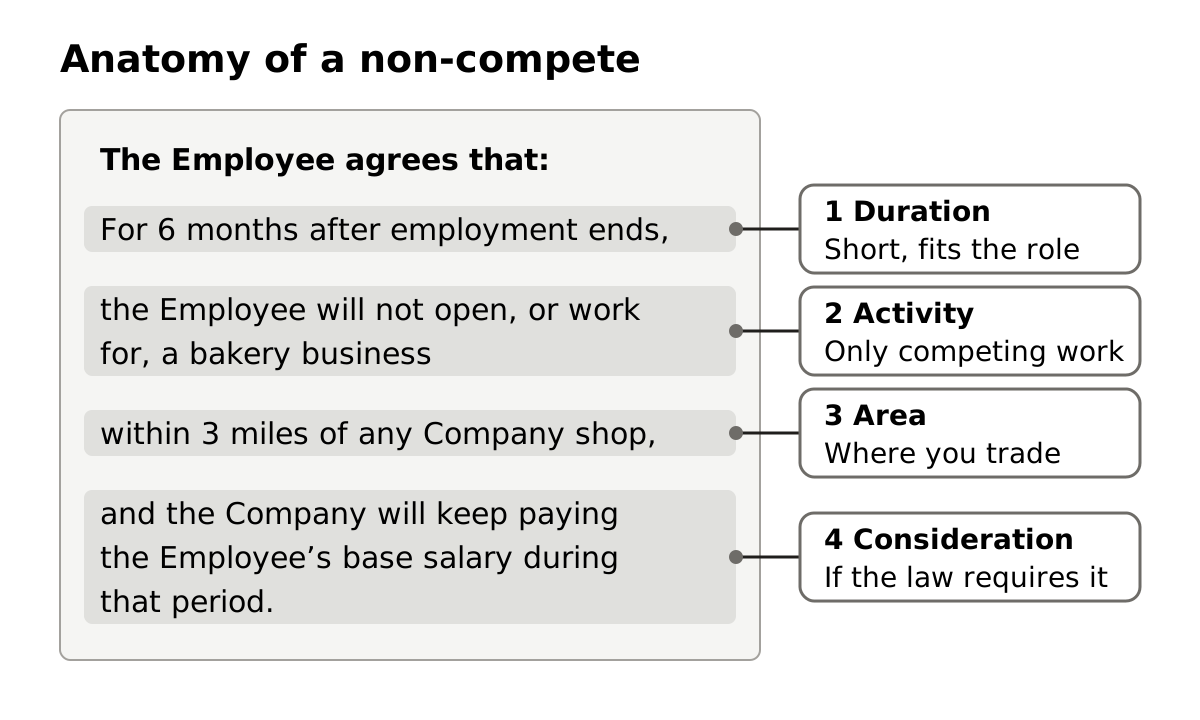
The four things a court will look at
- A legitimate interest. Trade secrets, confidential pricing, client relationships and specialist know-how count. Wanting to avoid competition, full stop, doesn’t.
- Duration. Six to twelve months is common for senior roles in places that allow non-competes. Two years or more needs a strong reason.
- Geography. It should match where you actually do business. “Anywhere in the world” for a junior sales rep in Denver won’t fly.
- Scope of activity. Ban the specific competing work, not every job in the industry. A head baker at a Leeds bakery can reasonably be kept from opening a rival bakery around the corner for a few months. Barring her from working in any kitchen in Yorkshire is another matter.
Some places add a fifth requirement: pay. Massachusetts and Germany both tie enforceability to compensation, and many US states require something new of value (a raise, a bonus, a promotion) when a non-compete is signed after employment has already started.
The United States, state by state
There’s no nationwide ban. The FTC issued a rule in 2024 that would have banned most non-competes, but a federal court set it aside before it took effect, and in 2025 the FTC dropped its appeal. The FTC can still go after individual agreements it considers unfair, but for everyday purposes, state law decides.
States that ban most employee non-competes
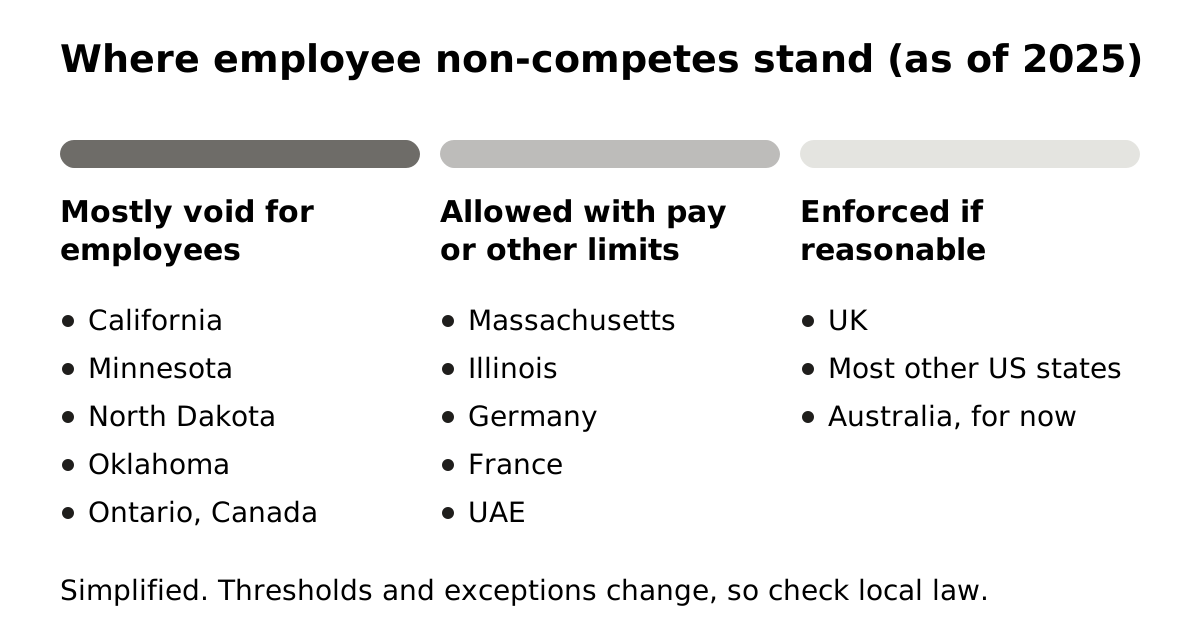
California voids nearly all of them, including ones signed in another state, and it’s now unlawful even to include one in an employee’s contract. North Dakota and Oklahoma have long had similar rules, and Minnesota banned new employee non-competes from July 2023. These states generally still allow restrictions connected to selling a business.
States with pay thresholds or other limits
A growing list of states bars non-competes for lower-paid workers. Illinois, for example, prohibits them for employees earning $75,000 a year or less (as of 2025). Washington, Oregon, Colorado, Maine and others have their own thresholds, which often adjust each year. Massachusetts caps most non-competes at 12 months, bars them for non-exempt employees, and requires either garden leave pay of at least half the employee’s base salary or other agreed consideration.
Most other states
Most other states enforce reasonable non-competes. Many courts will trim an overbroad clause (often called “blue penciling”) rather than throw it out. Some won’t, which means an overreaching clause can leave you with nothing at all. That alone is a good reason to draft narrowly.
The UK, EU, Canada, Australia and the UAE
In the UK, non-competes are enforceable if they protect a legitimate interest and are no wider than reasonably necessary. Courts often uphold three to six months for senior staff and look hard at twelve months unless the role justifies it. The government proposed a three-month statutory cap in 2023, but as of 2025 no cap is in force. UK courts won’t rewrite a clause, although they can delete a severable part of it.
In the EU, rules vary by country. In Germany, a post-employment non-compete for an employee is binding only if the employer pays compensation of at least half the employee’s most recent pay for the restricted period, which can’t exceed two years. France also requires financial compensation, along with limits on time and place. Other member states have their own formalities.
In Canada, Ontario banned non-competes for most employees in 2021, with exceptions for senior executives and the sale of a business. Courts elsewhere in Canada are reluctant to enforce them and generally prefer non-solicitation clauses.
In Australia, restraints are judged under the common-law doctrine of restraint of trade. The federal government has announced plans to ban non-competes for workers earning below the high-income threshold from 2027, so keep an eye on that.
In the UAE, the labour law allows a non-compete of up to two years after employment ends, as long as it’s limited in place, time and type of work to what’s needed to protect the employer’s business.
If you’re the employer
- Ask whether you need a non-compete at all. For most roles, a solid confidentiality clause plus a client non-solicitation does the job and is far easier to enforce. Honestly, most small businesses don’t need anything more.
- If you do need one, tie it to specific roles with access to trade secrets or key clients, not every hire.
- Keep the duration short and the area and activity specific.
- Check local formalities: pay requirements, advance notice before signing, income thresholds, and any rules on how the clause is presented.
- Include a severability clause and state the governing law, knowing that many states won’t let you pick another state’s law to get around their own rules.
If you’re the employee
Read it as if you’re leaving tomorrow. Would it stop you taking the obvious next job in your field? Then negotiate. Asking for a shorter period, a narrower area, or a clause that only applies if you resign or are fired for cause is normal, and employers agree more often than people expect.
If you’ve already signed and you’re about to leave, don’t assume it’s void and don’t assume it’s binding. Get advice where you live before you accept the new role, because a lawsuit or an application for injunctive relief can arrive within days of your start date.
Next steps
Pull every employment and contractor agreement that contains a restraint and note, for each one, the worker’s location, role and pay and the clause’s duration and area. That quick table will show you which clauses are probably unenforceable and which ones need tightening. You can have LegalWolf flag restrictive covenants across a stack of contracts so you’re not reading them one by one.
This article is general information, not legal or tax advice. Laws differ between countries and states and change over time, so check the rules that apply to you or speak to a qualified professional.