Auto-renewal clauses: how not to get locked in for another year
An auto-renewal clause rolls a contract into a new term unless someone cancels before a deadline, usually 30, 60 or 90 days before the current term ends. The renewal isn’t really the trap. The notice window is. Miss it by a day and you can owe another full year. The fix is boring but it works: find the deadline the day you sign, put it in your calendar with a buffer, and cancel exactly the way the contract says.
How one missed date costs $14,400
Here’s a typical clause: “This Agreement will automatically renew for successive twelve-month terms unless either party gives written notice of non-renewal at least 60 days before the end of the then-current term.”
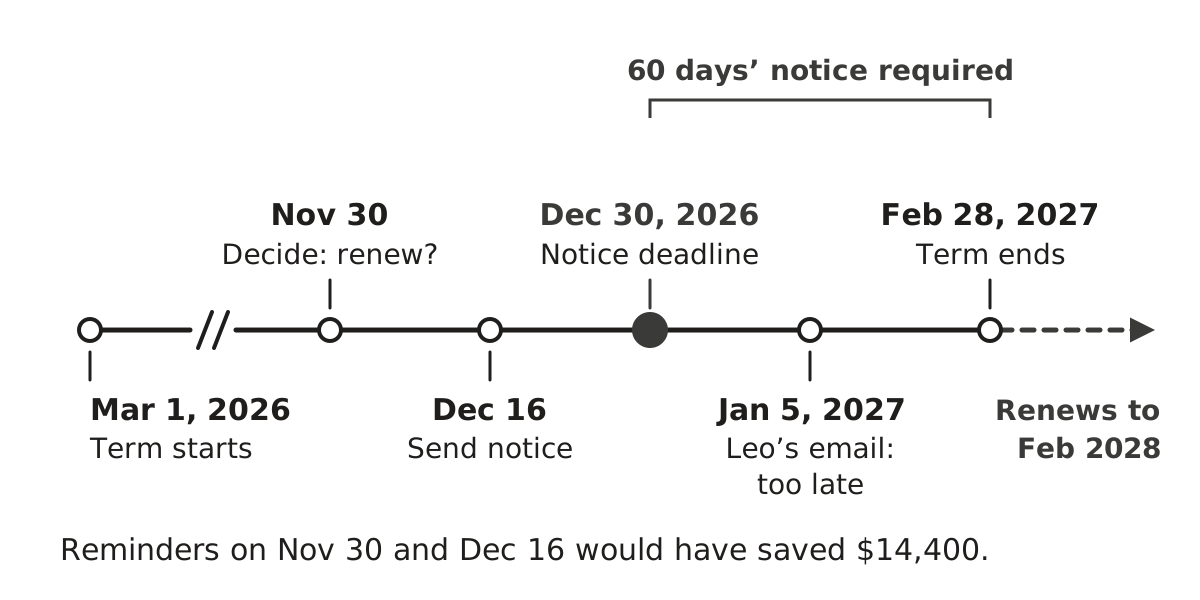
Leo manages a small physiotherapy clinic in Denver. He signs a scheduling software contract starting March 1, 2026, for 12 months. The term ends on February 28, 2027. Sixty days before that is December 30, 2026, right when half his staff are away for the holidays. He emails a cancellation on January 5. Too late. The contract renews through February 2028, and at $1,200 a month that’s a $14,400 mistake.
Counting days trips people up, especially with “business days” or a deadline that lands on a weekend. The deadline calculator will do the arithmetic for you. The auto-renewal and notice period glossary entries cover the common variations.
When renewal turns into a trap
Auto-renewal on its own is often convenient. Nobody wants their payroll software switching off because they forgot to re-sign. It gets nasty when it’s paired with other terms:
- Long renewal terms. A three-year initial term that renews for another three years.
- Long notice windows. A 90 or 180-day window means deciding half a year ahead.
- Price rises on renewal. “Fees will increase by up to 10% on each renewal” or, worse, “to the vendor’s then-current list price.” See price escalation.
- Fussy notice rules. Notice must go by courier to a legal department, not by email to the account manager you actually talk to.
- No exit during the renewal term. No termination for convenience, so you’re stuck until the next window comes round.
What the law says
The rules differ a lot between business contracts and consumer contracts, and between countries.
Between businesses
In most places, auto-renewal clauses between businesses are enforced as written. Courts expect a business to read its contracts and track its own dates. There are narrow exceptions. New York, for example, has a law covering certain service and maintenance contracts that requires the provider to remind the customer before the cancellation deadline, and if it doesn’t, the renewal may not be enforceable against the customer. A few other US states have similar rules for particular contract types. Check before you rely on one.
With consumers
- In the US, many states have automatic renewal laws for consumer subscriptions that require clear disclosure, consent and an easy way to cancel. California’s is among the strictest and was tightened again with changes that took effect in July 2025. The FTC’s federal “click-to-cancel” rule was struck down by a federal appeals court in 2025, so state laws are doing most of the work unless a new federal rule arrives.
- In the UK, consumer law already restricts unfair renewal terms, and new subscription contract rules under the Digital Markets, Competition and Consumers Act 2024 are being phased in. Check the current start dates before you rely on them.
- In the EU, national rules vary. Germany, for example, says consumer contracts that roll over after the initial term can generally be cancelled on one month’s notice.
If you run a subscription business that sells to consumers, these rules apply to you. Being small doesn’t get you out of them.
How to cancel so it actually counts
A cancellation that doesn’t follow the contract may not count at all. Work through it in this order:
- Read the notices clause. It says how notice must be sent (email, courier, registered post), to whom, and to what address.
- Pin down the deadline. Does notice have to be sent by the date or received by it? When does email count as received?
- Say it plainly. “We give notice of non-renewal under Section 9.2. The Agreement will end on February 28, 2027.”
- Send it early. A week or two before the deadline, never on the last day.
- Keep proof. The sent email, the courier tracking, the postal receipt.
- Ask for written confirmation, and chase it if nothing arrives.
- Stop the payments after the final period, and watch for a last invoice.
The renewal cancellation letter gives you a clean notice to start from.
Fix it before you sign
The easiest time to deal with an auto-renewal clause is before there’s a signature on it. These are the asks that vendors agree to most often, in our experience, particularly the price cap and a shorter window.
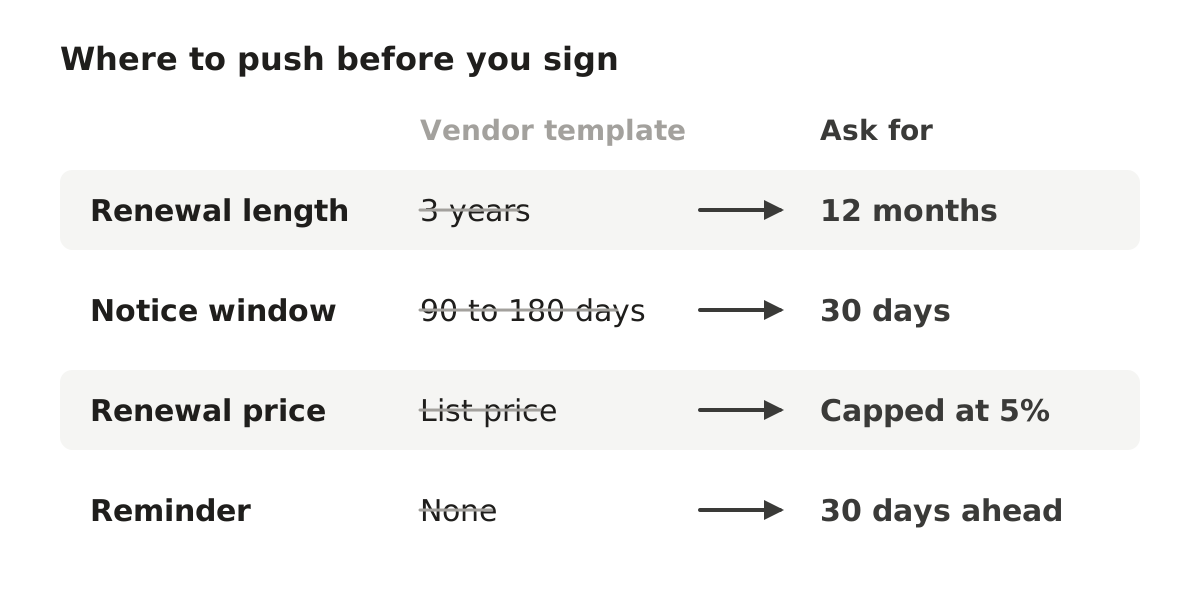
Two more are worth raising if you have any bargaining power. Ask for notice by email to a named address rather than by courier, and ask for a right to terminate on 30 to 60 days’ notice during any renewal term. If you’re the vendor, offering a reminder email costs you almost nothing and heads off a lot of angry customers.
Build a renewal calendar this week
Most missed renewals aren’t negotiation failures. They’re tracking failures. A simple system does the job:
- List every contract with a renewal clause: software, leases, equipment, services, insurance
- Record the end date, the notice window and how notice must be sent
- Set two reminders: one 30 days before the notice deadline to decide, one a week or two before to send
- Give each contract an owner, so the reminder doesn’t land in a shared inbox nobody reads
LegalWolf can pull renewal dates out of your contracts and remind you before they arrive, though a well-kept spreadsheet beats nothing by a mile. Start with your three biggest recurring contracts today: find the clause, work out the deadline, and decide now whether you actually want another year.
This article is general information, not legal or tax advice. Laws differ between countries and states and change over time, so check the rules that apply to you or speak to a qualified professional.