Buying a small business: a due diligence checklist
Due diligence is the checking you do between agreeing a price in principle and signing the purchase agreement. For a small business it usually covers six areas: the financials, customers and contracts, the people, the premises, debts and legal problems, and the licenses the business needs to operate. The aim is simple. Confirm you’re getting what the seller says you’re getting, find anything that should lower the price, and make sure the final agreement protects you against whatever you couldn’t fully check.
How the process usually runs
Most small deals follow the same path. You agree headline terms in a letter of intent (called heads of terms in the UK), which is mostly non-binding apart from points like confidentiality and exclusivity. The seller opens up its records, often through a shared folder. You and your advisers work through them, ask questions and negotiate the purchase agreement. For a small business this commonly takes 30 to 90 days, depending largely on how organized the seller is.
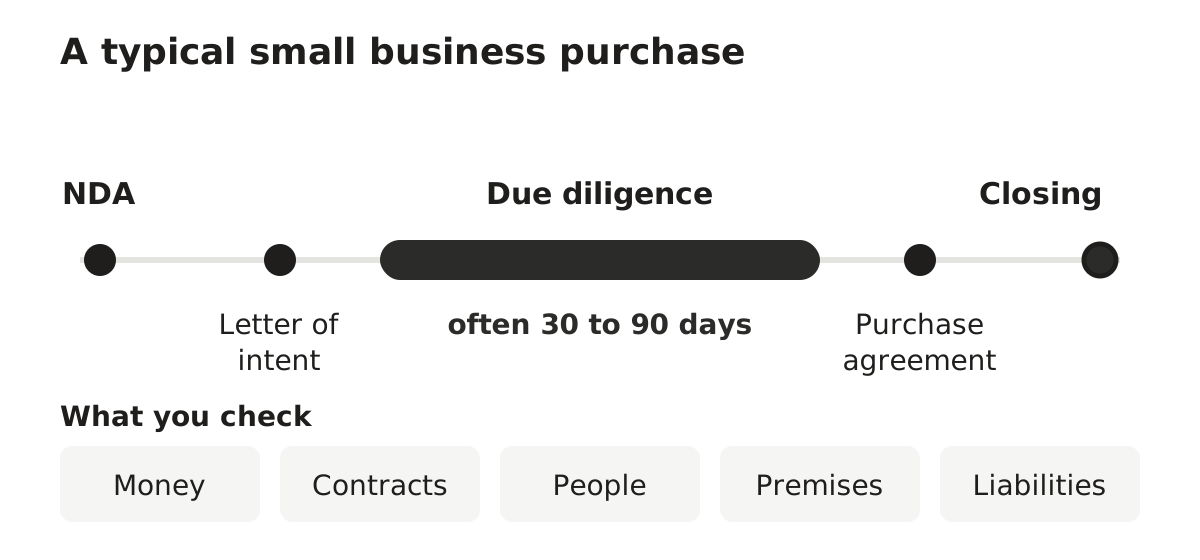
Sign a non-disclosure agreement before you see anything sensitive. The seller will want one anyway, and our mutual NDA template works well for this.
Asset purchase or share purchase
How you buy shapes what you need to check. In an asset purchase, you buy specific assets (equipment, stock, the brand, the customer list) and usually leave the old company and most of its liabilities behind. In a share or stock purchase, you buy the company itself, with its history, contracts, tax position and every liability, known or not.
| Asset purchase | Share purchase | |
|---|---|---|
| What you get | The assets you pick | The whole company |
| Past liabilities | Mostly stay with the seller, with exceptions | Come with the company |
| Contracts and licenses | Must be transferred, often with consent | Usually stay in place, unless a change of control clause applies |
| Employees | Depends on local law; in the UK and EU they often transfer automatically | Stay employed by the same company |
| Who usually prefers it | Buyers | Sellers, often for tax reasons |
Small US deals are often structured as asset purchases. Share purchases are common in the UK and elsewhere when the business is incorporated. Either way, get tax advice on the structure before you sign the letter of intent, because it’s hard to change afterward.
The numbers
Don’t rely on a broker’s summary. Ask for:
- Three years of financial statements and tax returns, plus management accounts for the year so far.
- Bank statements that match reported sales. If the seller says the café takes $40,000 a month, the deposits should show it.
- A breakdown of any “add-backs”, the personal expenses run through the business that make adjusted profit look better.
- Receivables and payables, with how old each one is.
- Customer concentration. If one client is 40% of revenue, you’re partly buying a relationship that might not survive the sale.
- Sales tax, VAT and payroll filings, and any open audits or disputes with the tax authority.
Contracts, customers and suppliers
Read the key contracts yourself or have them reviewed. You’re looking for:
- Change of control and assignment clauses that let the other side walk away or refuse a transfer after a sale.
- Exclusivity or non-compete obligations that would tie your hands.
- Contracts about to expire, or on unusually good or bad terms.
- Long minimum commitments to suppliers.
A marketing agency in Chicago whose biggest client can leave the moment it changes hands isn’t worth what its revenue suggests. If the seller will allow it, meet the key customers before closing.
People and premises
Staff
Get a list of employees and contractors with pay, start dates, contracts and any complaints or claims. Check whether anyone treated as a contractor should really be an employee, because that liability can follow the business. In the UK, the TUPE rules (and similar rules across the EU) mean employees generally move to the buyer on their existing terms, even in an asset purchase. Many other countries have no automatic transfer, so check the local position.
Ask who the business really depends on, too. If the owner is the only person the top clients talk to, negotiate a paid handover period.
The lease
For a business that operates from rented premises, the lease can make or break the deal. How long is left? Is there a right to renew? Can it be assigned to you, and on what conditions? A restaurant with 14 months left on a lease the landlord won’t extend is a very different purchase from one with ten years to run.
Debts, disputes and licenses
- Search for registered security over the assets: a UCC search in the US, the charges register at Companies House in the UK, the PPSR in Australia, or the provincial registries in Canada.
- Ask about current, threatened and past litigation, and search court records where you can.
- List every license and permit (food, alcohol, health, UAE trade licenses, professional registrations) and whether it transfers or you’ll need to apply fresh.
- Confirm who owns the intellectual property: the brand, domain names, website and any software. It should belong to the business, not the owner personally or a former web developer.
- Look for environmental, safety or regulatory issues specific to the industry.
Protecting yourself in the purchase agreement
You won’t catch everything. The purchase agreement covers the gap:
- Representations and warranties from the seller about the accounts, contracts, staff, tax and legal compliance.
- An indemnity for specific known risks, such as a pending tax audit.
- Part of the price held in escrow or paid later, so money is available if a claim comes up.
- An earn-out, where part of the price depends on future results, if you doubt the revenue will hold.
- A non-compete and non-solicitation from the seller, within what local law allows.
In practice, the holdback often matters more than the warranties. A warranty from a seller who has spent the money and moved to Portugal isn’t worth much.
Before you commit
Turn the sections above into your own request list and send it with, or right after, the letter of intent. Keep a simple log of what you asked for, what arrived and what’s still missing. Bring in an accountant for the numbers and a lawyer for the contracts and purchase agreement early, not in the last week. And be ready to walk away. The most expensive small business purchases are the ones where the buyer found the problem during due diligence and went ahead anyway.
This article is general information, not legal or tax advice. Laws differ between countries and states and change over time, so check the rules that apply to you or speak to a qualified professional.