Commercial leases: the clauses that cost tenants most
The clauses that cost commercial tenants the most are rarely the headline rent. They’re the extras and the exit terms: service charges and operating costs, rent increases, repair and restoration duties, personal guarantees, and the rules on leaving early or handing the lease on. A lease quoted at $30 per square foot can cost far more once those are added up. Business tenants also get much less protection from the law than people renting homes, so what the lease says is usually what you get.
The rent is only part of what you pay
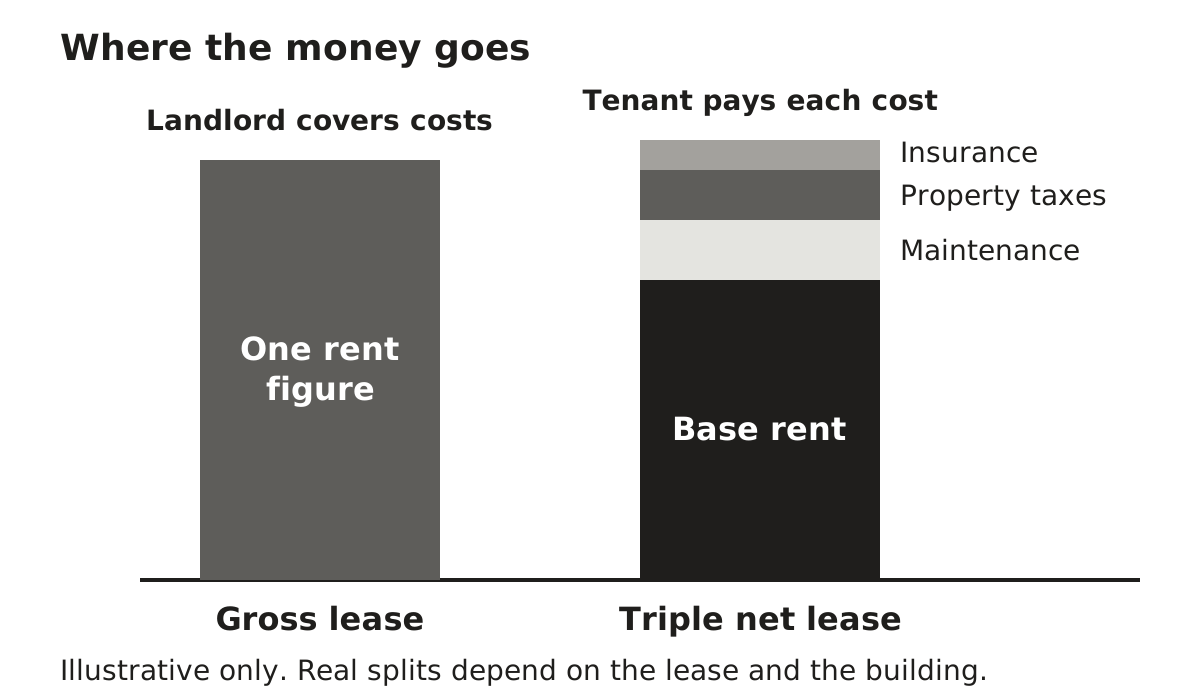
Leases split running costs in different ways. In a gross lease you pay one figure and the landlord covers the building’s costs out of it. In a net lease, common in the US, you pay base rent plus a share of property taxes, insurance or maintenance, and a triple net (NNN) lease passes all three to you. In the UK the extras usually arrive as a service charge and insurance rent, and a full repairing and insuring (FRI) lease puts repairs and insurance on the tenant.
What to check:
- What’s included in operating costs or the service charge. Major capital improvements, the landlord’s financing and its disputes with other tenants usually shouldn’t be.
- Whether there’s a cap on annual increases in the costs the landlord controls.
- Your right to see the accounts and challenge them (see audit rights).
- How your share is worked out. A share based on your space as a proportion of the building is normal. A share that grows when other units sit empty isn’t.
How the rent goes up
Most leases longer than a couple of years build in increases, and the method matters more than people think.
- Fixed steps, such as 3% a year. Predictable and easy to budget.
- Index-linked, tied to an inflation measure. Ask for a cap and a floor, or a year of 8% inflation lands on you in full.
- Open market reviews, common in the UK. Watch for “upward only” wording, which means the rent can rise at review but never fall, even in a slump.
Our glossary entry on price escalation walks through the common formulas.
Repairs and handing the keys back
This is where tenants get hit hardest, often years after signing. Under a full repairing lease you may have to put the premises into good repair, even if they were shabby when you moved in. At the end of a UK lease, landlords routinely serve a schedule of dilapidations, a list of repair and reinstatement work with a price attached, and the bill for a modest unit can run into tens of thousands of pounds. US leases have their own version in restoration and surrender clauses.
- Attach a photographic schedule of condition to the lease and limit your repair duty to that condition.
- Carve out structural and roof repairs, or cap your share of them.
- Agree in writing which parts of your fit-out you can leave behind.
- If you must strip everything out at the end, budget for it from day one.
Guarantees and deposits
For a new business, expect the landlord to ask for a personal guarantee from the owners, a rent deposit, or both. A guarantee on a ten-year lease at $6,000 a month is a potential $720,000 personal liability. Push for a cap, a burn-off after a period of on-time payment, or in some markets a “good guy” guarantee that ends once you hand back the keys with the rent paid up. Deposits of three to six months’ rent are common for young businesses; ask for part of yours back after a clean payment record.
Getting out: renewal, breaks and holdover
Renewal
If your business depends on its location (a café, a salon, a clinic), you need to know you can stay. In the US, renewal generally depends on an option in the lease, usually exercised by written notice within a fixed window. Miss the window by a day and you may lose the option. In England and Wales, many business tenants have a statutory right to renew under the Landlord and Tenant Act 1954, unless the lease was “contracted out” of that protection, which many shorter leases are.
Break clauses
A break clause lets you end the lease early on set dates. Landlords often attach conditions, such as no rent arrears and handing over the premises empty. English courts apply those conditions strictly, and a small unpaid sum can make a break notice fail. Ask for the conditions to be limited to paying the main rent and leaving.
Holdover
If you stay on after the lease ends without a new deal, many US leases charge holdover rent at 150% to 200% of the last rent. Know your end date, and put every notice deadline in the calendar the day you sign. A deadline calculator makes that quick.
Assignment, subletting and use
At some point you may want to sell the business, move or downsize. Check whether you can assign or sublet with the landlord’s consent, and whether that consent can’t be unreasonably withheld. Watch for clauses that treat a sale of your company’s shares as an assignment, and for recapture clauses that let the landlord take the space back instead of approving your buyer.
The use clause matters too. If it limits you to “retail sale of women’s clothing”, adding a coffee bar may need consent, and a narrow use clause makes the lease harder to pass on. Retail tenants should ask for an exclusive: a promise that the landlord won’t lease to a direct competitor in the same center.
The smaller clauses that still bite
- Relocation clauses let the landlord move you to other space in the building. Insist on comparable space and moving costs paid.
- Access rights for repairs and viewings should require notice and avoid disrupting trade.
- Insurance requirements can be expensive, so get a quote before you sign. Our note on insurance clauses covers what’s usual.
- Rent suspension should apply if the premises become unusable through damage you didn’t cause.
- Force majeure clauses in leases often exclude the duty to pay rent, so don’t count on one to excuse payment.
Before you sign
Negotiate at the heads of terms stage, before the lawyers draft the lease. That’s when landlords are most flexible, particularly on rent-free periods, fit-out contributions and caps. Then have the full lease reviewed. Commercial leases routinely run past 50 pages, and the expensive parts are rarely on page one. You can check a lease for the clauses above with LegalWolf before your lawyer looks at it, so the paid hours go on the parts that matter.
This article is general information, not legal or tax advice. Laws differ between countries and states and change over time, so check the rules that apply to you or speak to a qualified professional.