12 contract red flags every small business should know
The red flags that hurt small businesses most are vague scope, one-sided liability, broad indemnities, the other side’s right to change terms whenever it likes, and exit terms that make leaving painful. None of them means you have to walk away. They mean slow down, work out what the clause could cost you, and ask for a change. Here are twelve we see all the time, grouped by where they tend to hide, with what to ask for instead.
Scope and money
1. Nobody can say exactly what you’re delivering
“Contractor will provide marketing services as requested” could mean almost anything. Vague scope leads to arguments about what was included, endless revisions and unpaid extra work. Ask for specific deliverables, quantities, dates and an acceptance process. For project work, a proper statement of work fixes most of this.
2. They can change the terms whenever they like
Watch for “we may update these terms at any time by posting a new version on our website.” That lets one side rewrite the deal after you’ve signed. Ask that changes need written agreement, or at least advance notice plus a right to leave without penalty if you don’t accept them. See the amendment clause entry.
3. The payment terms push the risk onto you
Net 90, “pay when paid” clauses that tie your payment to your customer getting paid by someone else, and broad rights to set off disputed amounts can all leave you waiting months for cash. Ask for net 30, a deposit on larger jobs, and a right to charge interest on late payments.
Liability and risk
4. Their liability is capped and yours isn’t
A one-sided limitation of liability is one of the most common problems in templates written by bigger companies. If their exposure stops at 12 months of fees and yours has no limit, ask for a mutual cap. This one is usually easy to win, because it’s hard to defend out loud.
5. The indemnity is broad and only runs one way
“Supplier shall indemnify Customer against all losses arising out of or relating to this Agreement” turns you into the insurer for the whole relationship. Ask for mutual indemnification, limited to third-party claims, and tied to what each side actually caused.
6. The warranties are lopsided
If you’re buying, watch for a warranty disclaimer that leaves you with no promise the thing will work. If you’re selling, watch for open-ended promises like “Supplier warrants the deliverables will meet all of Customer’s requirements,” which nobody can satisfy. Aim for specific, time-limited warranties with a clear fix, such as repair or re-performance within 30 days.
IP, confidentiality and restrictions
7. The IP clause takes more than the deliverables
Freelancers and agencies, read the IP assignment twice. If it transfers “all intellectual property created by Contractor during the term,” you may be handing over your templates, code libraries and methods. Assign only the final deliverables, keep your pre-existing materials, and give the client a license to use them where it needs to.
8. Confidentiality only protects them, or never ends
A confidentiality clause that protects only one side’s information, or lasts forever for ordinary business information, is worth pushing on. Mutual duties with a fixed length, often two to five years after the contract ends, are common. Real trade secrets can reasonably get longer protection.
9. Limits on who else you can work with
Broad non-compete, exclusivity or non-solicitation terms can restrict your business well beyond this one deal. Whether they’re enforceable varies hugely: California generally voids non-competes, for example, while many other US states and the UK enforce reasonable ones. Don’t plan on a clause being struck down. Ask for narrow scope, a short duration, and a specific region or customer list.
Exit and disputes
10. It renews itself and the window is tiny
A contract that renews for another full term unless you cancel 90 days ahead is very easy to miss. Ask for a shorter window, a capped renewal price and a reminder from the other side. Put the notice date in your calendar the day you sign, and see our auto-renewal entry for the variations.
11. Only they can walk away
If they can end the contract on 30 days’ notice for any reason but you can only leave for material breach, the relationship is lopsided. Ask for mutual termination for convenience, or at least payment for work done plus a reasonable notice period if they end it early.
12. The dispute terms are stacked against you
Read governing law, forum and the dispute process together. Warning signs include court or arbitration in a distant city or country, a one-way attorneys’ fees clause that only helps them, and waivers of rights you might want later. Picture a bakery in Leeds with a £6,000 claim against a supplier whose contract sends every dispute to Delaware. The claim is real, but chasing it costs more than it’s worth.
How serious is each one?
They aren’t all equal. This is roughly how we’d rank them for a typical small business.
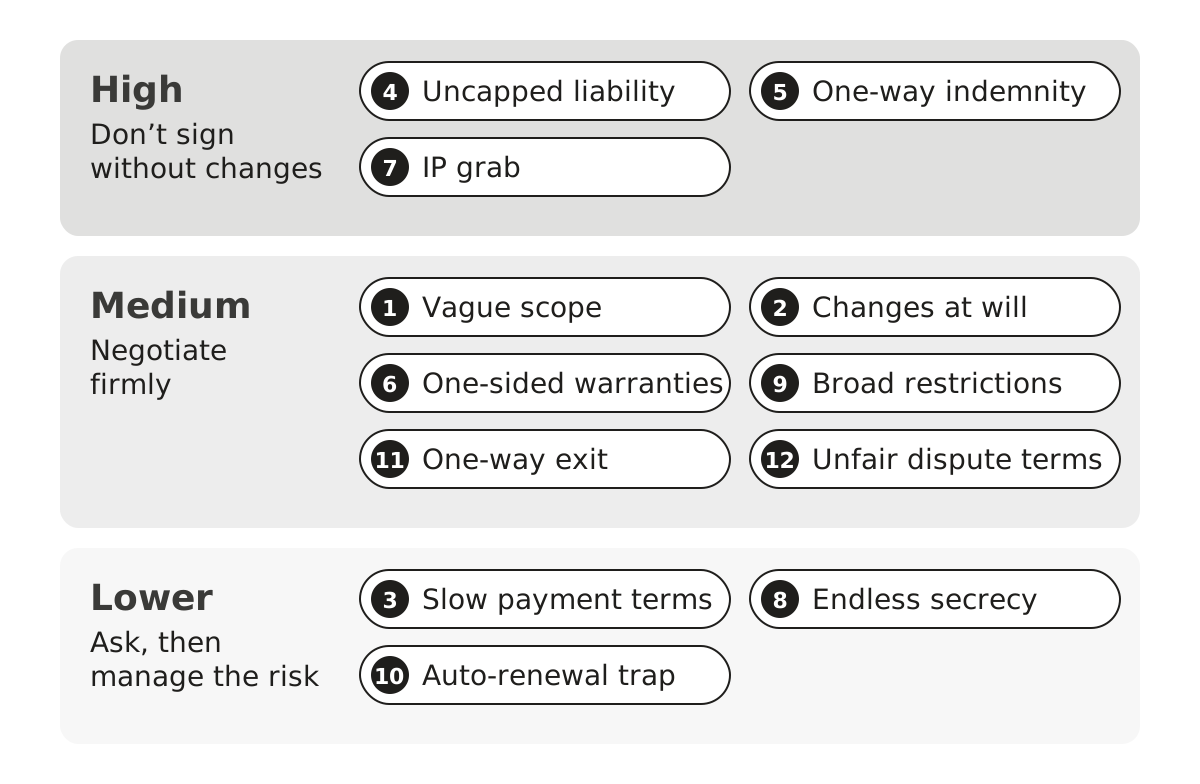
Your priorities may be different. A cash-tight startup might reasonably treat net 90 payment terms as a deal-breaker, and a consultant whose whole value is her methods should treat the IP clause as the one that matters most.
What to do when you spot one
- Understand it. Know what the clause does and roughly what it could cost you.
- Weigh it. Compare the risk with the value of the deal.
- Propose wording. “Please make Section 8 mutual and add a cap of 12 months’ fees” gets further than “we don’t like Section 8.”
- Give one sentence of reasoning. It makes a yes more likely.
- Know your walk-away point before the conversation starts.
Plenty of these can be caught automatically. LegalWolf reviews contracts for one-sided and missing clauses, so your time goes on the negotiation rather than the hunt.
Next time a contract lands in your inbox
Read it once for the deal, then go looking for each of the twelve on purpose. If you find more than one in the high band, or the deal is big enough that a mistake would really hurt, get a lawyer to look at it before you sign. For everything else, a short, polite list of specific changes is usually all it takes.
This article is general information, not legal or tax advice. Laws differ between countries and states and change over time, so check the rules that apply to you or speak to a qualified professional.