The employee handbook policies small businesses need
A small business handbook needs fewer policies than you’d think: anti-harassment and equal opportunity, discipline and grievances, hours and pay, leave, confidentiality and IT use, health and safety, and a clear statement of how the handbook relates to employment contracts. Depending on where you are, the law expects some of these in writing. The rest save you from having the same argument five times.
What you don’t need is a 90-page template that promises benefits you don’t offer and quotes laws from a state you’re not in. Picture a six-person coffee roaster in Portland whose downloaded handbook includes a policy on company aircraft. Nobody reads it, but in a dispute, a lawyer on the other side will.
Why bother with a handbook at all
A handbook does three jobs. It tells people what’s expected, so fewer problems start. It shows you treat people consistently, which matters if a dismissal or discrimination claim comes later. And it puts in one place the policies that, in many countries, employees must be told about.
A fifteen-person business can usually cover everything in 15 to 25 pages. Plain language beats legal language here, because the whole point is that people read it.
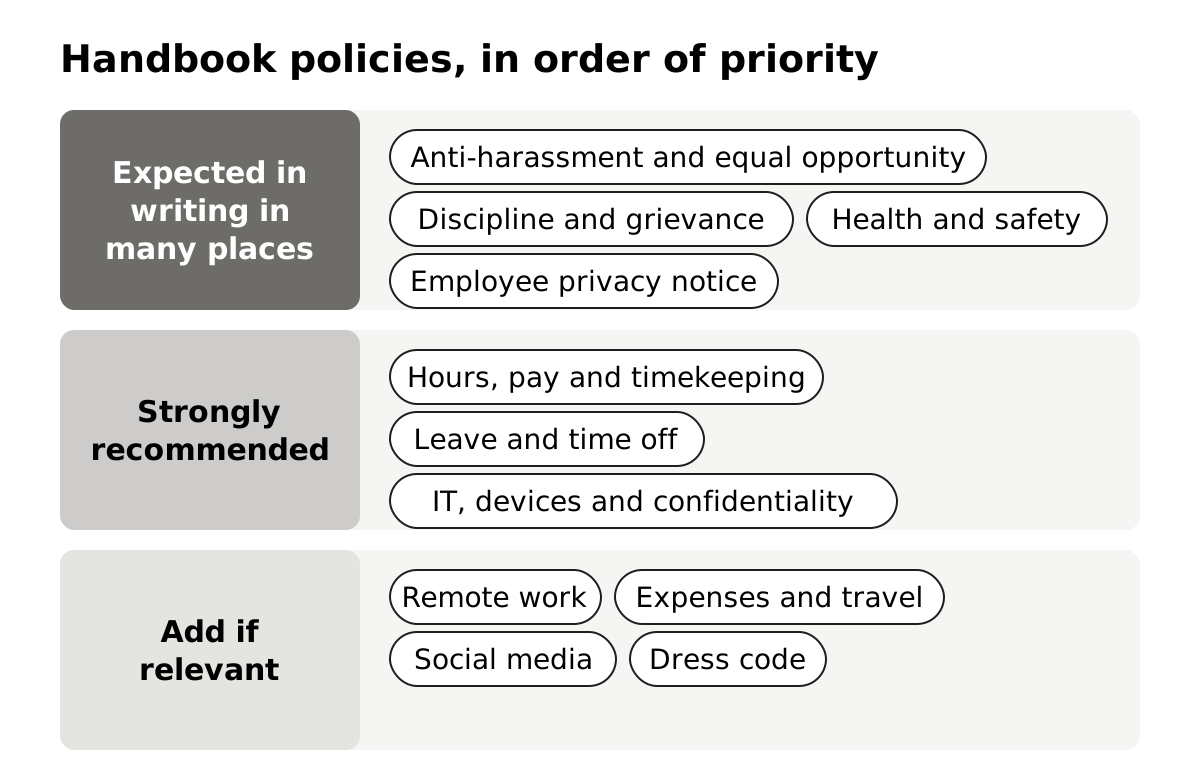
The policies to start with
Equal opportunity and anti-harassment
Say what behavior isn’t acceptable, how to report it (with at least two routes, so nobody has to report to the person harassing them), how you’ll investigate, and that nobody will be punished for reporting in good faith. In the US, having and enforcing a policy like this can help an employer defend some harassment claims, and California and New York require harassment prevention training for many employers. In the UK, employers have had a legal duty since October 2024 to take reasonable steps to prevent sexual harassment of their staff, and a written policy is one of the first things a tribunal will look for.
Discipline and grievances
Explain how performance and conduct problems are handled and how employees can raise complaints. In the UK, the written statement of employment terms has to tell employees where to find the disciplinary and grievance rules, so most businesses put them in the handbook and build the process around the Acas Code of Practice. In the US, keep it flexible. Describe the steps you usually take, but reserve the right to skip steps, so the policy doesn’t undercut at-will employment.
Hours, pay and timekeeping
Cover working hours, breaks, how time is recorded, how overtime gets approved and when payday is. For US employers with non-exempt staff, a clear rule that all hours worked must be recorded, and that off-the-clock work isn’t allowed, is basic wage-and-hour protection.
Leave and time off
Holiday or PTO, sick leave, family leave and public holidays. Local law drives almost everything here. In the US, many states and cities require paid sick leave, and federal FMLA leave applies once you have 50 or more employees. Some states, including California, treat accrued vacation as earned wages that must be paid out when employment ends, so a “use it or lose it” policy may be unlawful there. In the UK, most workers are entitled to 5.6 weeks of paid holiday a year, and EU law sets a floor of four weeks.
Confidentiality, IT and data
Set the rules on confidential information, use of company systems, personal devices and monitoring. If you monitor email or devices, say so. In the UK and EU, data protection law requires you to tell employees how their personal data is used, usually through a separate employee privacy notice. Keep the actual confidentiality obligation in the employment contract or a standalone NDA, because a handbook policy may not bind anyone on its own. A confidentiality clause in the contract is the part that does the work.
Health and safety
What to do in an emergency, how to report injuries and near misses, and any rules specific to your work. In the UK, businesses with five or more employees must have a written health and safety policy.
Keep the handbook from becoming a contract
This is where small businesses get caught. If your handbook reads like a list of promises, a court may treat parts of it as contractual. That can turn a discretionary bonus into an entitlement, or a disciplinary procedure into a checklist you must complete before dismissing anyone.
- State that the handbook isn’t a contract and that you can update it. In the US, add that nothing in it changes at-will employment.
- Keep contractual terms, like pay, notice and post-employment restrictions, in the employment contract itself.
- In the UK, be deliberate about which policies are contractual. Enhanced sick pay, for example, might be meant to bind you. Say so either way.
- Don’t disclaim everything. A commission plan, for instance, is supposed to be enforceable, and employees need to be able to rely on it.
One US-specific caution. The National Labor Relations Act protects employees’ right to discuss pay and working conditions with each other, even in workplaces with no union. Blanket rules like “don’t discuss your salary” or “never criticize the company online” can be unlawful. Narrow each rule to what you really need to protect.
Rolling it out and keeping it current
- Give everyone a copy and get a signed or electronic acknowledgment that they received it. The sign PDF tool handles a simple acknowledgment page.
- Date every version and keep the old ones. If there’s a dispute about something that happened in 2025, you’ll need the policy that applied at the time.
- Review it once a year and whenever the law changes. Leave laws change often.
- In some EU countries, notably Germany, a works council may have the right to be consulted on, or agree to, certain policies. Check before rolling out.
- If you have staff in more than one state or country, use a core handbook plus short local supplements instead of one document that tries to be right everywhere.
Next steps
If you already have a handbook, read it alongside your employment contracts and look for conflicts, like different notice periods or benefits you no longer offer. The compare text tool is handy for seeing exactly what changed between two versions. If you don’t have one yet, start with the six policies above, keep it short, and have a local employment lawyer read it before you hand it out. LegalWolf can also flag inconsistencies between a handbook and your contract templates.
This article is general information, not legal or tax advice. Laws differ between countries and states and change over time, so check the rules that apply to you or speak to a qualified professional.