Employee or independent contractor? How the law decides
The law decides by looking at how the work actually happens, not at what your contract calls it. If you control when, where and how someone works, pay them steadily for their time and fold them into your business like staff, most regulators will treat them as an employee, even if they signed a document saying “independent contractor.” The exact test depends on where the work is done, and in the US it can even change depending on which agency is asking.
Getting it wrong is expensive. Back payroll taxes, unpaid overtime, holiday pay, pension or benefits contributions, penalties and interest can all land at once, often years after the fact. It usually starts with something small: a contractor you stopped using files for unemployment benefits, and the state agency starts asking questions.
Why the label on the contract isn’t enough
Courts and tax authorities everywhere share one instinct. Substance beats form. Take Maya, who does bookkeeping for a dental practice in Phoenix. She works Monday to Friday, 9 to 5, at a desk in the office, uses the practice’s laptop and software, and gets paid a flat $4,200 a month. Her agreement says she’s an independent contractor. Nobody who looks at the facts will agree.
Compare Dev, a freelance bookkeeper who serves eleven small businesses from his own home office, sets his own hours, pays for his own software, and bills $65 an hour through his LLC. If one client leaves, he has ten others. He looks like a business because he is one.
Most real cases sit somewhere between Maya and Dev. That’s where the tests matter.
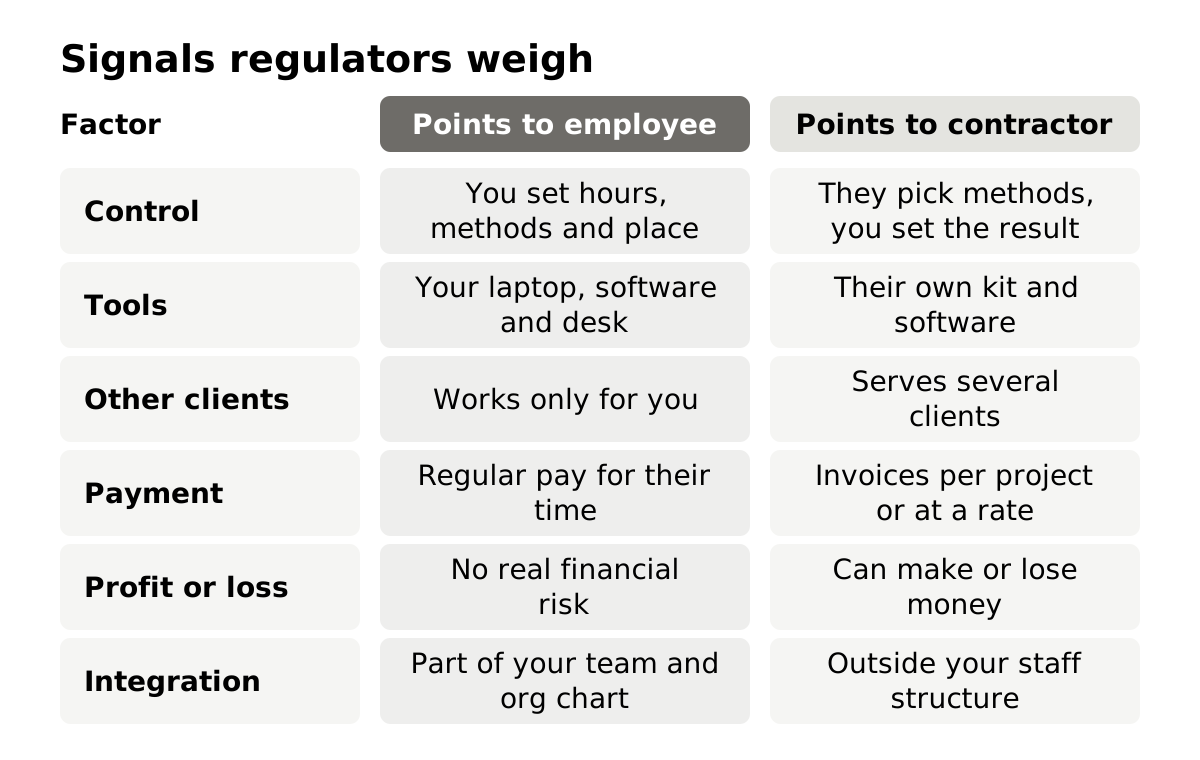
The factors almost every test looks at
The wording varies by country. The themes don’t.
- Control. Who decides how the work gets done, the hours and the location? Setting a deadline and a spec is fine. Dictating methods and schedules points toward employment.
- Financial independence. Does the worker invest in their own tools, set their own prices and carry a real chance of profit or loss?
- Other clients. Is the worker free to work for others, and do they actually do it?
- Integration. Is the person doing the core work of your business, alongside your staff, with a company email and a spot on the org chart?
- Personal service. Could they send someone else to do the job, or does it have to be them?
- Permanence. An open-ended relationship with no defined project looks more like a job than a fixed engagement with an end date.
Regulators weigh the whole picture, which is why two businesses with similar-looking arrangements can get different answers.
In the US, it depends who’s asking
This is where the US gets awkward. Different agencies use different tests, and a worker can be an employee for one purpose and a contractor for another.
The IRS
For federal tax, the IRS uses a common-law test that groups the factors into behavioral control, financial control and the relationship of the parties (benefits, permanence, and whether the work is a key part of your business). If you’re genuinely unsure, you can ask the IRS for a determination on Form SS-8, though don’t expect a quick answer.
The Department of Labor
For federal minimum wage and overtime, the Department of Labor asks whether the worker is economically dependent on you or in business for themselves. Its official guidance on how to apply that “economic reality” test has changed between administrations, so check the current position rather than relying on something written a few years ago.
State law and the ABC test
States run their own tests for unemployment insurance, workers’ compensation and wage laws, and some are much stricter. California is the best-known example. For most purposes it uses the “ABC test,” which presumes the worker is an employee and puts the burden on you to prove all three conditions. Massachusetts and New Jersey use ABC-style tests for some purposes too, and other states have their own versions.
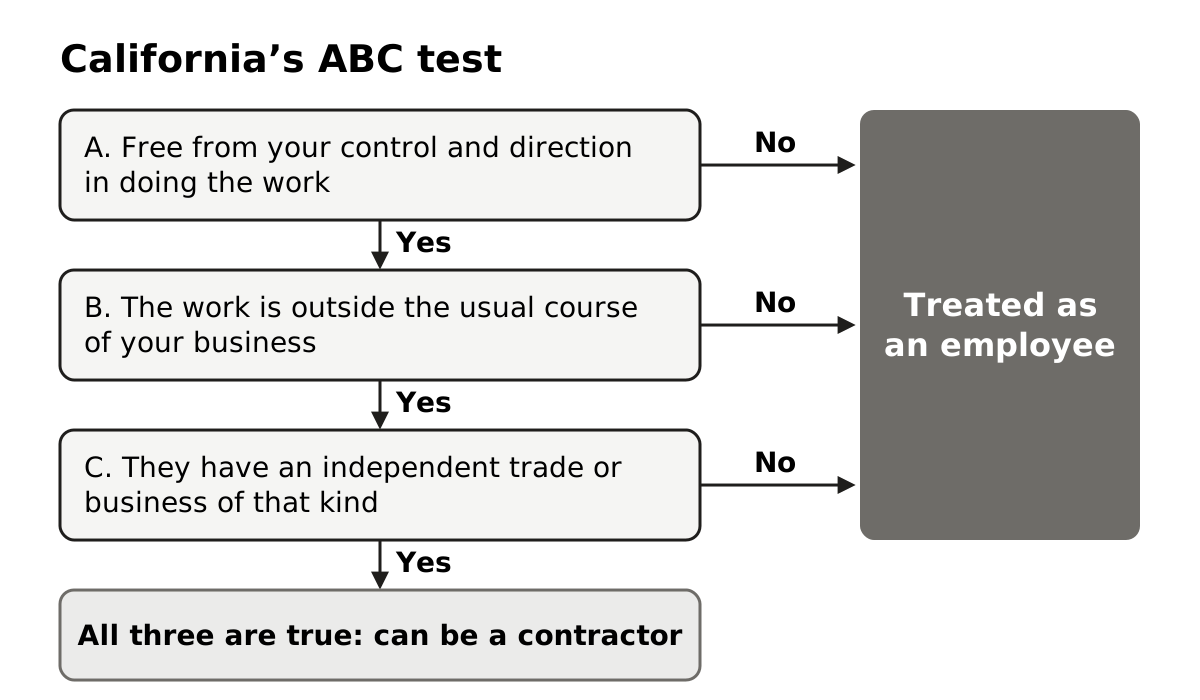
Part B catches a lot of people. A design studio in Los Angeles that hires a “freelance” designer to do design work is paying someone to do exactly what the studio sells. That’s a hard case to win. California does have exemptions for certain professions and for some business-to-business arrangements, but each comes with its own conditions.
In the UK, there are three categories, not two
UK employment law recognizes employees, workers and the self-employed. Workers sit in the middle. They don’t get the full set of employee rights, such as protection from unfair dismissal, but they are entitled to the minimum wage, paid holiday and rest breaks. Plenty of gig-economy arrangements have been found to be worker relationships even though the contract said self-employed.
Tax is a separate question. The off-payroll working rules, usually called IR35, apply when a contractor works through their own limited company. Since April 2021, medium and large private-sector clients have had to decide the contractor’s status themselves and issue a status determination statement. For small clients, the contractor’s own company still makes the call. HMRC’s online CEST tool gives a view on status. It isn’t the last word, but keep a copy of the result.
The EU, Canada and Australia
In the EU, each member state has its own test, and several (Spain, the Netherlands and Belgium among them) have been active in reclassifying platform workers. The EU Platform Work Directive, adopted in 2024, adds a presumption of employment for people working through digital platforms where there are signs of control, and member states have until late 2026 to bring it into national law.
In Canada, the CRA looks at control, who owns the tools, the chance of profit and risk of loss, and whether the worker can subcontract or hire helpers. Provinces apply their own tests for employment standards, and the answers don’t always line up with the CRA’s.
In Australia, the High Court put heavy weight on the written contract in two 2022 decisions, but Parliament amended the Fair Work Act in 2024 so that the real substance of the whole relationship, including how it works in practice, is considered. A well-drafted contract helps. It won’t rescue an arrangement that looks like employment day to day.
What misclassification costs
The bill usually includes some mix of:
- unpaid employer payroll taxes or social security contributions, plus interest
- back pay for overtime, minimum wage shortfalls or holiday pay
- missed pension, retirement or benefits contributions
- penalties, which tend to be steeper if the misclassification looks deliberate
- in some places, liability for tax you should have withheld from the worker’s pay
There’s a quieter cost too. Treating someone like staff while calling them a contractor muddies who owns their work. The default ownership rules for commissioned work differ from the rules for employees, so any contractor agreement should include a clear IP assignment.
How to set up a contractor relationship properly
- Start with the facts, not the paperwork. If the role needs fixed hours, your equipment and daily supervision, it’s probably a job. Hire an employee.
- Define deliverables, not duties. Scope the work as a project or outcome with a price, not as a list of tasks someone performs under your direction.
- Let them run their business. Their tools, their hours, their methods, their other clients. Don’t require them at staff meetings or give them a company job title.
- Pay against invoices, not timesheets. Hourly billing is fine for real freelancers, but a fixed monthly amount with no defined work looks a lot like salary.
- Put it in writing, and make the writing match reality. Our free contractor agreement template is a sensible starting point. Then look at the relationship again every six months or so, because arrangements drift.
Next steps
List everyone you pay who isn’t on payroll and run each one through the factors above. Anyone who looks more like Maya than Dev deserves a closer look, ideally with an employment lawyer or accountant in the relevant country or state. If you already have contractor agreements, you can check them for control language and missing IP terms with LegalWolf before a tax agency or an unhappy former contractor does it for you.
This article is general information, not legal or tax advice. Laws differ between countries and states and change over time, so check the rules that apply to you or speak to a qualified professional.