Force majeure in practice: what counts and how to claim it
Force majeure excuses a party from performing a contract when an event outside its control prevents or hinders performance. In most common law countries it only works if four things are true: your contract has a force majeure clause, the event falls within it, the event actually caused your failure, and you followed the clause’s notice rules. A deal that has simply become more expensive usually isn’t enough.
Everything turns on the wording
In the US, UK, Canada, Australia and other common law countries, there’s no general legal doctrine of force majeure. Its effect comes almost entirely from the contract, so two clauses with the same heading can produce very different results. Read yours word by word.
Civil law systems work differently. French law defines force majeure in its civil code. UAE law provides that an obligation can be extinguished when an external cause makes performance impossible, with separate relief where exceptional events make performance excessively burdensome. In those systems the law can help you even without a clause, although a clause can still shape how it applies.
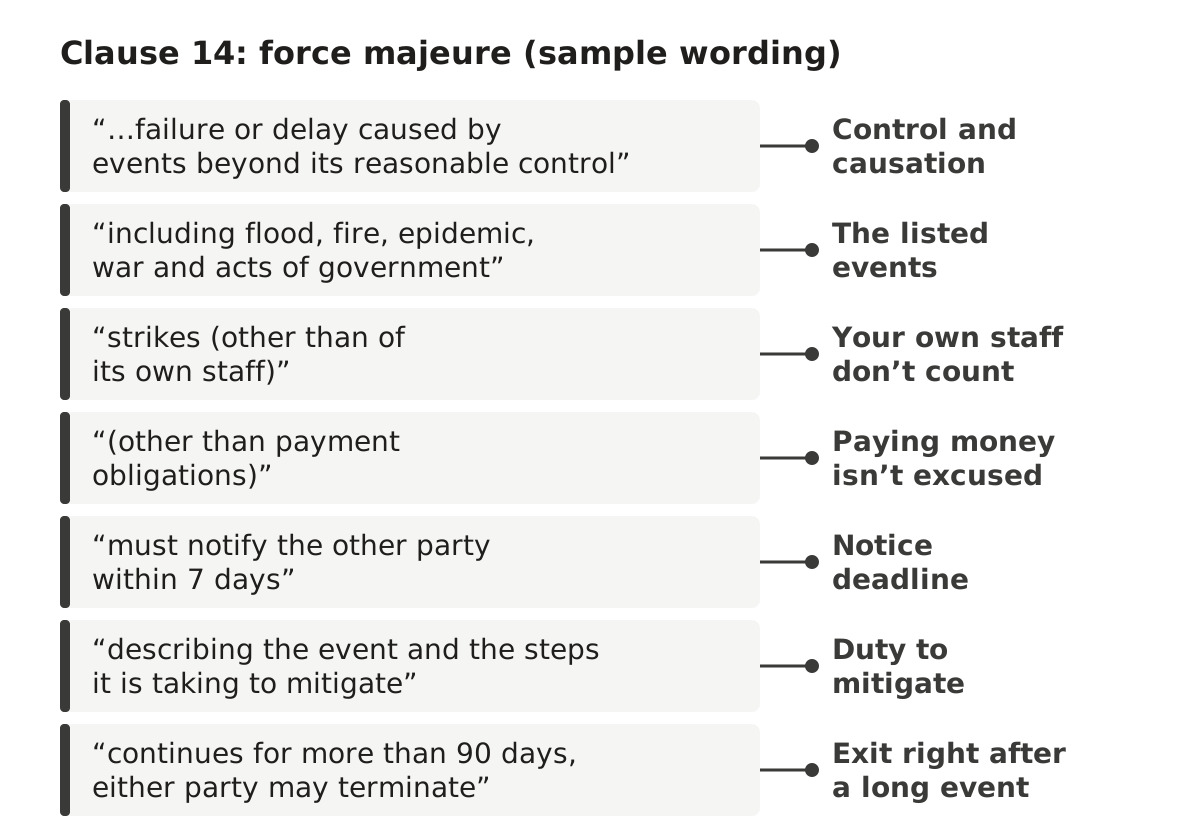
Here’s a fairly typical clause from a supply agreement, broken into the parts that matter.
What usually counts
Most clauses list specific events and then add a general catch-all. Common entries include:
- Floods, earthquakes, hurricanes, wildfires and other natural disasters
- War, terrorism, riots and civil unrest
- Epidemics and pandemics, especially in clauses written since 2020
- Government action: embargoes, sanctions, lockdowns, changes in law
- Strikes, sometimes limited to industry-wide or third-party strikes
- Failure of utilities, transport or telecoms networks
- Cyberattacks, which show up more and more in technology contracts
A catch-all like “any other event beyond the reasonable control of the affected party” can stretch coverage. Courts may still read it in light of the listed items, so an event quite unlike anything on the list could fall outside it.
What usually doesn’t
- The deal turning unprofitable. Rising material costs or currency swings generally aren’t force majeure unless the clause says so. That risk normally belongs in a price escalation clause.
- Things you could have seen coming, especially if they were already happening when you signed.
- Your own supplier letting you down, unless that failure was itself caused by a covered event and the clause extends to subcontractors.
- Paying money. Many clauses expressly exclude payment obligations, and courts are reluctant to treat a cash squeeze as prevented performance.
- Problems you caused, through carelessness or gross negligence or a failure to prepare sensibly.
What you’ll need to show
Courts reading these clauses tend to look for the same handful of elements:
- A qualifying event that falls within the list or the catch-all.
- Beyond your control. You didn’t cause it and couldn’t reasonably have prevented it.
- Causation. The event, not something else, caused the failure. If you’d have missed the deadline anyway because half your team quit, force majeure won’t save you.
- The right level of impact. Check the verbs. “Prevented” is a high bar, “hindered” or “delayed” is lower, and “impossible” is the hardest of all.
- Mitigation. You took reasonable steps to limit the damage, such as finding other suppliers or routes.
- Proper notice, given the way the clause requires.
How to claim it, step by step
Say you import furniture into Melbourne, and a port closure overseas strands three containers you promised to a hotel group for a fit-out.
Read the clause first
Find the covered events, the impact test, the notice deadline and method, any duty to mitigate, and what happens next: suspension, an extension of time, or a right to end the contract. Read the notices clause as well, since it may control how and where your notice has to go.
Send notice quickly
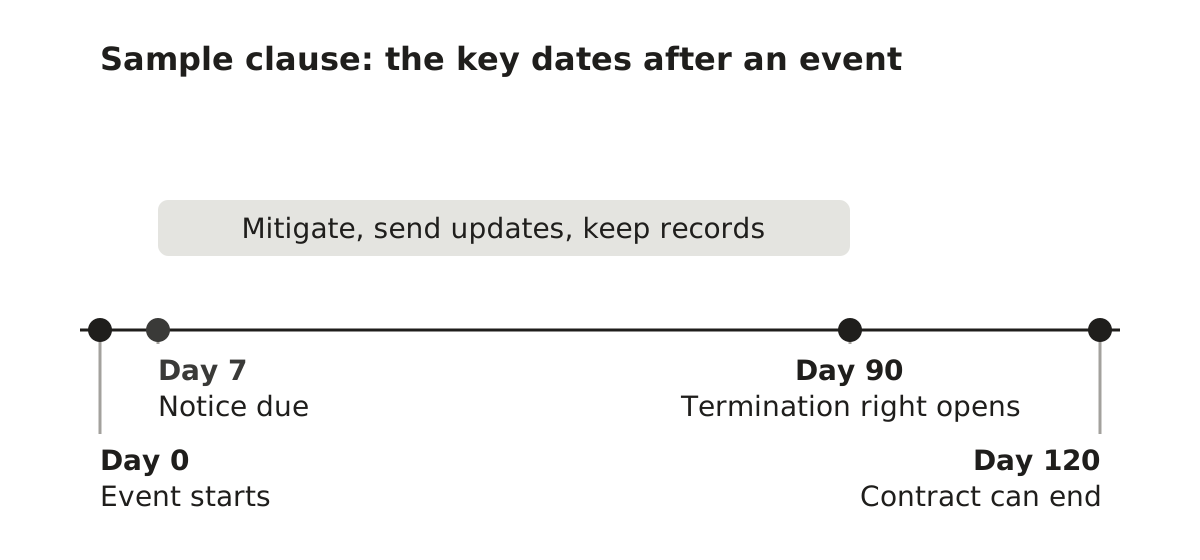
Many clauses set a short deadline, often a few days to a few weeks, and some make notice a condition of any relief at all. Miss it and you can lose the protection entirely. Your notice should describe the event, explain how it affects your obligations, estimate how long it will last and set out what you’re doing about it.
Keep the evidence
Save government orders, port closure notices, carrier emails, weather reports and your own records of what you tried. You may have to prove causation months later, to someone who wasn’t there.
Keep performing what you can
Deliver whatever you’re still able to, send regular updates, and resume in full once the event ends if the clause requires it.
Watch the exit date
Many clauses let either side terminate if the event drags on beyond a set period, commonly 60 to 180 days. Know when that right arises, whether you plan to use it or expect the other side to.
No clause, or the event isn’t covered
General law may still help, but the tests are strict.
| Doctrine | Where | Effect |
|---|---|---|
| Frustration | UK, Canada, Australia and other common law countries | The contract ends automatically if an unforeseen event makes performance impossible or radically different; it rarely succeeds |
| Impossibility or impracticability | US states, and the UCC for sales of goods | May excuse performance where an unforeseen event makes it impossible or commercially impracticable |
| Force majeure under the civil code | France, the UAE and other civil law countries | Can excuse or suspend performance |
| Hardship | Several civil law systems, including France | May allow renegotiation or court adjustment where performance becomes excessively onerous |
Common law courts set the bar high. A contract becoming more expensive, even much more expensive, generally doesn’t frustrate it.
When the other side claims it against you
- Ask for the notice in writing and check it arrived on time and in the required form.
- Check whether the event is actually covered and whether the impact test is met.
- Ask for evidence of causation and of what they’ve done to mitigate.
- Check whether the clause suspends your obligations too, such as paying for goods that never arrived.
- Reserve your rights in writing while you look into it, and line up another source if you can.
Next steps
If an event is hitting your ability to perform, read the clause today, note the notice deadline and send a clear notice promptly. The deadline calculator helps you track notice and termination dates. If you’re on the receiving end, test the claim against the clause before accepting it. You can pull out and compare the force majeure clauses across your contracts with LegalWolf.
When you next negotiate, check that the clause lists events relevant to your business, says whether payment is excluded, sets a workable notice period, and fits with your limitation of liability, insurance and termination terms. For high-value contracts or long disruptions, get legal advice early, because the notice you send in the first week often decides the outcome.
This article is general information, not legal or tax advice. Laws differ between countries and states and change over time, so check the rules that apply to you or speak to a qualified professional.