What every founders’ agreement should cover
A founders’ agreement should settle who owns what, how that ownership is earned over time, who makes which decisions, who owns the work, and what happens when a founder leaves. The last point matters most. Most co-founder fights come down to someone walking away with a big slice of the company after a few months, and nobody having written down what should happen.
The paperwork goes by different names. In the US it might be a founders’ agreement, restricted stock purchase agreements with vesting, or an LLC operating agreement. In the UK the rules usually sit in a shareholders’ agreement alongside the company’s articles of association. Don’t get hung up on the label. What matters is what the documents actually say.
Sign it before the company is worth anything
The best time to sign is the week you incorporate, when the shares are worth almost nothing and nobody has a grievance. Wait a year and every clause turns into an argument about the past: who worked harder, who put in more cash, whose idea it was.
Dana and Marcus started a scheduling app in Austin on a 50/50 split and a handshake. Eight months in, Marcus took a job at a bank. He still owned half the company. When Dana went to raise a seed round, investors wouldn’t touch a cap table where a departed founder held 50%, and she ended up buying him out at a price that stung. With standard vesting and a one-year cliff, Marcus would have left with nothing.
The split and how it’s earned
Equal splits feel fair and skip an awkward conversation, which is why they’re so common. They aren’t always wise. If one founder is full-time and the other is keeping a day job, or one arrived with a working prototype, an unequal split may reflect reality better. The test is whether everyone could explain the split a year from now without resentment.
Vesting and the cliff
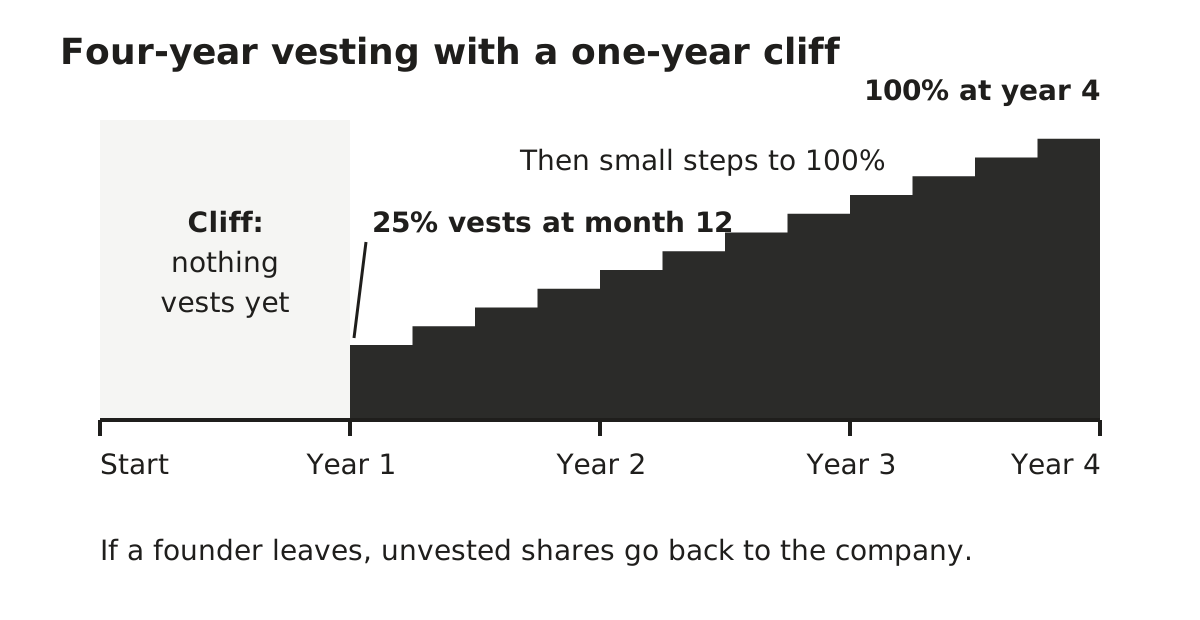
Vesting means founders earn their shares over time instead of owning them outright on day one. The usual startup pattern, especially in the US, is four years with a one-year cliff: nothing vests for the first 12 months, 25% vests at the one-year mark, and the rest vests monthly or quarterly over the following three years. If a founder leaves, the company can buy back the unvested shares, usually at the original tiny price.
In the US, founders who receive shares subject to vesting usually file an 83(b) election with the IRS within 30 days of the grant. Miss that window and you can face income tax on the value as each batch vests, which gets painful if the company takes off. There’s no extension, so put the deadline in your calendar the day you sign. Other countries have their own rules for taxing founder shares, so check locally.
Think about acceleration too: whether vesting speeds up if the company is sold (“single trigger”) or only if it’s sold and the founder is then pushed out (“double trigger”). Investors tend to dislike single trigger acceleration, since a buyer can end up paying for a team with no reason to stay.
Roles, time and money
Write down who does what and how much time each founder is putting in. It feels bureaucratic. It’s also what founders argue about most. A sentence like “Marcus will work full-time on the company from 1 March and won’t take other paid work without the board’s approval” heads off a lot of grief.
- Titles and areas of responsibility (product, sales, finance).
- Time commitment, and what happens if it drops.
- Salaries, if any, and when they start.
- Cash each founder puts in, and whether it’s for shares or a loan.
- Spending limits: who can commit the company to what without asking.
Who owns the work
Everything a founder builds for the business (code, designs, the brand, customer lists) should belong to the company, including anything made before the company existed. Without a written IP assignment, a departing founder may still own the code they wrote at the kitchen table, and investors will find that gap in due diligence.
Day jobs are the other trap. If a founder is still employed, their employment contract may give the employer rights over what they create, sometimes even outside working hours. Read it before they write a line of code. Our free IP assignment template handles the basic transfer to the company.
Decisions and deadlock
Day-to-day calls can sit with whoever runs that area. Big decisions need a clear rule. Most agreements list “reserved matters” that need every founder, or a set majority, to agree: issuing new shares, borrowing above a threshold, selling the company, changing what it does, hiring or removing a founder.
With two founders at 50/50, deadlock is a real risk. You can give someone a casting vote, agree to bring in a named adviser or go to mediation, or as a last resort use a buy-sell mechanism in which one founder names a price and the other must either buy or sell at it (often called a “shotgun” clause). Shotgun clauses are blunt. They favor whoever has more cash.
When a founder leaves
Spend the most time here. A good agreement treats different exits differently.
| Situation | Common approach |
|---|---|
| Founder quits before the cliff | No shares have vested, so all of them return to the company |
| Founder leaves on good terms after the cliff (a “good leaver” in UK terms) | Keeps vested shares; the company can buy back unvested ones at cost |
| Founder removed for serious misconduct (a “bad leaver”) | Company may buy back some or all shares at a low price, subject to local law |
| Death or long-term illness | Usually treated as a good leaver; some teams fund buyouts with insurance |
Pair this with transfer restrictions, so founders can’t sell or give shares to outsiders without first offering them to the company or the other founders. Add confidentiality and, where it’s enforceable, a non-solicitation clause. Go carefully with non-competes. California generally won’t enforce them, and many other places limit their scope and length, particularly where the founder is also an employee.
If someone wants to buy you
Two clauses matter when a buyer shows up. Drag-along lets a majority require minority holders to sell on the same terms, so one holdout can’t block a sale. Tag-along lets minority holders join any sale on the same terms, so a majority founder can’t sell out and leave the others stuck with a stranger.
Getting it done
- Sit down together and agree the business points in plain English: split, vesting, roles, cash, decisions, departures.
- Have a lawyer turn them into documents that fit your entity and country. Templates are a fine starting point, but the vesting mechanics have to match your company’s constitution and share rules.
- Sign IP assignments at the same time.
- If you’re in the US, calendar the 83(b) deadline.
- Expect to revisit it when you raise money. Investors will ask for changes anyway.
If you’re reviewing a draft someone else prepared, you can run it through LegalWolf to flag missing vesting, IP or leaver terms before anyone signs.
This article is general information, not legal or tax advice. Laws differ between countries and states and change over time, so check the rules that apply to you or speak to a qualified professional.