Freelancer taxes: how much to set aside and when to pay
Most freelancers should move 25% to 35% of every payment into a separate account the day it arrives, and pay tax in instalments during the year instead of in one lump at the end. The exact percentage depends on your income, where you live and whether you charge VAT or GST. The timing depends on your country: US freelancers usually pay quarterly estimates, UK freelancers pay twice a year through Self Assessment, and Canada and Australia use their own instalment systems.
Nobody withholds tax for you when you work for yourself. That’s the whole problem in one sentence.
Why freelancers get caught out
As an employee, tax comes out of your pay before you see it. As a freelancer, a client pays you $4,800 and all of it lands in your account. It feels like your money. About a third of it isn’t.
The first year is the worst. In the US, you can owe a full year of tax in April plus an underpayment penalty for not paying during the year. In the UK, your first bill often arrives alongside your first advance payment for the next year, so you pay roughly one and a half years of tax on a single day in January. People who haven’t been saving find this out the hard way.
How much to set aside
Your set-aside needs to cover three things:
- Income tax on your profit (income minus allowable expenses).
- Social contributions: self-employment tax in the US, Class 4 National Insurance in the UK, CPP contributions in Canada.
- VAT, GST or sales tax if you’re registered. This was never your money, so put 100% of it aside.
For US freelancers, self-employment tax is 15.3% on 92.35% of your net earnings from self-employment: 12.4% for Social Security (up to an annual wage cap) and 2.9% for Medicare. That’s on top of federal income tax and any state income tax.
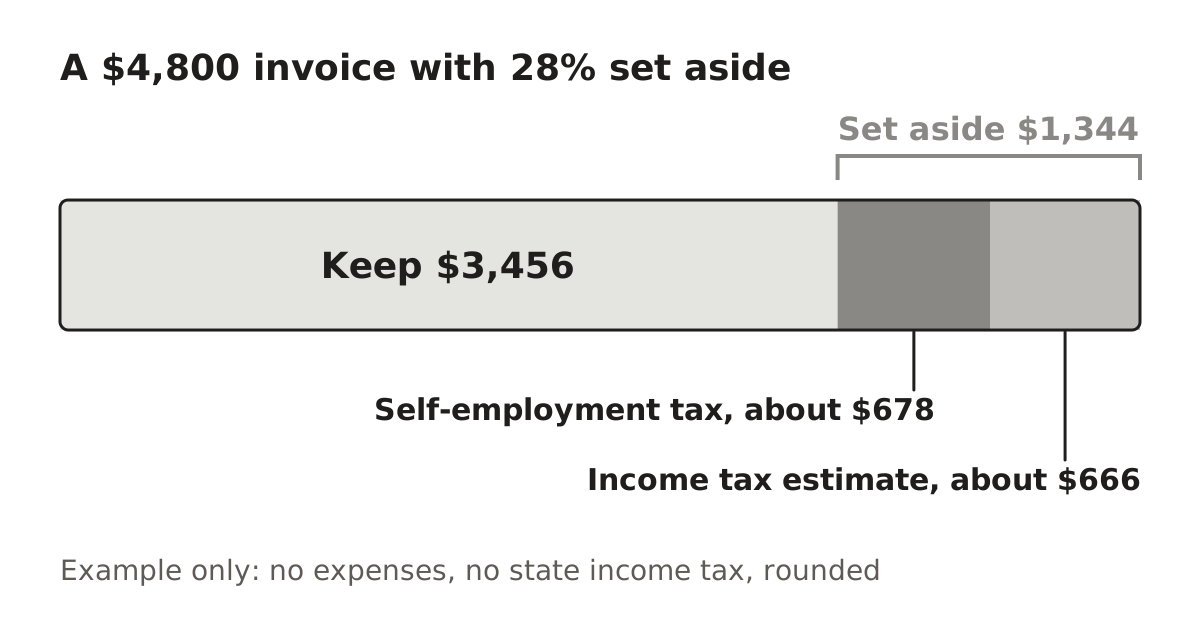
Take Maya, a UX designer in Austin. She invoices a client $4,800. Texas has no state income tax, and at her income level a set-aside of about 28% covers her federal income tax and self-employment tax. So $1,344 goes into her tax account and $3,456 is hers to spend.
In the UK, a copywriter in Leeds earning profits in the basic-rate band pays 20% income tax plus 6% Class 4 National Insurance (as of the 2025/26 tax year) on profit above the personal allowance. Setting aside 25% to 30% of each payment is a sensible starting point. If she’s VAT registered, the £600 of VAT on a £3,000 invoice goes into the pot as well, all of it.
| Your situation | A reasonable starting set-aside |
|---|---|
| Modest profits, low-tax or no-income-tax state or region | 20% to 25% |
| Mid-range profits, typical income tax | 25% to 30% |
| Higher profits or a high-tax state or province | 30% to 40% |
| VAT, GST or sales tax you charge | 100% of the tax amount |
These are starting points, not answers. After your first full year, look at what you actually paid as a share of what you invoiced and adjust. Our tax set-aside calculator gives you a quick estimate from your expected income.
When to pay in the US
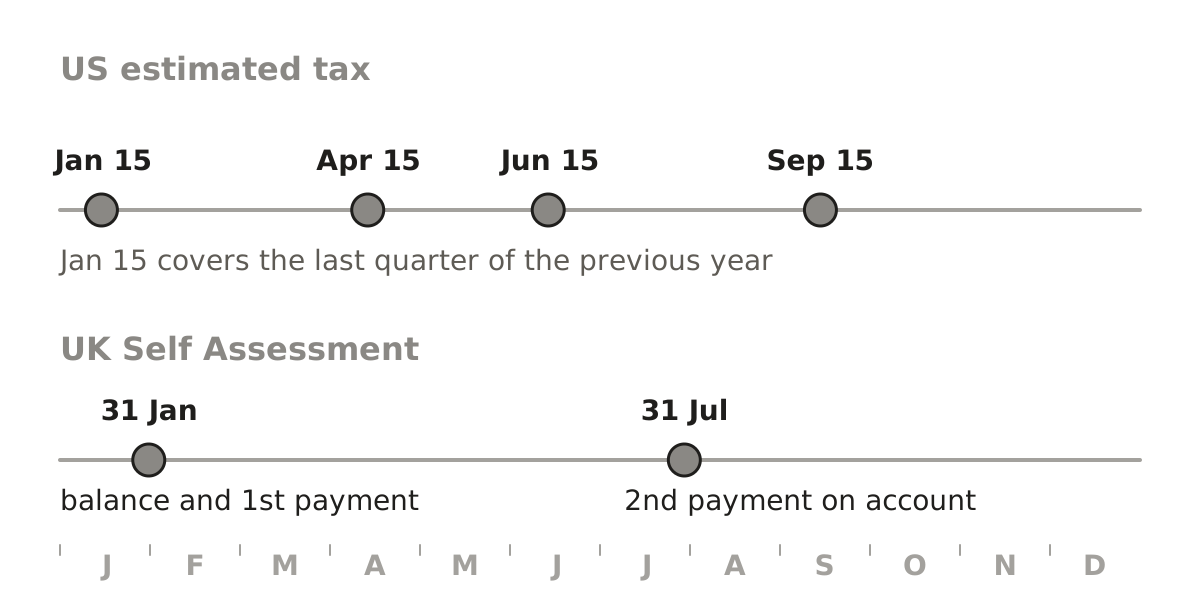
The IRS expects you to pay during the year through quarterly estimated tax if you expect to owe $1,000 or more for the year. The due dates are April 15, June 15, September 15 and January 15 of the following year, moving to the next business day when they fall on a weekend or holiday. Most states with an income tax have their own estimated payments on similar dates.
You can avoid the underpayment penalty by paying at least 90% of this year’s tax or 100% of last year’s total tax through your estimates. If last year’s adjusted gross income was over $150,000, the prior-year figure goes up to 110%. The prior-year route is popular because you know the number in advance.
When to pay in the UK
Once you start trading, you need to register for Self Assessment by 5 October after the end of the tax year you started in. The UK tax year runs from 6 April to 5 April. Your online return and any balance owed are due by 31 January after the tax year ends.
If your last bill was more than £1,000 (and less than 80% of your tax was collected at source), you also make payments on account toward next year’s bill: half on 31 January and half on 31 July. Each one is half of the previous year’s bill.
Here’s the first-year shock in numbers. The Leeds copywriter’s first year leaves her owing £6,000. On 31 January she pays that £6,000 plus a first payment on account of £3,000 for the current year, so £9,000 in one go. Then another £3,000 on 31 July. If she’s been setting aside 28% from day one, that’s fine. If she hasn’t, it’s a very bad month.
Canada and Australia
Canada
Self-employed people generally file by June 15, but any balance owing is still due by April 30. The CRA will ask for quarterly instalments (March 15, June 15, September 15 and December 15) if your net tax owing is more than $3,000 ($1,800 in Quebec) in the current year and in either of the two previous years. You also pay both the employee and employer shares of CPP contributions on your self-employment income, which surprises a lot of new freelancers.
Australia
Once you have business income, the ATO will usually put you into the pay as you go (PAYG) instalment system and send you quarterly notices. The Medicare levy sits on top of income tax. If your GST turnover reaches A$75,000, you register for GST and report it on your business activity statement.
A simple system that works
- Open a separate savings account and call it “Tax”. Don’t link a card to it.
- Every time a client pays, move your percentage across the same day, plus any VAT or GST in full.
- Put every tax deadline for the next 12 months in your calendar now.
- Once a quarter, compare what’s in the account with what you expect to owe, and top up if needed.
- Keep your receipts and invoices in one place as you go, not in a shoebox in January.
We’d go further: the separate account does more good than any spreadsheet. Money you can’t see doesn’t get spent. It also helps to get paid on time: clear payment terms and a right to late payment interest in your contracts make the cash flow more predictable. A proper contractor agreement should state both.
Next steps
- Pick a starting percentage from the table above and apply it to your next payment.
- Check whether you’re registered with your tax authority as self-employed, and by when you need to be.
- Write down every payment date for your country for the coming year.
- Check your turnover against the VAT or GST threshold where you live.
- Book time with an accountant before your first return. They’ll often save you more than they charge.
This article is general information, not legal or tax advice. Laws differ between countries and states and change over time, so check the rules that apply to you or speak to a qualified professional.