Hiring remote workers in other countries: the legal basics
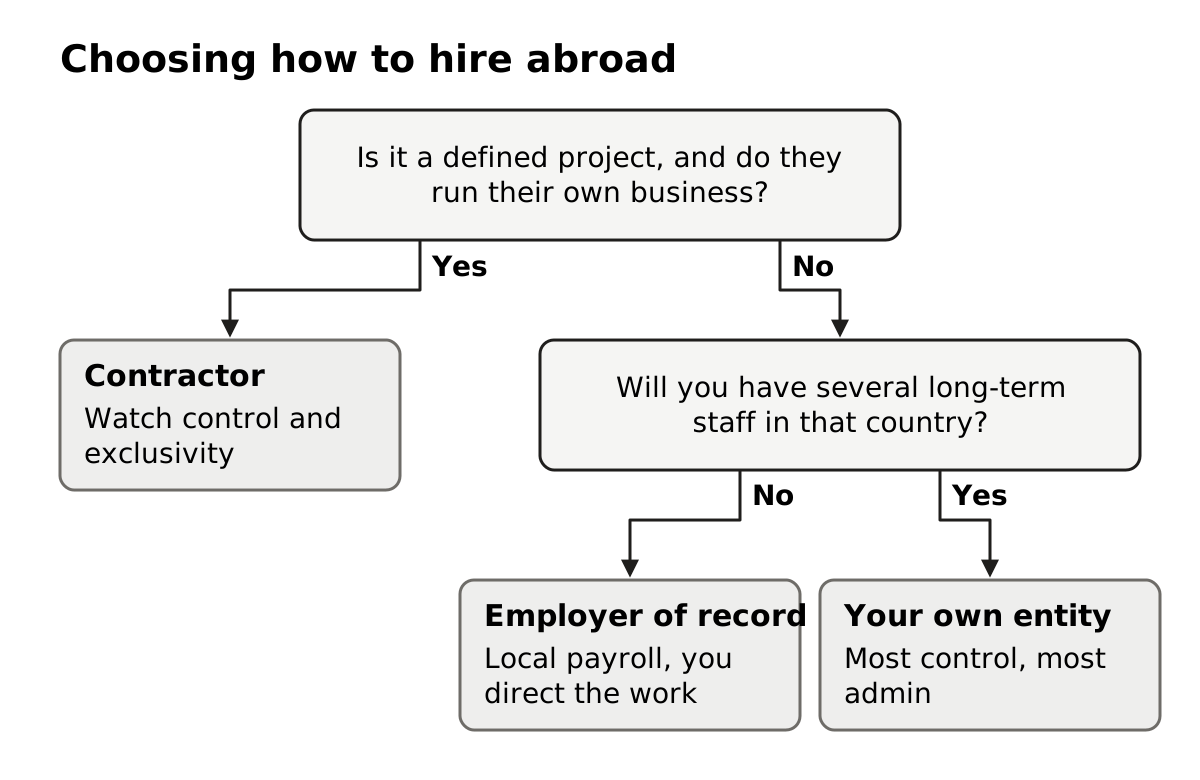
When you hire someone who works in another country, that country’s employment, tax and social security rules generally apply to them, wherever your company is based. You have three main ways to do it: engage them as an independent contractor, employ them through an employer of record (EOR) that runs local payroll and compliance, or set up your own local entity. For one or two people, contractors and EORs are the usual choices. Which one fits depends on how much control you need and how long the arrangement will last.
Plenty of small companies start by paying a developer in Lisbon or a marketer in Manila through a payments app and calling it done. That works for genuine freelance projects. It becomes a problem when the “freelancer” works full time for you, for years, taking direction like everyone else on the team.
Option one: an independent contractor
This is the simplest and cheapest setup. The person invoices you, handles their own taxes, and you pay in whatever currency you agree. It fits real project work: a brand identity, a mobile app build, six months of translation alongside their other clients.
The risk is misclassification under the worker’s local law. Most countries look at the same things: control over hours and methods, integration into your team, exclusivity, and whether the person genuinely runs their own business. If a local authority or court decides they were an employee, you can owe back social security contributions, holiday pay, severance and penalties, and not having an office in that country doesn’t necessarily get you off the hook. Our article on employee versus contractor status walks through the tests, and the contractor agreement template is a reasonable starting point for the paperwork.
Option two: an employer of record
An EOR is a company that already has a local entity in the worker’s country. It becomes the legal employer: it runs payroll, withholds tax, pays social security, provides mandatory benefits and issues a locally compliant employment contract. You direct the day-to-day work and pay the EOR a fee on top of salary and employer costs.
Fees vary by provider and country, commonly a few hundred dollars per employee per month as of 2025, plus the real employer costs, which in parts of Europe add a sizeable percentage on top of gross salary. Compared with the cost of a misclassification claim, it’s often money well spent for anyone who looks and acts like staff.
Read the EOR agreement closely. Check how the employee’s work product passes to you, how termination is handled and who pays for it, what happens to the employee if you switch providers, and the EOR’s limitation of liability. Ask whether the EOR has its own entity in that country or subcontracts to a local partner you know nothing about.
Option three: your own local entity
A subsidiary or branch gives you full control, and at some point, usually once you have a handful of people in one country, it becomes cheaper than an EOR. It also brings local incorporation, a registered address, accounting, payroll, corporate tax filings and ongoing compliance. It’s a step for when a country is a real market or team base for you, not for a single hire.
Whose law applies
Many employers assume they can pick their home law in the contract and be done with it. It doesn’t work that way. You can often choose the governing law of the contract, but the worker usually keeps the protection of the mandatory employment rules where they normally work. In the EU, that principle is built into the rules on which law governs employment contracts. Minimum wage, working time, holiday, dismissal protection and anti-discrimination rules tend to be in that mandatory group.
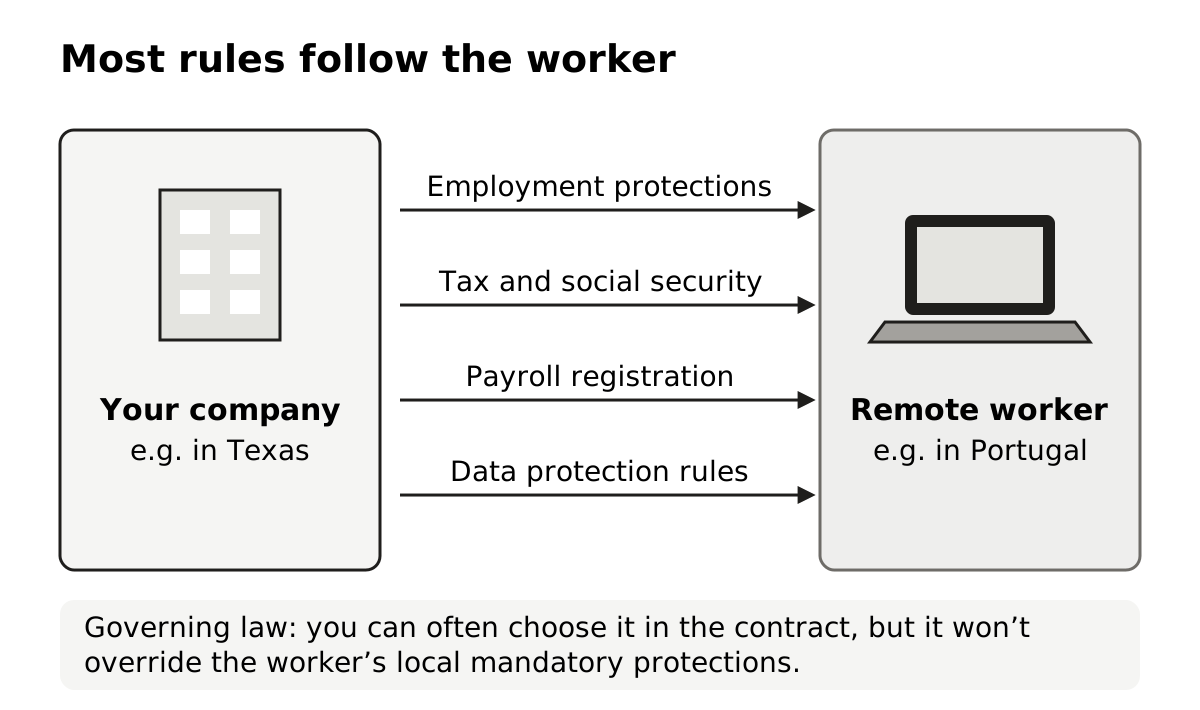
Tax and social security follow the worker too. As the employer, or through an EOR, you may need to register for payroll in their country. Some countries have social security agreements that decide which system applies in cross-border cases, but they’re mostly aimed at people posted abroad temporarily, not permanent remote hires.
The traps people miss
Permanent establishment
If a remote employee regularly negotiates or signs contracts for you, or works from what looks like a fixed place of business for your company, the local tax authority may decide your company has a “permanent establishment” there and owes corporate tax. Tax treaties and local rules decide exactly where that line sits. If someone abroad is closing deals for you, take tax advice before it becomes a habit.
Intellectual property
Ownership rules for work made by employees and contractors differ by country. Some require specific wording or formalities for an assignment, some give creators moral rights that can’t be fully waived, and some require compensation for employee inventions (Germany is the usual example). Use a written IP assignment checked for the country concerned, and make sure any EOR agreement passes ownership through to you.
Data protection
If your hire is in the EU or UK, their own personal data is protected by the GDPR or UK GDPR. If they access your customers’ data from another country, think about data transfer rules as well.
Immigration
Hiring someone to work remotely from their own country usually doesn’t need a visa. Relocating them, or letting them work from a third country for months, might. Several countries offer digital nomad visas, but those come with conditions and don’t settle the tax and employment questions.
Before you make the offer
- Decide whether the role is really a project (contractor) or a job (EOR or entity).
- Check the worker’s country for mandatory employment terms, notice periods and severance.
- Confirm who handles payroll tax, social security and any local registrations.
- Get a written contract with IP assignment, confidentiality and data protection terms that suit that country.
- Think about permanent establishment risk for any role involving sales or signing contracts.
- Agree the currency, payment method, and who bears exchange rate and transfer costs.
- Put a review in the diary for six months out. A contractor who was doing one project in January can be a de facto employee by December.
Next steps
If you already have people abroad, list each one with their country, how they’re engaged, their weekly hours for you and how long they’ve been working with you. Anyone full time and long term on a contractor agreement is the first conversation to have with a local advisor or an EOR. If you’re reviewing EOR or contractor paperwork, LegalWolf can highlight the IP, liability and termination terms worth questioning.
This article is general information, not legal or tax advice. Laws differ between countries and states and change over time, so check the rules that apply to you or speak to a qualified professional.