How long to keep business and tax records
For most small businesses, keeping tax records for at least six to seven years is a safe default, and in several countries it’s close to the legal minimum. The US generally requires three years from filing, but longer in some situations. The UK asks companies for six years and sole traders for at least five years after the filing deadline. Canada requires six years, Australia five, and some EU countries up to ten. Records about assets, contracts and your company itself should be kept longer, sometimes permanently.
The hard part isn’t the number. It’s knowing when the clock starts, and which records fall outside the normal rule.
The minimum periods by country
| Country | Typical minimum for tax records (as of 2025) |
|---|---|
| US | Generally 3 years from filing; 6 years if you underreported income by more than 25%; 7 years for a bad debt or worthless securities claim; employment tax records for at least 4 years; indefinitely if no return was filed or it was fraudulent |
| UK companies | 6 years from the end of the last company financial year they relate to, longer in some cases |
| UK sole traders | At least 5 years after the 31 January submission deadline for that tax year |
| UK VAT and payroll | VAT records generally 6 years; payroll records 3 years from the end of the tax year |
| Canada | 6 years from the end of the last tax year they relate to |
| Australia | 5 years, generally from when you prepared or obtained the records or completed the transactions, whichever is later |
| Germany | Up to 10 years for core accounting records, shorter for some other documents |
| France | 6 years under tax rules, with accounting documents often kept 10 years under commercial rules |
| UAE | 7 years after the end of the tax period for corporate tax; VAT records generally 5 years, longer for real estate |
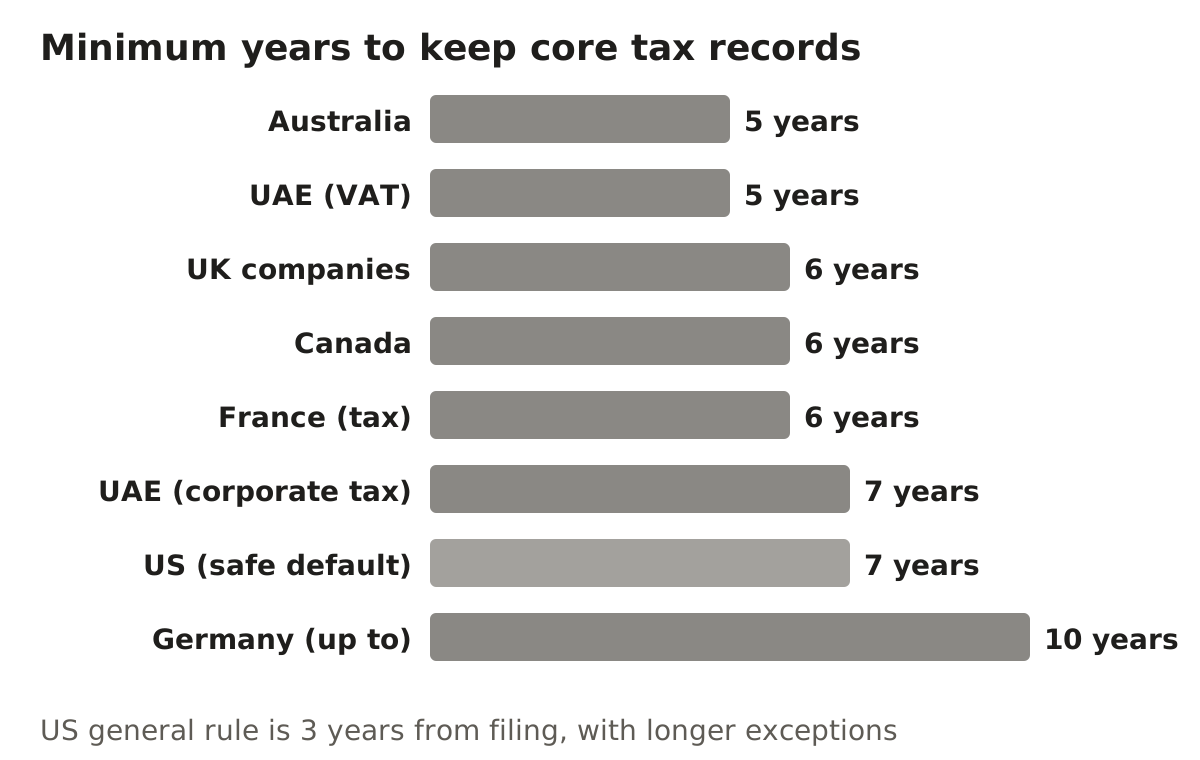
US states can have their own, sometimes longer, periods for state tax. That’s one reason many US accountants tell clients to keep everything for seven years rather than three. We agree. Three years is the rule, but the exceptions are common enough that seven is the sensible habit.
When the clock actually starts
The period usually runs from the end of the tax year, the filing date or the filing deadline, not from the date on the receipt. That can add a year or more to how long you keep a document.
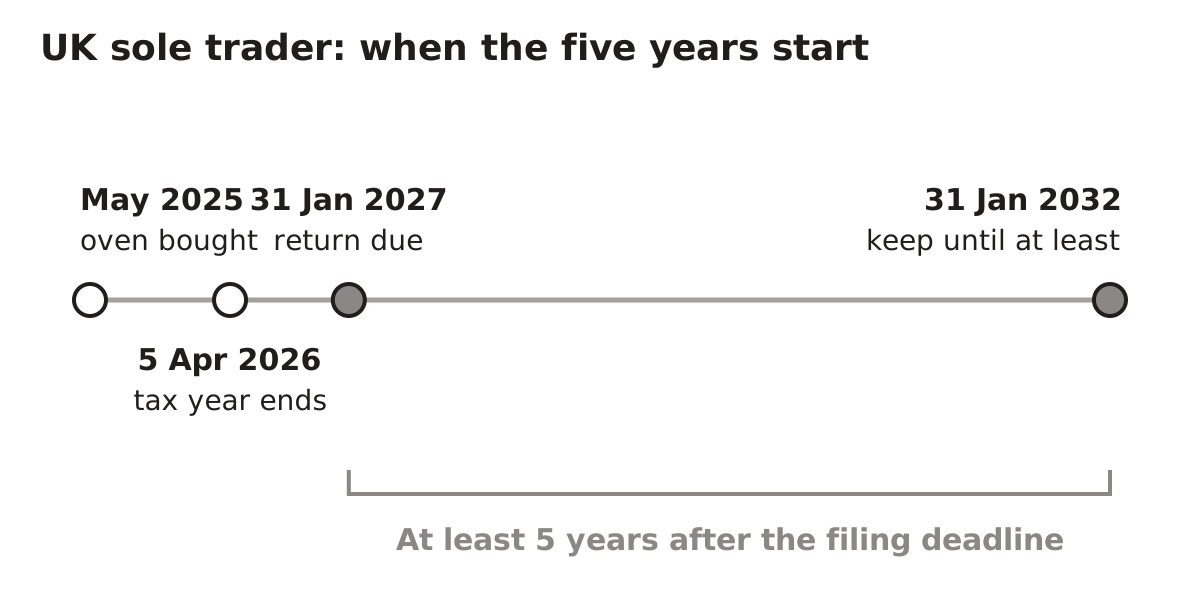
Take a bakery in Leeds run as a sole trader. A receipt for a new oven dated May 2025 falls in the 2025/26 tax year, which ends on 5 April 2026. The return for that year is due by 31 January 2027, and the records have to be kept for at least five years after that, so until at least 31 January 2032. That’s nearly seven years after the purchase.
Records you should keep longer
Some documents need to outlive the normal tax period because they affect later years or other legal rights.
- Asset records. Keep purchase records for equipment, vehicles and property for as long as you own them, plus the normal period after you sell. You’ll need the cost figures to work out any gain or loss on sale.
- Loss records. If you carry a tax loss forward, keep the records for the year of the loss until the loss has been used up and that later year is closed.
- Contracts. Keep signed contracts for the whole term, plus the limitation period for claims under them, which is often six years in England and Wales for simple contracts and varies by state in the US. Some obligations continue after the end date under a survival clause.
- IP documents. Keep IP assignments and licences permanently. If someone challenges who owns your logo or code in ten years, that’s your proof.
- Company records. Formation documents, share registers, minutes and major resolutions are usually kept for the life of the company.
- Employment records. These have their own periods under employment and payroll law, which can differ from the tax rules.
Paper, scans and cloud storage
Most tax authorities, including the IRS and HMRC, accept digital copies of records as long as they’re complete, legible and can be produced when asked. Some countries have extra rules about the format or where electronic records are stored, so check before you shred original paper documents.
Plan for how you’ll get records back years from now. Accounting apps get discontinued, subscriptions lapse, and a login from 2026 may not work in 2032. Export your records at year end into a format you control, such as PDFs and spreadsheets, and keep a backup somewhere separate. You can shrink scans with our PDF compressor, combine a year of receipts with merge PDF, and lock sensitive files with protect PDF.
Don’t keep personal data forever
Keeping everything forever creates its own problem. Under data protection laws such as the GDPR in the EU and UK, you shouldn’t hold personal data longer than you need it. A legal duty to keep tax records justifies keeping them for the required period, not indefinitely. After that, delete or anonymise records that contain personal data, like old payroll files or customer details, unless you have another good reason to keep them.
A simple retention schedule
- List the main types of records you keep: sales invoices, purchase receipts, bank statements, payroll, contracts, company documents.
- Next to each, write the period that applies in your country and when it starts.
- Add a longer period for anything tied to assets, losses, contracts or IP.
- Store each year’s records in one folder, named by tax year.
- Once a year, delete the folders whose period has ended, after checking nothing inside is still needed.
Next steps
Start with this year’s records: make sure invoices, receipts and bank statements are all saved in one place, with a backup. Then check the rule for your country and business type, and put a yearly reminder in your calendar to review and clear out old folders. If you’re under audit or in a dispute, don’t delete anything related until it’s fully resolved, even if the normal period has passed.
This article is general information, not legal or tax advice. Laws differ between countries and states and change over time, so check the rules that apply to you or speak to a qualified professional.