Mediation: how it works and how to prepare
Mediation is a confidential negotiation run by a neutral mediator who helps both sides reach their own settlement. The mediator doesn’t decide who’s right and can’t impose anything. Nothing binds you unless you sign a settlement agreement. It usually takes a day or less, costs a fraction of going to trial, and a large share of the commercial disputes that go through it settle.
How it differs from the other routes
| Negotiation | Mediation | Arbitration | Court | |
|---|---|---|---|---|
| Who decides | The parties | The parties, with a mediator’s help | The arbitrator | The judge |
| Binding? | Only if agreed | Only once a settlement is signed | Yes | Yes |
| Private? | Yes | Yes, and usually confidential | Usually private | Generally public |
| Typical length | Varies | Half a day to a few days | Months to years | Months to years |
The real difference is control. In court or arbitration, someone else decides. In mediation you accept only a deal you can live with, and you can build in things a judge could never order: a revised contract, a discount on next year’s work, an agreed statement for your customers.
When it makes sense
Mediation tends to work best when:
- Both sides would gain from keeping the relationship, such as a key supplier or a long-term client
- The dispute is part money and part misunderstanding or broken trust
- The cost of fighting is out of proportion to what’s at stake
- Neither side can be sure how a court would rule
- Privacy matters to one or both of you
It works less well when one side is acting in bad faith, when you need an urgent court order such as an injunction, or when you want a public ruling that deters others.
Sometimes you won’t have a choice. Many contracts include a mediation clause or a tiered dispute escalation process that requires mediation before arbitration or court. Courts push parties toward it too. In England and Wales, courts can order parties to try alternative dispute resolution and can penalize an unreasonable refusal in costs, and most defended small money claims are now referred to a free, short telephone mediation. Many US courts require mediation for certain civil cases, and court-connected programs are common in Canada and Australia.
What the day looks like
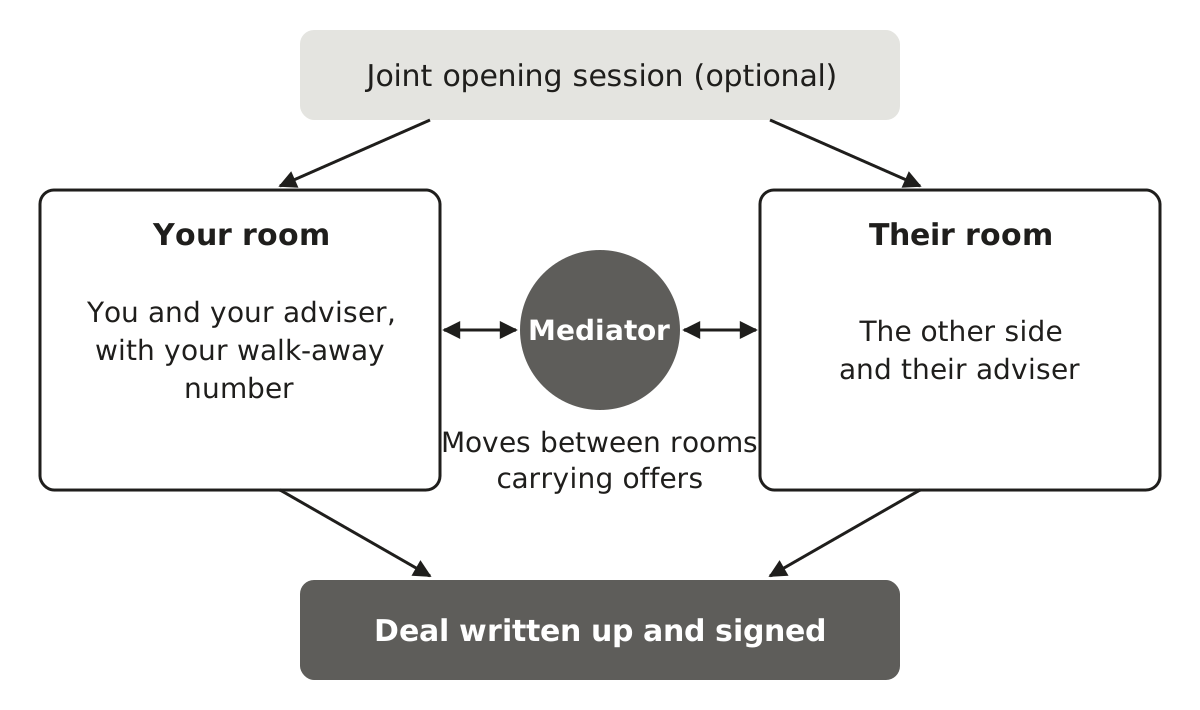
Formats vary, but a typical commercial mediation, in person or by video, runs something like this.
Before the day
You agree on a mediator and sign a mediation agreement covering fees, confidentiality and the mediator’s role. Each side sends a short position paper and the key documents. Good mediators often have a private call with each side beforehand to understand what’s really going on.
The opening
The mediator explains the process, and each side may give a brief opening statement. Some mediators skip the joint session entirely when feelings are running high.
Private sessions
This is where most of the day goes. Each side sits in its own room, and the mediator moves between them. What you say in private is typically confidential and won’t be passed on unless you allow it. Expect the mediator to test your case, ask awkward questions about risk, and carry offers back and forth.
Settlement
If you reach a deal, write it down and sign it before anyone leaves. A settlement that exists only as a handshake at 7pm can fall apart by the morning. Once signed, it’s typically enforceable as a contract, and where a court case is already underway it can often be turned into a court order. For cross-border deals, the Singapore Convention on Mediation provides a framework for enforcing international mediated settlements in countries that have ratified it, though far fewer countries have signed up to it than to the equivalent convention for arbitration awards.
What stays confidential
Confidentiality is what lets people speak candidly. It comes from a mix of the mediation agreement, the rules on settlement discussions and, in many places, specific legislation. Several US states have adopted a uniform mediation law that creates a privilege for mediation communications, and for cross-border mediations EU rules protect mediators from being forced to give evidence, subject to limited exceptions.
It isn’t absolute. Exceptions can apply to threats of harm, to fraud, and to evidence that exists independently of the mediation. A document doesn’t become protected just because you brought it into the room.
How to prepare
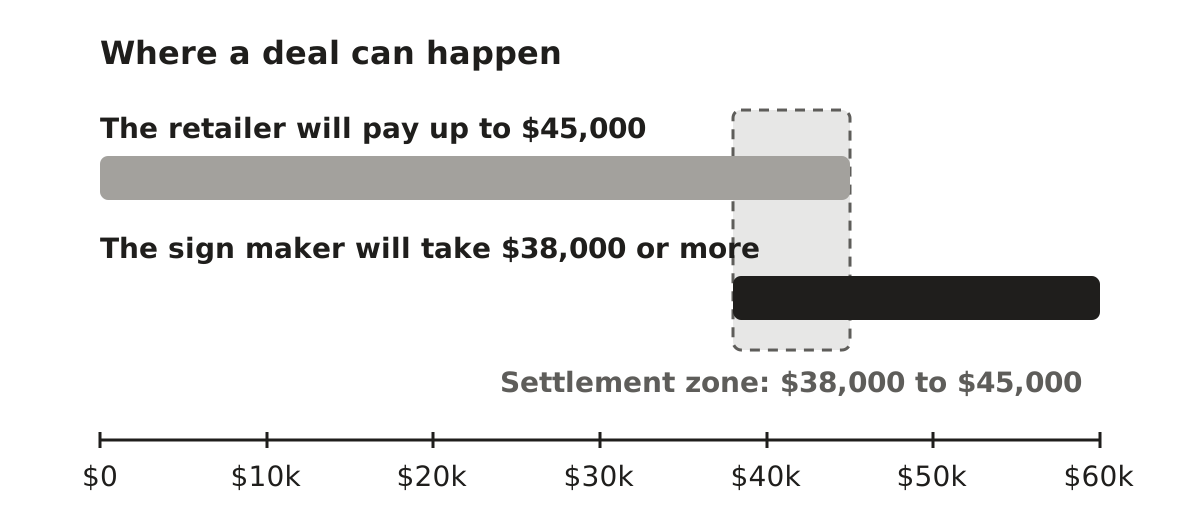
Preparation is what separates a useful mediation from an expensive day of posturing. Take a sign fabricator in Ohio owed a final $60,000 installment by a retail chain that says the signs were late and badly finished.
- Be honest about your case. List your strongest and weakest points, and ask your adviser for a realistic view of your chances at trial.
- Know your alternative. If this doesn’t settle, what happens next, how long does it take and what does it cost?
- Do the math. Say the sign maker has a 70% chance of winning. That’s $42,000 in expected value. Knock off $25,000 in legal fees it probably won’t recover (in most US courts, each side pays its own) and a year of waiting, and a $38,000 settlement today starts to look good. In England, the loser usually pays a large share of the winner’s costs, which changes the math in both directions.
- Set your walk-away number before the day, and know why it sits where it does.
- Think beyond cash: a payment plan, future orders, credits, a reference or an agreed statement.
- Bring someone who can say yes. Mediations stall when the person in the room has to “check with head office.”
It also pays to understand the contract terms that frame the risk for both sides, such as limitation of liability, indemnification and attorneys’ fees clauses. A fee-shifting clause can change both sides’ appetite for a deal quite dramatically.
What it costs
Mediator fees vary widely by location, experience and the size of the dispute. Commercial mediators commonly charge anything from a few hundred dollars for a short session to several thousand or more for a full day, and the fee is usually split equally. Court-connected and community schemes for smaller claims are often free or cheap. Add your own lawyer’s time if you use one. Even so, a mediation typically costs a small fraction of a trial.
Mistakes we see often
- Opening with an extreme number that wrecks your credibility for the rest of the day
- Treating the mediator as a judge to be won over rather than someone helping both sides find a deal
- Arriving without the documents, or without authority to settle
- Leaving without a signed written agreement
- Letting a limitation period run out while talking, with no written standstill agreement in place
Getting ready
Check your contract for a mediation or escalation clause and follow its steps and timelines. Pull together the key documents, build an honest view of your position, and decide in advance what you’d accept. You can review the contract’s dispute resolution and liability clauses with LegalWolf before you start. For larger disputes, having a lawyer help you prepare, even if they don’t attend, usually pays for itself.
This article is general information, not legal or tax advice. Laws differ between countries and states and change over time, so check the rules that apply to you or speak to a qualified professional.