How to read a contract before you sign it
Read it three times, and don’t read it the same way twice. The first pass checks that the paper matches the deal you think you made. The second slows right down on the handful of clauses that decide who pays when things go wrong. The third goes looking for definitions, attachments and anything that should be there but isn’t. For a ten-page services agreement, that’s about an hour with a pen in your hand.
Most people start at clause 1 and grind forward. By page four they’re skimming, and page four is usually where the liability section lives. Splitting the job into passes keeps your attention where the money is.
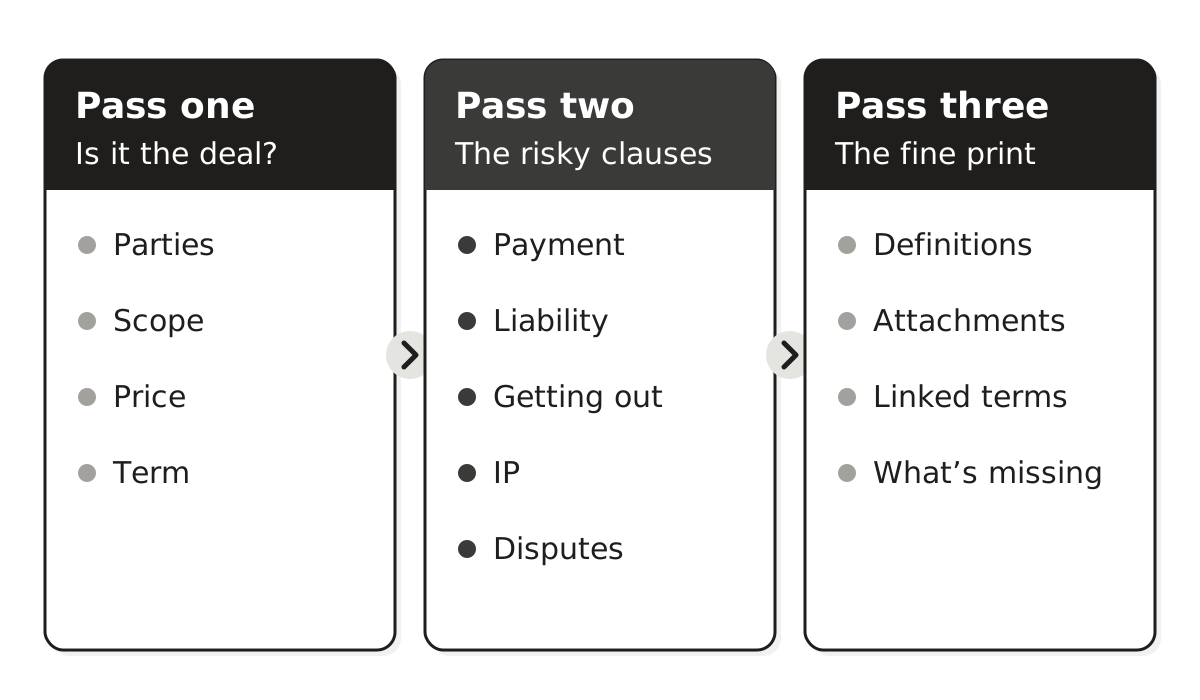
First pass: is this the deal you agreed to?
Ignore the legal language for now. Just check that the document describes the arrangement you shook hands on. You’d be surprised how often it doesn’t.
Maya runs a two-person design studio in Austin. Her proposal said $8,000 for a brand refresh. The client’s contract said $8,000 “per phase,” and there were three phases. Nobody was being sneaky. Someone had copied the wrong template. She only caught it because she read for the deal before anything else.
- Who’s signing. Check the exact legal names. “Brightline Media LLC” and “Brightline Holdings Inc.” are different companies with different bank accounts. If you’re signing for your business, make sure the business is the party, not you personally.
- What’s being delivered. By when, and how will everyone know it’s finished? Fuzzy scope causes more fights than any clause a lawyer ever wrote.
- The money. The total, the schedule, what triggers each invoice, and whether expenses, tax or platform fees sit on top.
- How long it lasts. Start date, end date, and whether it rolls over by itself. Our term of agreement entry shows how this is usually drafted.
If any of these are wrong, stop there and get them fixed. Haggling over a liability cap on a deal with the wrong price is wasted effort.
Second pass: the clauses that cost money
Every contract has five or six clauses that decide what happens on a bad day. Read these slowly, and twice if they’re long.
Payment
Find the payment deadline. Net 30 is common, net 60 is annoying, and net 90 is a free loan to your customer. Check whether you can charge interest on late payments and whether the other side can raise prices mid-term. A right to set off “disputed amounts” sounds harmless. In practice it can hold up a $4,800 invoice for months over a $300 disagreement.
Liability and indemnity
Read the limitation of liability and the indemnification clauses side by side. The first usually caps what either side can claim. The second often sits outside that cap and makes one party pay for lawsuits brought by outsiders. A one-way, uncapped indemnity is about the most expensive sentence a small business can sign.
Getting out
Work out whether you can leave early. Plenty of contracts only allow termination “for cause,” meaning a serious breach, often after a cure period of 15 or 30 days. Then look for auto-renewal and write down the window you’d have to hit to stop it.
IP and confidentiality
If you make things for clients, check what the IP assignment actually hands over. It should cover the deliverables, not the templates, code snippets and methods you reuse on every job. Check how long confidentiality lasts and whether it protects both sides or only them.
Disputes
The governing law and forum selection clauses decide whose law applies and where any fight happens. If a Toronto consultant agrees to arbitrate in Singapore, a $15,000 unpaid invoice probably isn’t worth chasing.
The small words that do the heavy lifting
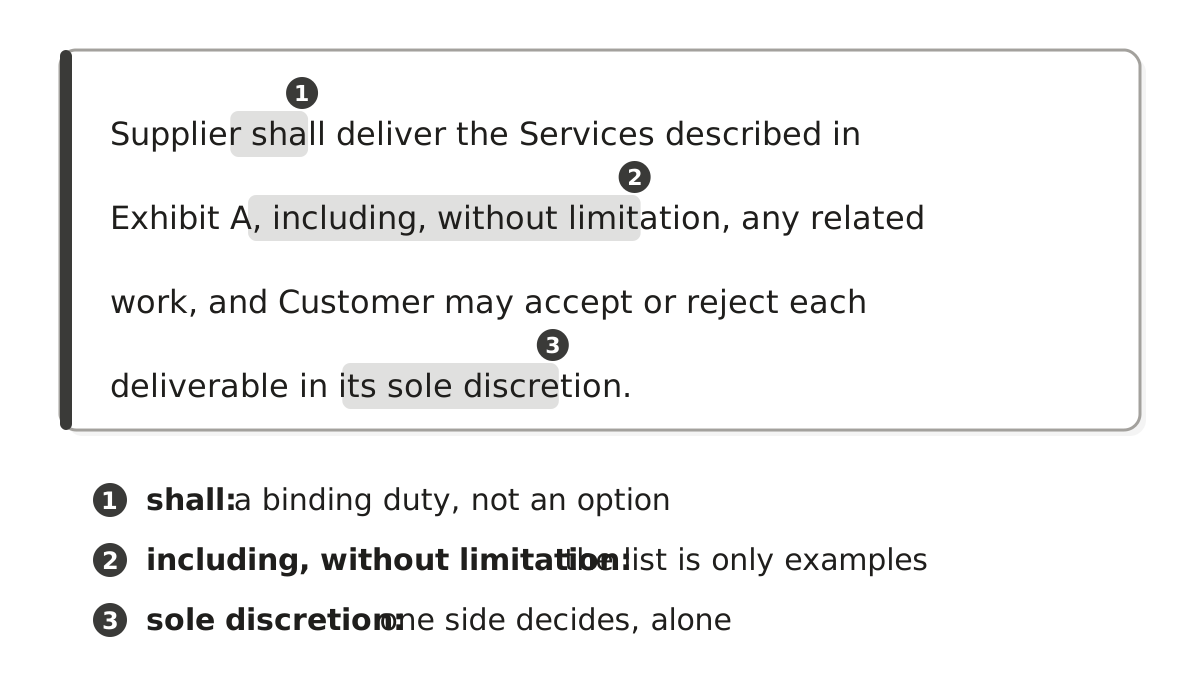
Contracts turn on words that look harmless. Slow down when you see these.
| Word or phrase | What it usually signals | What to check |
|---|---|---|
| “shall” or “must” | A binding obligation | Who has to do it, and by when |
| “may” | A right or option, not a duty | Whether you needed it to be a duty |
| “sole discretion” | One side decides, with little room to argue | Whether it covers approvals or payments |
| “including, without limitation” | The list is examples, not the whole category | Whether the category is wider than you think |
| “best efforts” | A demanding standard in some places | Whether “reasonable efforts” would be safer; see best efforts |
| “notwithstanding anything to the contrary” | This clause beats other clauses | Which ones it overrides |
Third pass: definitions, attachments and what’s missing
Capitalized words are usually defined terms, and a definition can quietly rewrite a whole clause. If “Services” includes “any related services requested by Customer,” your fixed-price project just became open-ended. Read the definitions after pass two, once you know which terms matter.
Then open everything the contract pulls in: exhibits, schedules, order forms, statements of work. Online terms “incorporated by reference” through a URL count too, and some vendors keep the right to change those pages later. Click every link and read what it says today.
Last, look for gaps. The ones we see most often:
- No acceptance process, so the work is never officially “done” and the final invoice floats
- No way out if the relationship just isn’t working
- A cap on their liability and none on yours
- No price review on a three-year deal
- No notices clause saying how formal letters have to be sent
Most business contracts also include an entire agreement clause. That generally means promises made on calls or in emails don’t count unless they made it into the document. If the salesperson promised it, get it written in.
Keep an issues list as you go
Every time something bothers you, jot one line with the clause number. “7.2: our liability uncapped, theirs capped at fees paid.” “12.1: renewal notice 90 days, too long.” When you’re done, sort the list:
- Must change. You won’t sign without it.
- Should change. Worth asking for, but not a deal-breaker.
- Questions. Things you don’t understand yet.
That list is your negotiation agenda. It also makes a lawyer faster and cheaper, because they start from your concerns instead of a blank page. If you’d like a head start, you can run the draft through LegalWolf to flag risky clauses before you build it.
Right before you sign
Compare the final version against the last draft you agreed. Edits get lost between rounds, and now and then new ones appear. The compare text tool will show you every difference in a minute or two. Then:
- Check every blank is filled and every exhibit is attached
- Make sure the person signing for the other side has authority to bind them
- Put the key dates in your calendar: renewal notice deadline, payment dates, milestones
- Save the signed copy somewhere you’ll still find it in two years
Honestly, most small contracts don’t need a lawyer if you read them this way. The ones that do are high value, unusual, or governed by a law you’ve never dealt with. For those, hand a lawyer your issues list and ask for a view on the must-change items.
This article is general information, not legal or tax advice. Laws differ between countries and states and change over time, so check the rules that apply to you or speak to a qualified professional.