IEEPA tariffs struck down: importer refunds and what replaced them
On February 20, 2026, the Supreme Court held in Learning Resources, Inc. v. Trump that the International Emergency Economic Powers Act (IEEPA) doesn’t allow the President to impose tariffs. That knocked out the 2025 "reciprocal" tariffs and the fentanyl-related tariffs on goods from China, Canada and Mexico. CBP stopped collecting them on February 24, 2026 and is now paying refunds, with interest, through a new system called CAPE. The administration didn’t stop tariffing, though. A temporary 10% tariff under Section 122 ran from February 24 to July 24, and since July 24, new Section 301 duties of 10% or 12.5% apply to most imports from 60 trading partners. If you import, you need to act on two fronts: claim what you’re owed, and budget for the duties that replaced it.
What changed
The ruling
Chief Justice Roberts wrote for the Court. The core holding is short: IEEPA does not authorize the President to impose tariffs. Coverage of the decision reports a 6 to 3 vote. The Court didn’t spell out how refunds should work, which left that to the Court of International Trade (CIT) and CBP.
Refunds through CAPE
On March 4, 2026, the CIT issued an order directing CBP to process refunds. CBP built CAPE (Consolidated Administration and Processing of Entries) and opened it in phases, starting on April 20, 2026 with unliquidated entries and entries liquidated within the previous 80 days. Key points from CBP:
- Only the importer of record, or the customs broker that filed the entries, can submit a CAPE declaration.
- Refunds include interest from the date of deposit to liquidation or reliquidation.
- CBP must have your bank details on file for ACH refunds. As of mid-September, about $1.3 billion of refunds were on hold for missing banking information.
- CBP says refunds usually issue 60 to 90 days after a declaration is accepted.
As of September 11, 2026, CBP had accepted about $134.7 billion of potential and certified refunds covering roughly 27.2 million entries, and about $122 billion, including interest, had been certified and sent to Treasury for payment.
The fight over older entries
Entries that were finally liquidated are the hard part. The government appealed the CIT’s universal refund order to the Federal Circuit in June 2026 and argues that refunds on finally liquidated entries should be limited to importers who sued. CAPE Phase 3, scheduled for October 6, 2026, covers finally liquidated entries of plaintiffs where the CIT ordered reliquidation, for importers that gave CBP a valid importer number by July 30, 2026. If you didn’t sue, whether you’ll recover on those entries depends on the appeal.
The replacement tariffs
The Section 122 tariff (10%, effective February 24, 2026) was limited by statute to 150 days. The CIT ruled it unlawful on May 7, 2026, but the relief covered only three named plaintiffs, so everyone else kept paying until it expired on July 24. From 12:01 a.m. that day, new Section 301 duties took over: 10% or 12.5% on most imports from 60 trading partners that account for about 99.4% of US imports. Goods already covered by Section 232 measures (such as steel, aluminum, autos and parts, and copper) are excluded, and so are qualifying goods from Canada and Mexico that receive USMCA preference. Small businesses have already filed suits at the CIT challenging the new duties.
Who it affects
- Importers of record who paid IEEPA duties in 2025 or early 2026. The refund goes to them.
- Businesses that bought from US distributors or on delivered duty paid terms. You weren’t the importer, so any refund goes to someone else. Whether you get a share depends on your contract.
- Canadian and Mexican exporters, whose USMCA-qualifying goods fall outside the new Section 301 duties.
- Lenders and claim buyers, who are now pricing refund claims as assets.
Key dates
| Date (2026) | Event |
|---|---|
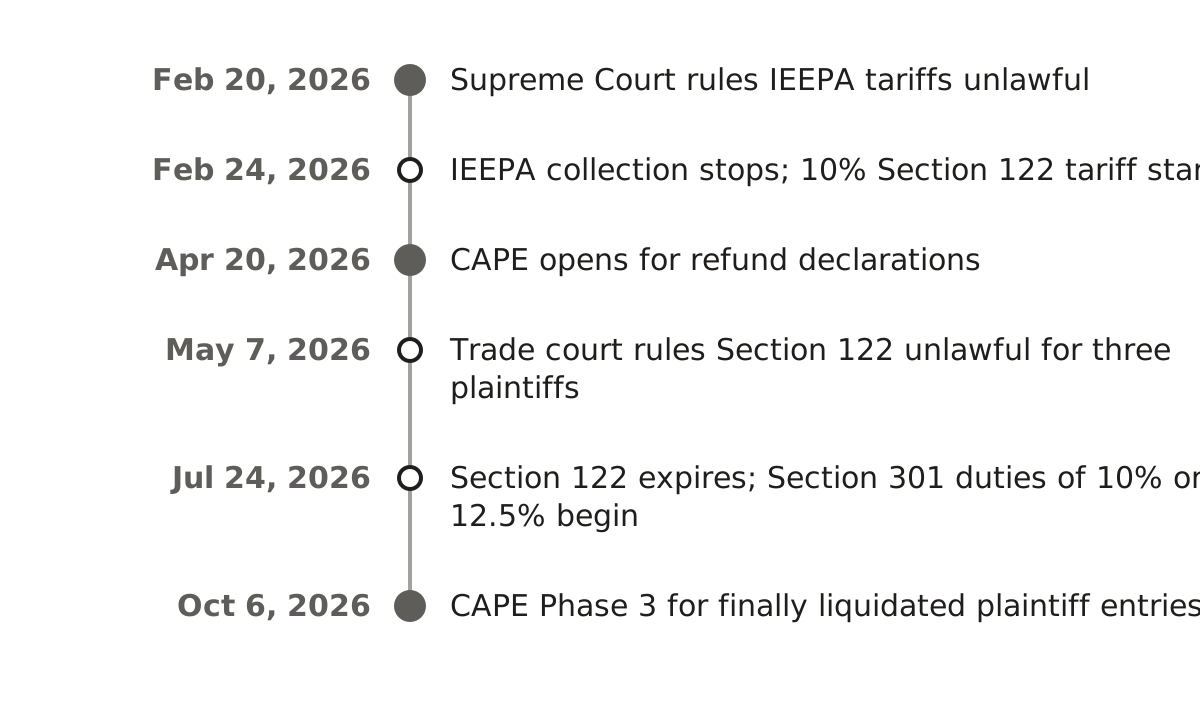
| February 20 | Supreme Court rules IEEPA tariffs unlawful |
| February 24 | IEEPA collection stops; 10% Section 122 tariff starts |
| March 4 | CIT orders CBP to process refunds |
| April 20 | CAPE opens for refund declarations |
| May 7 | CIT rules Section 122 unlawful, relief limited to three plaintiffs |
| July 24 | Section 122 expires; Section 301 duties of 10% or 12.5% begin |
| October 6 | CAPE Phase 3 for finally liquidated plaintiff entries |
What it means in practice
Maria runs a toy importer in Columbus, Ohio, and is importer of record on 30 entries from 2025 that carried $48,000 in IEEPA duties. Twenty entries, with $32,000 of those duties, were still unliquidated or recently liquidated when CAPE opened. She files through her broker, and those refunds come back with interest, provided CBP has her ACH details. The other ten entries, with $16,000 of duties, were finally liquidated before she thought to act, and she didn’t sue. For now, those depend on the Federal Circuit.
Meanwhile her new shipments from outside North America now carry 10% or 12.5% Section 301 duties. On a $200,000 container, that’s $20,000 to $25,000. The refund helps this year’s cash flow, but it doesn’t fix next year’s margins.
What to do now
- Pull a list of every entry with IEEPA duties and its liquidation status from ACE or your broker.
- Enroll in ACH refunds with CBP if you haven’t. No bank details, no money.
- File CAPE declarations for eligible entries now, and track acceptance.
- For finally liquidated entries, talk to trade counsel about whether to sue while the appeal runs.
- If you bought through distributors or on delivered terms, read the price and tax clauses; a price escalation clause may say who benefits.
- Reprice for the Section 301 duties and check whether USMCA-qualifying sourcing makes sense.
- Book refunds carefully in your accounts, and ask your accountant how to treat the interest.
As of September 2026, the Federal Circuit appeal and the challenges to the Section 301 duties are both undecided, so expect more changes.
Sources
- Supreme Court of the United States: Learning Resources, Inc. v. Trump (February 20, 2026)
- US Customs and Border Protection: IEEPA duty refunds
- Skadden: US trade court strikes down Section 122 tariffs
- Morgan Lewis: US administration rebuilds global tariff program under Section 301
- C.H. Robinson: CBP reports progress on IEEPA refunds; CAPE Phase 3 launches October 6
This article is general information, not legal or tax advice. Laws differ between countries and states and change over time, so check the rules that apply to you or speak to a qualified professional.