Indemnification clauses: what you’re really agreeing to
An indemnity is a promise to cover someone else’s losses if a particular thing happens, usually a claim or lawsuit from an outsider. Agree to indemnify a client and you may end up paying their lawyers, their settlement and any judgment, even if that’s far more than the contract was worth. That’s why it’s one of the most fought-over clauses in business contracts, and why it deserves a word-by-word read.
What it looks like when it bites
Sam is a freelance developer in Manchester. He builds a $20,000 booking app for a chain of gyms. The contract says he’ll indemnify the gym chain against claims that the app infringes anyone’s intellectual property. Eighteen months later, a company holding a patent on a booking feature sends the gym chain a demand letter. Under the indemnity, Sam may be on the hook for the chain’s legal fees and any settlement. Defending a patent claim can easily run past $100,000.
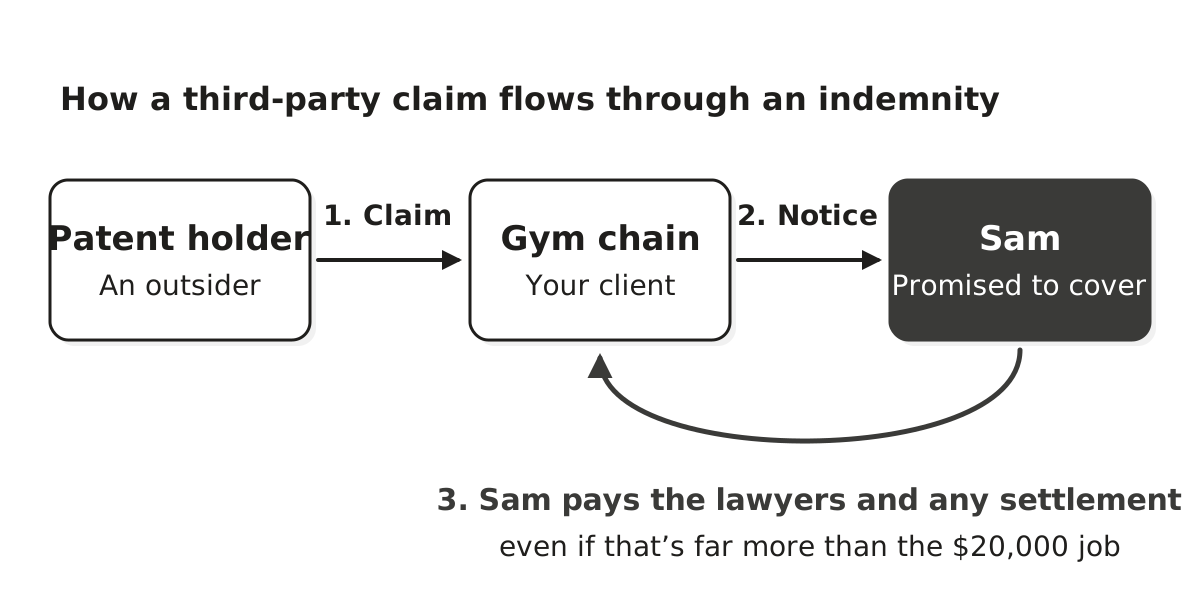
That’s the whole point of an indemnity: it shifts the cost of certain risks from one side to the other. It works differently from suing for breach of contract. With a breach claim, the injured party has to prove its loss and usually runs into limits on what it can recover. With an indemnity, you’ve agreed in advance to cover a category of losses, which can make the other side’s recovery quicker and wider.
Indemnify, defend and hold harmless
You’ll often see the three verbs strung together. They aren’t always saying the same thing.
- Indemnify means reimburse losses once they’ve happened.
- Defend means take on the defense of the claim, usually from day one, and pay the lawyers before anyone knows whether the claim has merit. In many US states, the duty to defend is broader than the duty to indemnify.
- Hold harmless is read by some courts as meaning the same as indemnify and by others as a separate promise not to sue the other party. There’s no single answer; see hold harmless.
The duty to defend is the part people underestimate. You can end up funding a lawyer for a claim that turns out to be nonsense, and that money doesn’t come back.
The words that decide the bill
Two indemnities on the same topic can cost you wildly different amounts depending on how the trigger is written.
“Arising out of” or “to the extent caused by”
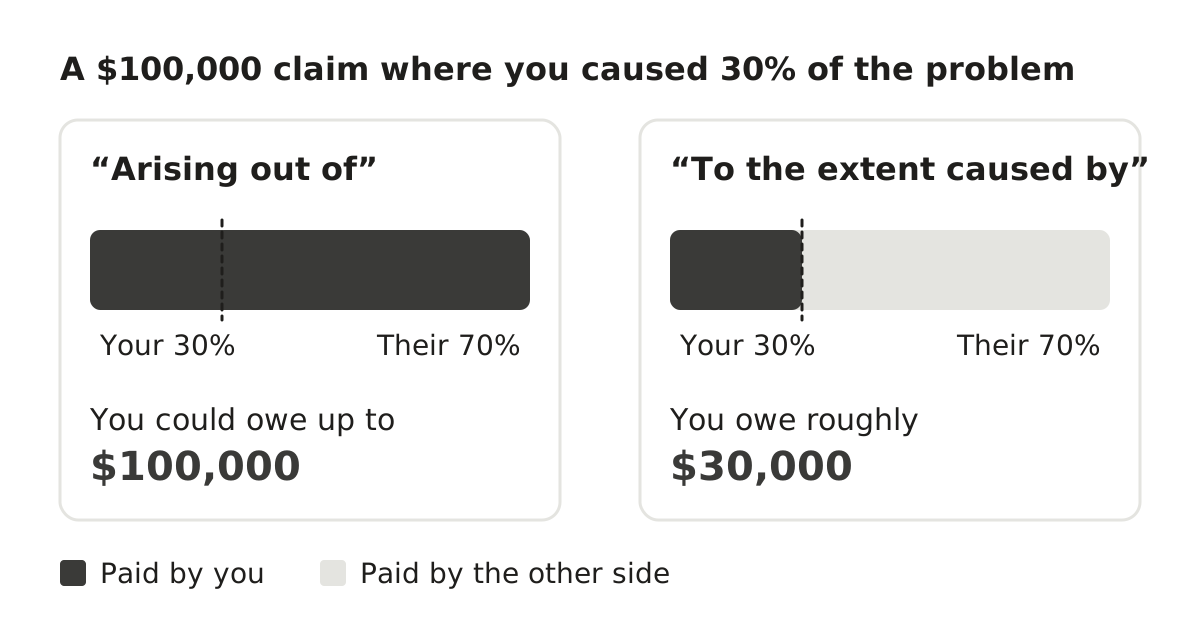
“Losses arising out of or relating to the Services” is very wide. It can catch claims that are only loosely connected to your work, including ones the other side mostly caused. “Losses to the extent caused by Contractor’s negligence” is narrower. You pay for your share and no more.
Say an injury claim settles for $100,000 and a court would put 30% of the fault on you. With “to the extent caused by,” you’re looking at roughly $30,000. With “arising out of,” the other side can argue you owe the lot. Some jurisdictions won’t let a party be indemnified for its own negligence unless the contract says so very clearly, but you don’t want to be the test case.
Outsiders’ claims or their own losses
A sensible indemnity covers third-party claims, where someone outside the contract sues. Some go further and cover the other party’s own direct losses too. That turns the indemnity into a back door around the limitation of liability and the normal rules on proving damage. Unless there’s a real reason, ask for third-party claims only.
Which indemnities are normal and which aren’t
Some indemnities are standard and fair. Others are a grab. A rough guide, based on what we see in small business contracts:
| Indemnity for | Usually given by | Reasonable? |
|---|---|---|
| IP infringement by the product or deliverables | Vendor or creator | Yes, if limited to what the vendor controls |
| Injury or property damage caused by negligence | Whoever is on site or supplying goods | Yes, when tied to fault |
| Breach of data protection duties | Whoever handles the data | Often, usually with its own cap |
| Content or materials the customer supplies | Customer | Yes |
| “Any breach of this Agreement” | Either side | Usually too broad |
| Anything “arising out of” the relationship | Either side | Usually too broad |
Mutual indemnities, where each side covers the risks it controls, are common and fair. A one-way indemnity running only from the smaller party should make you sit up, especially if nothing caps it.
Caps, insurance and local law
Is it under the cap?
Indemnities are often carved out of the liability cap entirely. If the cap is 12 months’ fees but the clause says it “shall not apply to indemnification obligations,” your exposure under the indemnity has no ceiling. If that’s where you land, you have options: bring it under the general cap, agree a separate “super-cap” of two or three times annual fees, or keep only a narrow category like IP infringement uncapped.
Will your insurance pay?
Call your broker. General liability policies often cover contractual liability only for certain kinds of contract, and professional liability policies vary a lot. Ask plainly whether your policy would respond to this indemnity as written. The insurance clause may also require you to carry specific cover.
Which law applies?
- In the US, many states have anti-indemnity statutes for construction contracts that stop a party being indemnified for its own sole negligence, and some reach other industries. Many states also want an indemnity for a party’s own negligence to be spelled out clearly.
- In the UK, courts generally enforce commercial indemnities as written but read them strictly. Whether one covers the other party’s own negligence depends heavily on the wording.
- In many civil law countries, including much of the EU and the UAE, the common law idea of an indemnity doesn’t translate neatly, and local rules may limit what can be shifted or excluded. A clause lifted from a US template might not work the same way under another governing law.
How to push back
Deleting the clause rarely works. Narrowing it usually does. The asks that tend to land:
- Make it mutual where both sides create risk
- Limit it to third-party claims
- Swap “arising out of” for “to the extent caused by”
- Tie it to fault: negligence, willful misconduct or breach of specific obligations
- Exclude losses caused by the other side’s own acts or its changes to your work
- Put it under a cap or a super-cap
Then read the procedure. A decent indemnity says how claims get handled, and you want all of this in it:
- Prompt notice of any claim, so you can act early
- Control of the defense by whoever’s paying
- No settlement without your consent, especially one that admits fault
- Cooperation from the protected party, at your cost
- Mitigation, so they take reasonable steps to limit the loss
Without those, you can find yourself paying for a settlement you never saw coming. If you want a quick first read, LegalWolf flags one-way and uncapped indemnities in a draft so you know where to spend your time.
Before you sign
Find the indemnity and answer four questions. Who’s covering whom? For what? Up to how much? On whose terms? If the honest answer is “me, for almost anything, with no limit, on their terms,” push back. For contracts involving IP, personal data or physical work on someone else’s premises, an hour of a lawyer’s time is cheap next to what that one clause could cost.
This article is general information, not legal or tax advice. Laws differ between countries and states and change over time, so check the rules that apply to you or speak to a qualified professional.