Letting someone go: notice, pay and paperwork
To let someone go properly, you need a lawful reason, the right amount of notice (or pay instead of it), their final pay on time, and a paper trail showing you followed a fair process. What counts as each of those depends heavily on where the employee works. In most US states you can end employment without notice for almost any lawful reason. In the UK, Canada, Australia, the EU and the UAE, notice periods are set by law, and protection from unfair dismissal kicks in after a certain length of service.
It’s never easy, and most of the legal risk comes from rushing it. The dismissal done in anger on a Friday afternoon is the one that ends up in front of a tribunal.
Start with the reason, and write it down
Even where employment is at will, the reason matters. Almost everywhere, it’s unlawful to dismiss someone because of a protected characteristic (race, sex, age, disability, religion and pregnancy, among others, depending on the country), or in retaliation for complaining, taking protected leave or blowing the whistle. The most common claim after a dismissal isn’t about notice. It’s that the stated reason was cover for an unlawful one.
So document as you go. For performance, you want dated records of the problems, the feedback you gave, and the time you allowed for improvement. For a redundancy (a layoff because the role is no longer needed), you want a record of why the role went and how you chose who was affected.
In the UK, employees have generally needed two years’ service before they can claim unfair dismissal, though government reforms are set to shorten that, so check the current rule before relying on it. The fair reasons are conduct, capability, redundancy, a legal restriction and “some other substantial reason,” and the process has to be fair too. For disciplinary cases, follow the Acas Code of Practice, because tribunals can increase awards when employers don’t.
In Australia, unfair dismissal protection generally applies after six months of employment, or twelve months for small businesses with fewer than 15 employees, which can rely on the Small Business Fair Dismissal Code if they follow it.
Notice: how much, and whether you can pay instead
Notice is the gap between telling someone their job is ending and their last day. There are usually two layers: the legal minimum and whatever the contract says. The employee gets whichever is longer.
| Where | Minimum notice from the employer (as of 2025) |
|---|---|
| Most US states | None for individual dismissals of at-will employees. The federal WARN Act requires 60 days’ notice of certain mass layoffs and plant closings at employers with 100 or more employees, and some states add their own rules. |
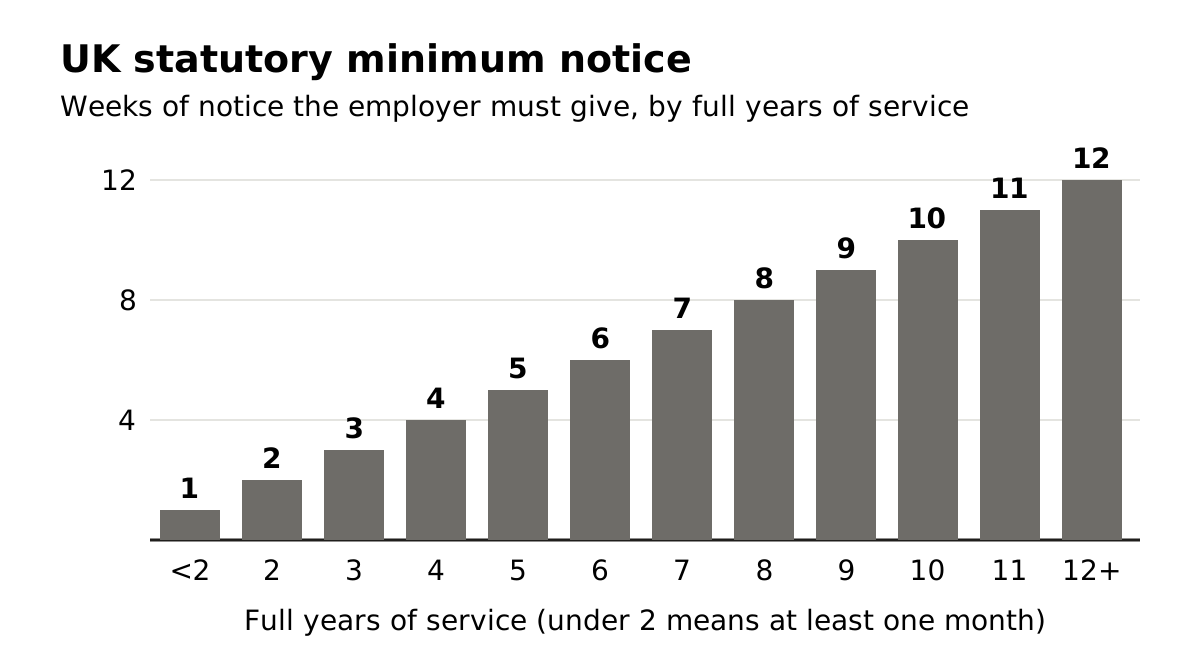
| UK | One week after one month’s service, then one week for each full year from two years, up to 12 weeks. |
| Australia | One to four weeks depending on service, plus one more week for employees over 45 with at least two years’ service. |
| Canada | Set by each province, rising with service. Common-law “reasonable notice” can be much longer unless the contract validly limits it. |
| UAE | As agreed in the contract, between 30 and 90 days. |
| EU countries | Set nationally and often by collective agreement, and frequently longer than in the UK. |
Paying in lieu of notice (often called PILON) means paying the notice period as a lump sum and ending employment straight away. It’s common and often sensible, especially for roles with access to client data. In the UK you generally need a PILON clause in the contract to do it cleanly. Without one you’re technically in breach, even if the amount is right. Garden leave, where the employee stays employed and paid but stays home, is another option if the contract allows it.
Final pay: get the timing right
Final pay rules trip up a lot of US employers because each state sets its own. California requires final wages immediately on dismissal, and penalties for paying late build up daily. Many other states allow until the next regular payday. Some states treat accrued, unused vacation as wages that must be paid out, while others let a written policy decide.
Elsewhere, final pay typically includes salary to the last day, accrued untaken holiday, notice pay, and any statutory redundancy or severance payment. In the UK, statutory redundancy pay applies after two years’ service. In the UAE, most employees are entitled to an end-of-service gratuity, which under the current law is 21 days’ basic salary for each of the first five years and 30 days for each year after that, subject to a cap.
Severance and settlement agreements
A severance agreement pays the employee more than they’re owed in exchange for a release of claims. It’s often a sensible trade for both sides. A few rules to know:
- US employees aged 40 and over. For a release of federal age discrimination claims to hold up, the employee must get at least 21 days to consider it (45 days in a group layoff), 7 days to change their mind after signing, and written advice to consult a lawyer.
- UK. A settlement agreement only waives statutory employment claims if the employee has taken independent legal advice on it. Employers usually contribute to the cost.
- Everywhere. Keep confidentiality and non-disparagement terms reasonable. Several countries and states limit clauses that stop employees reporting harassment or speaking to regulators.
The meeting and the paperwork
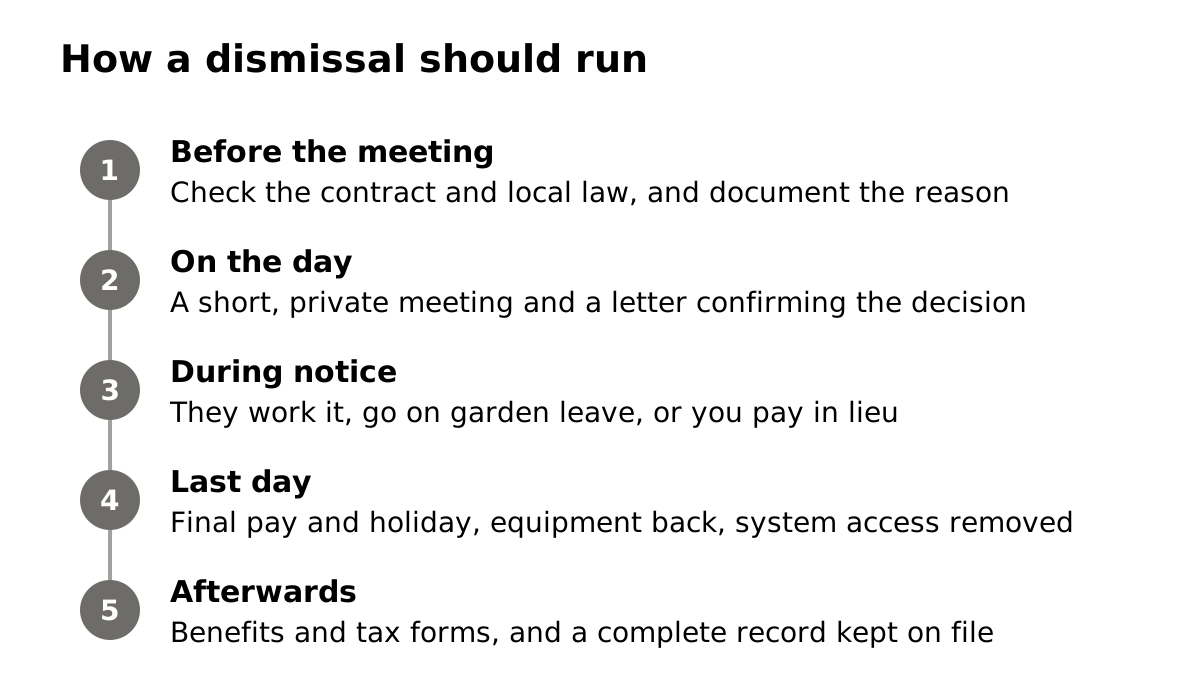
Keep the meeting short, private and early in the week. Have a second manager or someone from HR in the room. Say clearly that the decision has been made and why, explain what happens with pay and benefits, and hand over a letter confirming it. Don’t debate the decision. Do give them time to ask questions.
- A written letter with the last day, notice and pay details. Our termination notice template covers the basics.
- Return of equipment, keys and documents, and removal of system access that day.
- Benefits notices, such as COBRA continuation notices in the US for employers with 20 or more employees.
- Final payslip and tax forms (a P45 in the UK, for example).
- A reminder of duties that continue, like confidentiality and any non-solicitation terms. Clauses covered by a survival clause still apply after the job ends.
- Copies of everything: the letter, the final pay calculation and notes from the meeting.
Next steps
Before you schedule the conversation, pull the employee’s contract and check the notice clause, any PILON or garden leave wording, bonus and commission terms, and restrictions after they leave. Then check the minimums where they work, which may not be where you are. If the employee recently complained about something, is on or just back from leave, or has been with you a long time, talk to an employment lawyer first. An hour of advice costs far less than a claim.
This article is general information, not legal or tax advice. Laws differ between countries and states and change over time, so check the rules that apply to you or speak to a qualified professional.