Limitation of liability: how caps work and what they leave out
A limitation of liability clause sets the most one side can be made to pay the other if the contract goes wrong. It usually works in two steps. First it knocks out certain kinds of loss altogether, typically lost profits and other indirect losses. Then it caps everything else at a number, often the fees paid in the last 12 months. The carve-outs, meaning the things the cap doesn’t touch, matter just as much as the number.
If you sell services, a cap stops one bad job from sinking the business. If you buy them, a low cap can leave you carrying most of the damage when a supplier lets you down.
Two sentences doing two different jobs
Most of these clauses have two parts, and it helps to read them separately.
- The exclusion. “Neither party shall be liable for any indirect, incidental, special or consequential damages, or for lost profits, revenue or data.” Whole categories of loss disappear.
- The cap. “Each party’s total liability shall not exceed the fees paid under this Agreement in the twelve months before the claim.” A ceiling goes over whatever’s left.
Put them together and a supplier that fails badly can argue most of your loss is excluded and the rest is capped. That’s how a six-figure problem turns into a small refund.
A worked example
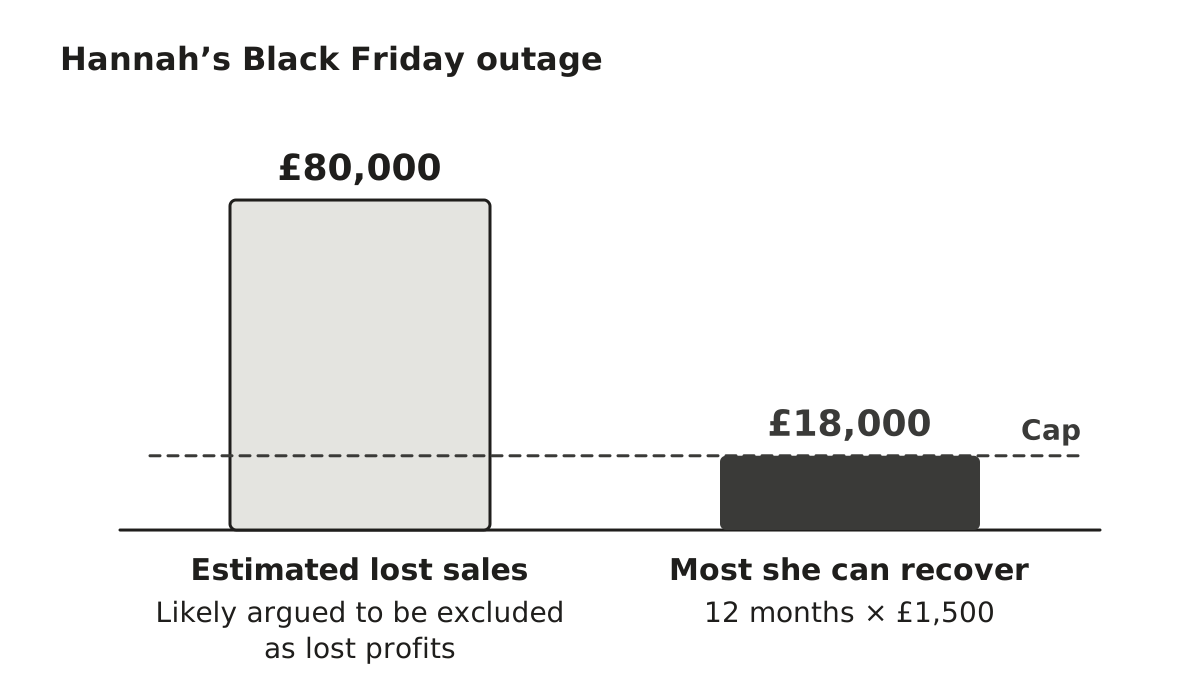
Hannah runs an online homeware shop in Bristol and pays £1,500 a month for her ecommerce platform. The platform goes down for two days in the middle of a Black Friday sale. She reckons she lost about £80,000 in sales.
Her contract excludes lost profits and caps liability at 12 months’ fees. Twelve times £1,500 is £18,000, so that’s the most she could recover. And because lost sales look a lot like lost profits, the platform will argue she’s owed far less, maybe just a service credit.
How the cap gets calculated
There’s no standard number. These are the formulas you’ll see most:
| Cap formula | Example | Watch out for |
|---|---|---|
| Fees paid in the prior 12 months | $2,000 a month SaaS gives $24,000 | Tiny early in the contract |
| Total fees paid or payable under the contract | $60,000 over three years | “Paid” and “payable” give different numbers |
| A fixed amount | $250,000 | May not keep up as the deal grows |
| A multiple of fees | 2 times annual fees | Which fees count |
| Insurance limits | Whatever the policy pays out | Exclusions and deductibles in the policy |
Watch the timing trap. With a “fees paid in the prior 12 months” cap, a claim in month two might be capped at a single month’s fees. The fix is simple: “the greater of $X and the fees paid or payable in the 12 months before the claim.”
Direct loss, consequential loss, and the grey bit in between
Where direct loss ends and consequential loss begins is one of the most argued points in contract law, and countries draw the line in different places. Roughly, direct loss flows naturally and obviously from the breach. Consequential loss depends on special circumstances. Hiring a replacement supplier is usually direct. Profit on a separate deal that collapsed is usually consequential.
Lost profits sit in the grey zone. Depending on the jurisdiction and the facts, they can land on either side. That’s why careful drafters exclude “lost profits” by name instead of trusting the label. If lost profits are the main thing you’d suffer from a failure, this is the sentence to negotiate.
What the cap usually leaves out
Almost every cap has carve-outs: types of liability that stay uncapped or get a higher limit. The common ones:
- Fraud or fraudulent misrepresentation
- Gross negligence or willful misconduct
- Death or personal injury caused by negligence
- Breach of confidentiality
- Indemnification, especially for IP infringement
- Data protection breaches, often under a separate super-cap
- The customer’s duty to pay fees it owes
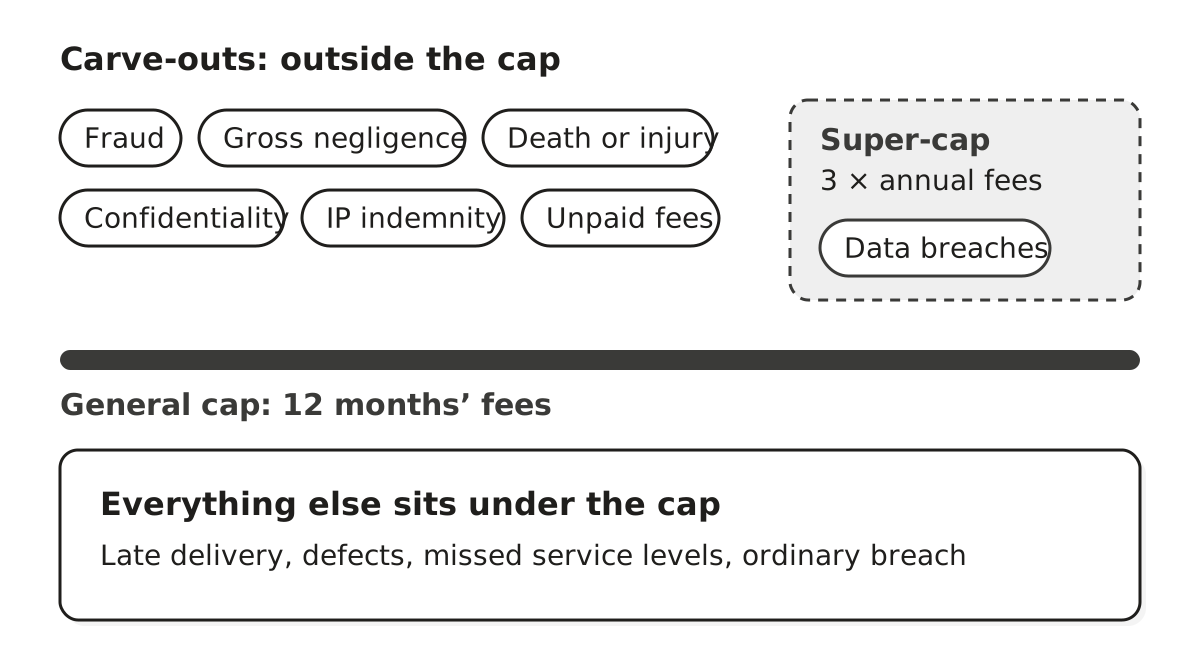
Carve-outs make sense for things a party really controls and that are too serious to cap. They become a problem when they swallow the cap. If the carve-outs include “any breach of Section 4” and Section 4 holds most of your obligations, the cap is decoration.
Super-caps are the usual compromise for data breaches and indemnities. A typical pattern is a general cap of 12 months’ fees plus a separate cap of three times annual fees for data protection claims.
Where the law won’t let you cap
Businesses have a lot of freedom here, but not unlimited freedom. Some examples:
- In the UK, you can’t exclude or limit liability for death or personal injury caused by negligence, and you can’t exclude liability for your own fraud. Other exclusions in business contracts on standard terms generally have to pass a reasonableness test.
- In most US states, courts enforce caps negotiated between businesses, but many won’t let a cap protect a party from its own fraud or intentional misconduct, and some treat gross negligence the same way. It varies state by state.
- In the EU, national law decides. Germany, for example, looks hard at limitations in standard business terms, and liability for intent can’t be excluded in advance.
- In the UAE, the civil law restricts how far liability can be excluded, particularly for fraud or serious fault.
Consumer contracts get much stricter treatment almost everywhere. A cap that works fine between two businesses may be unenforceable against a consumer.
Before you agree to a cap
First, check it cuts both ways. A supplier’s template will often cap the supplier tightly and leave the customer’s liability wide open. Asking for a mutual cap with mutual carve-outs is rarely controversial. Then run through this:
- Work out what the cap would be in a bad month, not a good one
- Estimate your realistic worst-case loss if the other side fails
- Check whether lost profits, lost data or business interruption are excluded
- List the carve-outs and make sure they apply to both of you
- Ask for a floor (“the greater of”) if the cap is based on fees
- Consider a super-cap for data breaches or IP claims
- Make sure liquidated damages or service credits aren’t your only remedy, unless you meant that
- Match the cap against your insurance
Read this clause alongside the indemnity, warranty and confidentiality sections, since they all interact. If the gap between the cap and your likely loss is big, negotiate. LegalWolf can spot one-sided caps and missing carve-outs in a draft, and a lawyer is worth the fee when the contract or the potential loss is large.
This article is general information, not legal or tax advice. Laws differ between countries and states and change over time, so check the rules that apply to you or speak to a qualified professional.