Deadlines to sue: limitation periods for contract claims
A limitation period is the deadline for starting a legal claim. Miss it and the other side can usually knock out your claim however strong it is. For contract claims the deadline is often somewhere between two and six years, but it varies a lot between countries and US states, the start date isn’t always obvious, and your contract may shorten it. If you have a dispute sitting unresolved, work out your deadline this week.
What a limitation period actually does
Limitation periods (called statutes of limitations in the US) stop old claims being brought after evidence has faded and witnesses have moved on. They also give businesses some certainty that a deal from years ago won’t come back to bite them.
In most common law countries, an expired period is a defense the other side has to raise. You can still file, but once the defendant points out you’re out of time, the court will dismiss the claim. Civil law systems get to a similar place with different mechanics. In practice, a late claim is almost always a lost claim. The statute of limitations glossary entry has a short definition.
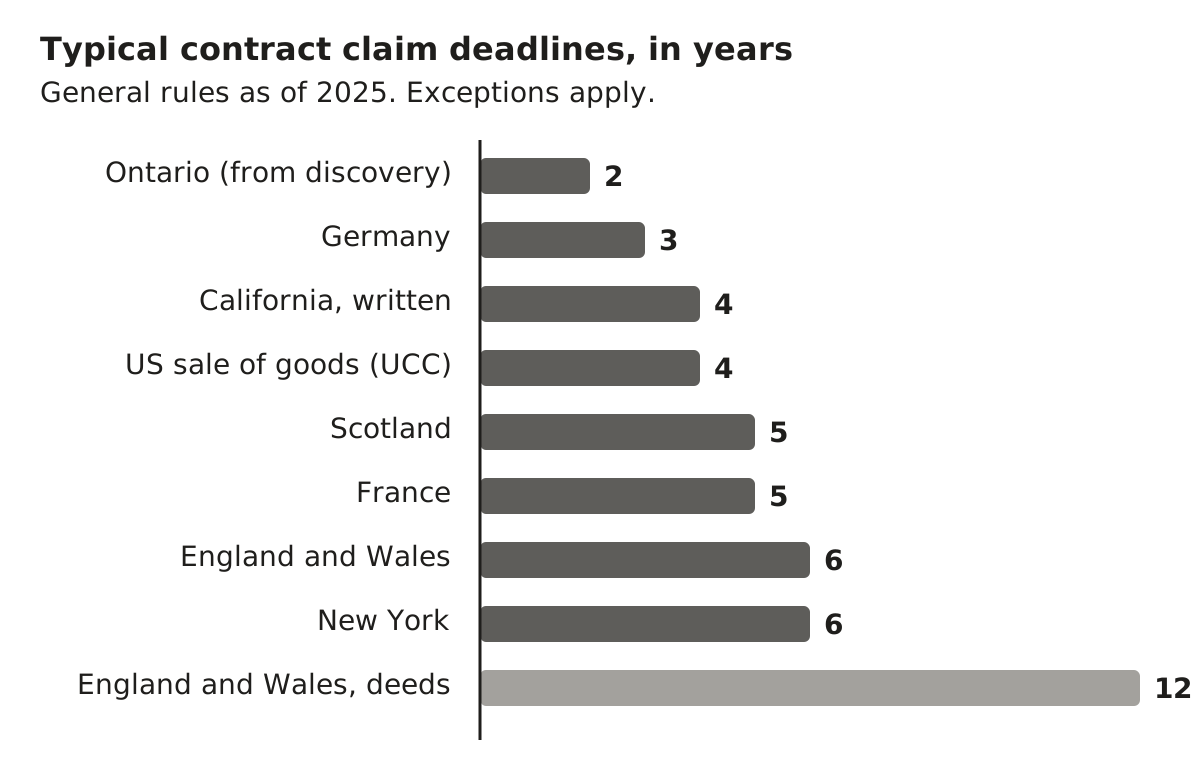
Typical periods for contract claims
These are general periods for ordinary contract claims as of 2025. Special rules apply to particular types of contract, and the periods do change, so confirm the one that applies to you.
A few notes on those numbers:
- England and Wales: 6 years from breach for simple contracts, 12 years for contracts signed as deeds.
- Scotland: generally 5 years, under a system called prescription.
- US states: commonly 3 to 6 years for written contracts and often shorter for oral ones. California allows four years for written contracts and two for oral. New York allows six for most contract claims.
- US sale of goods: generally 4 years under the UCC, which most states let the parties shorten to as little as one year.
- Canada: Ontario’s basic period is 2 years from when the claim was discovered, with other provinces setting their own rules.
- Australia: generally 6 years in most states, with the Northern Territory shorter.
- Germany and France: generally 3 years in Germany, counted from the end of the year in which you knew of the claim, and 5 years in France from when you knew or should have known the facts.
The UAE and other Gulf states set their own periods in their civil and commercial codes. Some are longer than common law periods and some commercial claims are shorter, so check the specific type of claim with a local adviser.
When the clock starts
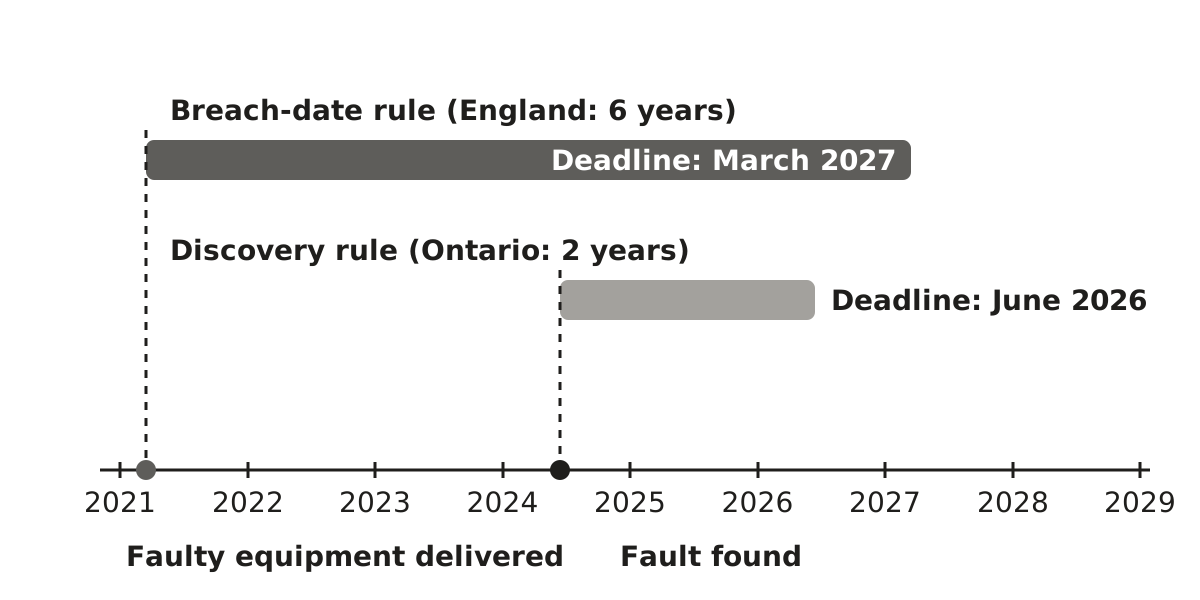
This is where people get caught out. Take a bakery in Leeds that buys a £40,000 deck oven, delivered in March 2021. It works fine for a while, then a manufacturing fault shows up in June 2024.
From the date of breach
In England and Wales and many US states, a contract claim generally accrues when the breach happens, whether or not you knew about it and whether or not you’d suffered any loss yet. For the bakery, the six-year clock in England would usually start at delivery in March 2021, not when the oven failed. That puts the deadline around March 2027.
From discovery
Some systems start the clock when you knew, or reasonably should have known, about the claim. Ontario and Germany work this way. Under a two-year discovery rule, the bakery’s clock would start in June 2024 and run out in June 2026, which is actually earlier. Many US states apply a discovery rule only in certain situations, such as fraud or hidden defects.
For unpaid invoices
For a debt, the clock usually starts when payment falls due, not when the invoice was sent. An invoice dated January 1 on net 60 terms typically falls due, and the claim typically accrues, around March 2. On an installment contract, each missed payment may have its own start date.
Long-stop dates
Discovery-based systems often add an outer limit that applies no matter when you found out. Ontario, for example, has an ultimate limit of 15 years for most claims.
What can pause or restart the clock
The rules differ a great deal, so treat these as things to check rather than guarantees:
- Acknowledgment or part payment. In England and Wales, a written acknowledgment of a debt or a part payment generally restarts the clock on a debt claim, as long as the period hasn’t already run out. Many US states have similar rules, often requiring a signed written acknowledgment.
- Standstill (tolling) agreements. The parties can usually agree in writing to pause the clock while they negotiate. They’re common in US and UK commercial disputes.
- Fraud or deliberate concealment. Many systems delay the start if the defendant hid the facts.
- Lack of capacity. Periods are often paused for minors and people who lack legal capacity.
- Mediation. For cross-border disputes in the EU, member states must make sure that time spent in mediation doesn’t cost you the right to go to court. Elsewhere, don’t assume mediation stops anything.
What usually doesn’t stop the clock: reminder emails, a demand letter, or months of friendly back-and-forth. Unless you have a signed standstill agreement, keep counting.
Your contract can move the deadline
Plenty of commercial contracts shorten the time to sue, with wording like “No action may be brought more than one year after the cause of action arises.” Whether that holds up depends on the law:
- Most US states allow reasonable contractual shortening, and the UCC lets the period for sales of goods be cut to one year.
- In the UK, such clauses are generally allowed in business contracts but may need to pass a reasonableness test, particularly on standard terms.
- Consumer contracts face tighter limits almost everywhere.
Look out for notice-of-claim clauses as well, which require you to tell the other side about a claim within a set time, and for survival clauses, which decide how long warranties and indemnities last after the contract ends. Warranty claims under a business purchase agreement, for example, often have to be notified within 12 to 24 months, far shorter than the statutory period. Your governing law clause matters too, although courts sometimes apply their own limitation rules even when a foreign law governs the contract.
How to protect your claim
- Write down the key dates: contract signed, breach, payment due dates, and when you found the problem.
- Identify the governing law and whether the contract shortens the period or requires notice of claims.
- Calculate the deadline conservatively from the earliest plausible start date. The deadline calculator handles the date arithmetic.
- Put reminders in your calendar at six months, three months and one month before expiry.
- Get admissions in writing. A customer’s email saying “we know we owe you” can be valuable.
- Propose a standstill agreement if talks are running close to the deadline.
- File a protective claim if nothing else works. Starting proceedings to stop the clock and then pausing them to negotiate is common practice.
Next steps
Take any unresolved dispute and work out the earliest possible deadline under the law that governs the contract, today rather than next quarter. Check the contract itself for time-bar clauses, notice-of-claim requirements and survival periods. You can find them quickly by running the contract through LegalWolf.
If the deadline is within a few months, or you’re unsure which law applies, speak to a lawyer promptly. Limitation is one area where a few weeks’ delay can cost you the entire claim.
This article is general information, not legal or tax advice. Laws differ between countries and states and change over time, so check the rules that apply to you or speak to a qualified professional.