MSA vs. SOW: how master agreements and statements of work fit together
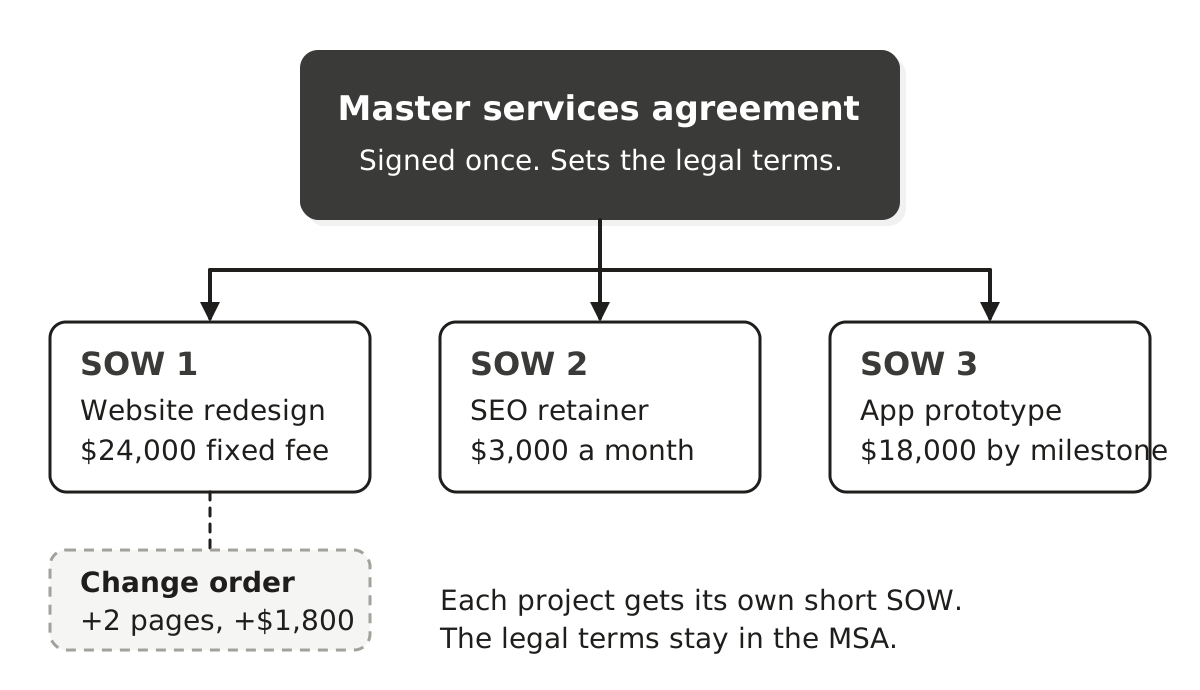
A master services agreement (MSA) sets the legal terms for an ongoing relationship: liability, IP, confidentiality, payment mechanics and disputes. A statement of work (SOW) describes one project under that relationship: what gets delivered, by when, and for how much. You negotiate the MSA once, then sign a short SOW for each new piece of work. Nobody has to renegotiate the liability cap every time the client wants a new landing page.
Northfield Digital, a 12-person agency in Dublin, works this way with a retail client. One MSA signed in 2024, then a redesign, a monthly SEO retainer and an app prototype, each on its own SOW. It’s efficient. It also creates its own problems, mostly when the two documents disagree.
What belongs in the MSA
The MSA is the legal foundation. It usually covers:
- How SOWs get created, signed and changed
- Payment mechanics: invoicing, payment terms, late interest, expenses and tax
- Who owns the IP, and what’s licensed
- Confidentiality and data protection
- Warranties and disclaimers
- Limitation of liability and indemnification
- Insurance
- Term, termination, and what happens to SOWs still running when it ends
- Governing law and how disputes get resolved
- The usual boilerplate: assignment, notices, entire agreement, severability
A good MSA barely mentions any particular project. It should work just as well for the first SOW as for the twentieth.
What belongs in the SOW
The SOW is the business document. The test we use: could someone who wasn’t in any of the sales meetings read it and tell whether the work got done? A good one includes:
- A reference to the MSA it sits under, by name and date
- The project’s goals and a clear description of scope
- Specific deliverables, with format and quantity
- What’s out of scope, in writing
- The timeline and key milestones
- Acceptance criteria and how acceptance works
- Pricing: fixed fee, time and materials, or milestone payments
- What each side has to do, such as client feedback within five business days
- Named contacts and roles
If you’re starting from scratch, the statement of work template covers all of these.
The two side by side
| MSA | SOW | |
|---|---|---|
| Purpose | Legal terms for the relationship | Details of one project |
| How often signed | Once, sometimes renewed | Once per project |
| Typical length | 10 to 30 pages | 2 to 10 pages |
| Who usually reviews it | Legal, finance, the owner | Project and account managers |
| Key content | Liability, IP, confidentiality, disputes | Scope, deliverables, timeline, price |
| How it changes | Formal amendment | Change order or a new SOW |
When they disagree, which one wins?
Sooner or later a SOW will say something the MSA doesn’t, or says differently. The MSA should have an order of precedence clause that settles it. A sensible version says the MSA wins unless a SOW names the specific MSA section it’s overriding and says clearly that it’s overriding it.
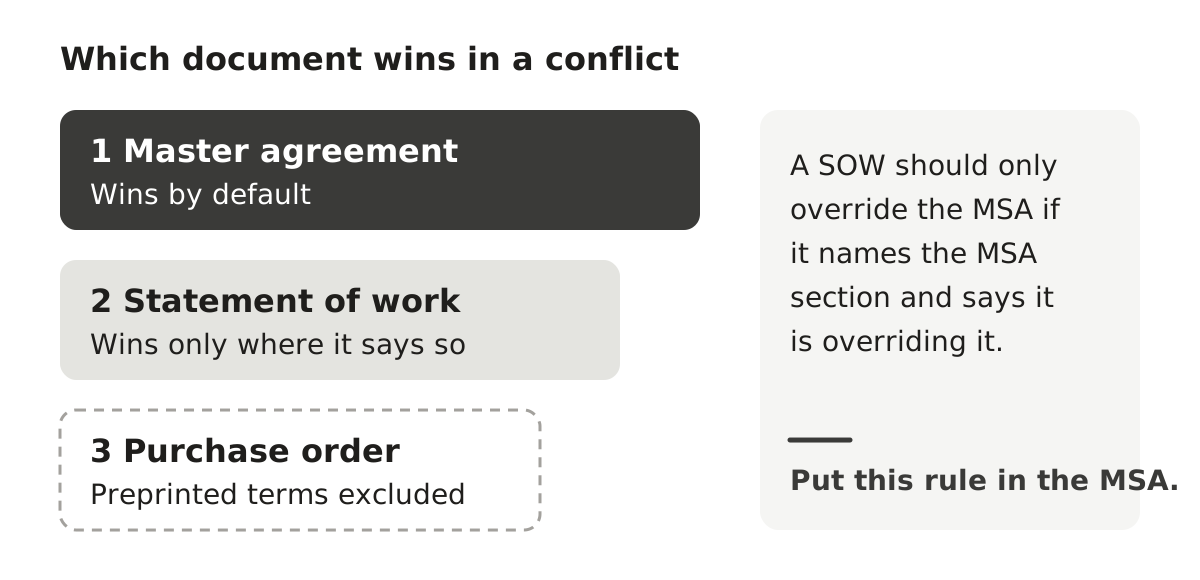
That drafting matters more than it looks. SOWs are often written quickly by project people who haven’t read the MSA in a year. Without a clear rule, a SOW line like “Client owns all materials used in the project” could arguably override a carefully negotiated MSA clause that lets the agency keep its own tools. Keep SOW templates focused on scope, timeline and price, and limit who’s allowed to sign a SOW that changes legal terms.
Where it usually goes wrong
Scope creep
The client asks for “one more small thing” and the project quietly doubles. The cure is a change order process in the MSA: any change to scope, timeline or price is agreed in writing, usually on a one-page form signed by both sides, before the extra work starts. Northfield’s redesign grew by two pages. That was a $1,800 change order, not a favor.
No acceptance criteria
Without them, a client can leave a milestone open indefinitely and hold up payment. Include objective criteria and a deemed acceptance rule, for example acceptance if there’s no written rejection with reasons within ten business days of delivery.
SOWs that outlive the MSA
If the MSA expires or is terminated, what happens to a SOW that’s half done? Many MSAs say open SOWs carry on under the MSA’s terms until they finish. If yours is silent, expect an argument. Read the termination and survival clauses together.
Payment terms that drift
The MSA says net 30. A SOW written in a hurry says “payment on completion.” Now nobody’s sure whether a milestone invoice is due in 30 days or whenever the whole project wraps up, and the client’s accounts team will pick whichever answer suits them. Either keep payment terms out of SOWs entirely, or have the SOW say plainly that it overrides the MSA’s payment clause for that project only.
Purchase orders with their own small print
Some customers issue a purchase order for each SOW, and the back of the PO has preprinted terms that contradict the MSA. Add a line to the MSA saying preprinted PO terms have no effect.
The wrong MSA
Big clients sometimes have several MSAs with the same supplier, or an expired one still floating around. Every SOW should name its MSA by title and date.
When one contract is enough
The MSA and SOW setup earns its keep when you expect repeat work. For a one-off job, a single agreement that combines the legal terms and the scope is simpler, and honestly most freelancers don’t need anything more. The services agreement and consulting agreement templates are built for that. Our rule of thumb: if you expect a second project with the same client within a year, set up an MSA.
If you already work under an MSA, pull it out and check four things: the precedence clause, what happens to open SOWs on termination, whether preprinted PO terms are excluded, and whether your SOW template sticks to scope, acceptance and price. You can also upload an MSA and its SOWs to LegalWolf to check them for conflicts. If you’re negotiating your first MSA with an important client, have a lawyer look at it, because every future project will run on those terms.
This article is general information, not legal or tax advice. Laws differ between countries and states and change over time, so check the rules that apply to you or speak to a qualified professional.