Oman’s 5% personal income tax: what high earners face from 2028
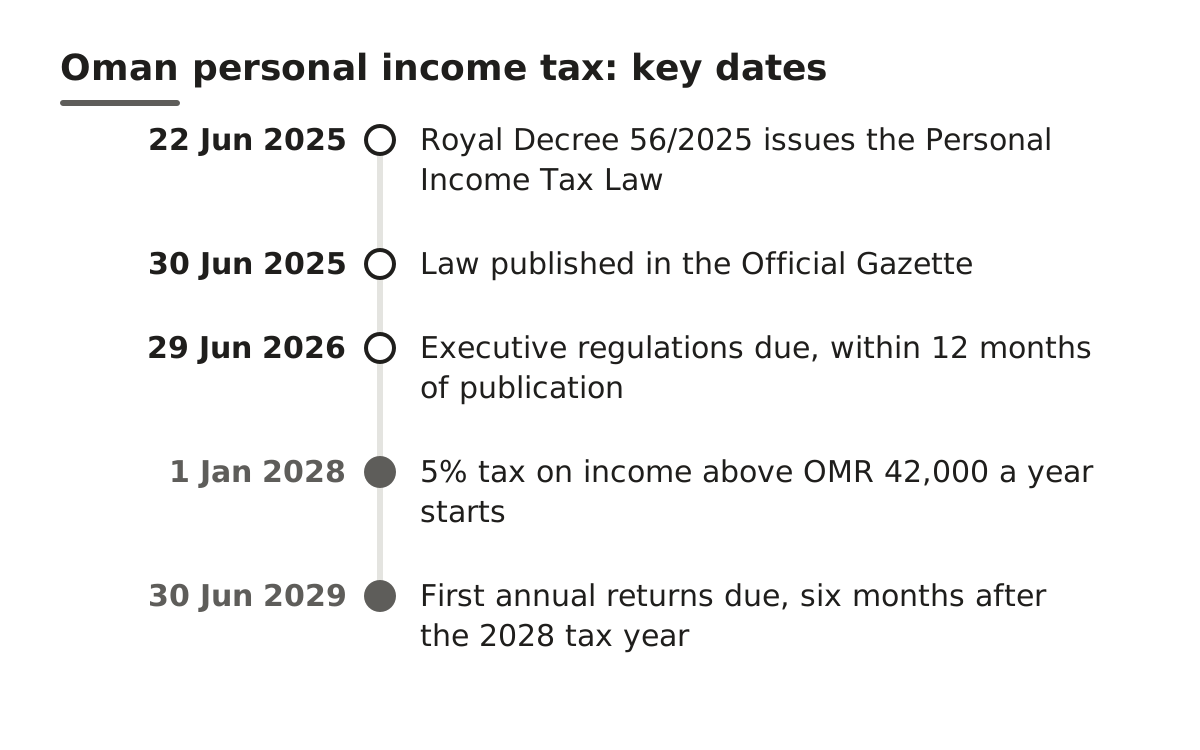
Oman will start taxing personal income on 1 January 2028. Royal Decree No. 56/2025, issued on 22 June 2025 and published in the Official Gazette on 30 June 2025, introduces a flat 5% tax on individual income above OMR 42,000 a year. The Tax Authority says about 99% of the population won’t pay it, because the threshold is high. The other 1% (typically senior executives, well-paid professionals, business owners and landlords with large portfolios) should start planning now, and so should the companies that employ them.
For a region best known for tax-free salaries, it’s a real shift. The rate is low and the threshold is generous, but the compliance side (withholding, returns, records of worldwide income) is new for most people in Oman.
What the law says
- Rate and threshold. 5% on net income above OMR 42,000 a year. KPMG notes that gross income includes cash and benefits in kind, so housing, cars and school fees paid by an employer count.
- Who’s taxed. Tax residents, both Omanis and expatriates, are taxed on worldwide income. Non-residents are taxed only on income from Oman. EY’s summary says one test of residence is spending more than 183 days in Oman in the tax year, whether or not the days are consecutive.
- What income counts. Deloitte lists employment income, self-employment income, rental income, pensions and board fees. EY adds royalties, interest, investment gains, gains on real estate and prizes.
- Reliefs. The Tax Authority lists deductions and exemptions for education, healthcare, inheritance, zakat, donations and a primary residence. The conditions and limits are left to the executive regulations.
- Withholding. Employers must withhold tax on salaries, pensions, end of service benefits and board remuneration.
- Returns. According to EY, returns are filed electronically within six months of the end of the tax year, so the first returns for 2028 would be due by 30 June 2029.
- Penalties. Deloitte notes late payment can attract penalties of up to 1% of the unpaid amount.
What’s still pending
The law leaves a lot to executive regulations, which KPMG says were due within 12 months of publication, so by 29 June 2026. Until they’re out, several details aren’t settled: the full residence tests, how the education and healthcare deductions are capped, how withholding works for employers outside Oman, and what records individuals need to keep. Treat the worked examples below as illustrations based on the law and the Tax Authority’s description, not as final numbers.
What it means in practice
Here’s how the 5% works on a few typical profiles, assuming the deductions work as the Tax Authority has described them.
| Person | Annual income | Above OMR 42,000 | Tax at 5% |
|---|---|---|---|
| Sami, operations manager | OMR 36,000 salary | Nothing | OMR 0 |
| Maryam, consultant | OMR 38,000 net fees plus OMR 6,000 rent | OMR 2,000 | OMR 100 |
| Rashid, finance director | OMR 54,000 salary plus OMR 7,200 housing | OMR 19,200 | OMR 960 |
| Rashid, after OMR 5,000 of school fees | OMR 56,200 after the deduction | OMR 14,200 | OMR 710 |
Two things stand out. First, the tax only bites on the slice above OMR 42,000, so even Rashid’s bill is under 2% of his total package. Second, Maryam is caught only because her rental income tips her over the line. People with several modest income streams are exactly the ones who’ll be surprised.
For Rashid’s employer, the practical job is payroll. On OMR 960 a year, withholding comes to about OMR 80 a month, but the employer has to know about the housing benefit, apply any reliefs correctly and report it. That needs system changes, and 2028 isn’t far off for a payroll project.
Who this affects, including foreign businesses
- Employers in Oman with staff earning near or above the threshold, once benefits in kind are counted.
- Foreign groups with Omani subsidiaries or branches, whose expatriate packages (housing, schooling, cars, bonuses) may push executives over OMR 42,000.
- Residents with income abroad, such as rent from property at home or investment income, because residents are taxed on worldwide income. EY’s summary says tax paid abroad can be credited, capped at the Omani tax on that income.
- Non-residents with Omani income, such as board fees from an Omani company or rent from Omani property.
- Freelancers and business owners taxed on self-employment income, who’ll need proper accounts to show their net figure.
What to do now
- List every employee whose total package, including benefits in kind, is anywhere near OMR 42,000.
- Talk to your payroll provider about withholding in 2028, and ask when their system will be ready.
- Review expatriate packages and employment contracts: do they promise net pay or gross pay? A tax-equalization promise could make the 5% your cost, not the employee’s.
- If you’re self-employed, start keeping clean records of income and expenses now, so 2028 isn’t your first year of bookkeeping.
- Keep receipts for education and healthcare spending, since those are expected to be deductible.
- Watch for the executive regulations and the Tax Authority’s guides, and revisit your plans once they’re published.
If you invoice clients in Oman as a freelancer, our tax set-aside calculator helps you work out how much to put away each month, and the invoice generator keeps your income records tidy from day one.
Sources
- Oman Tax Authority: Issuance of Personal Income Tax (PIT) Law
- KPMG: Oman publishes the Personal Income Tax Law
- EY: Oman to introduce personal income tax from January 2028
- Deloitte: Oman Personal Income Tax Law issued
- PwC Worldwide Tax Summaries: Oman, taxes on personal income
This article is general information, not legal or tax advice. Laws differ between countries and states and change over time, so check the rules that apply to you or speak to a qualified professional.