Personal guarantees: when your business debt becomes yours
A personal guarantee is your promise to pay a business debt yourself if the business doesn’t. Sign one and, for that debt, the limited liability you formed an LLC or company to get is gone. If the business defaults, the lender, landlord or supplier can usually come straight to you for the full amount (often plus their legal costs), without first winding up the business and frequently without suing it first. That’s why it pays to slow down every time someone slides one across the table.
Where they turn up
Plenty of owners sign guarantees without realizing it. Look out for them in these places:
- Bank loans and credit lines. In the US, SBA 7(a) loans generally require personal guarantees from anyone owning 20% or more of the business. Banks elsewhere take a similar line with young companies.
- Commercial leases. Landlords often want the owners of a new or small tenant to guarantee the rent, sometimes for the whole term.
- Equipment and vehicle finance.
- Trade credit applications. A supplier’s credit form often hides a guarantee paragraph just above the signature line.
- Business credit cards and merchant cash advances.
Watch the signature block. If it reads “individually and on behalf of Rivera Catering LLC”, you’re probably signing as a guarantor, not only as an officer of the company.
How it plays out when things go wrong
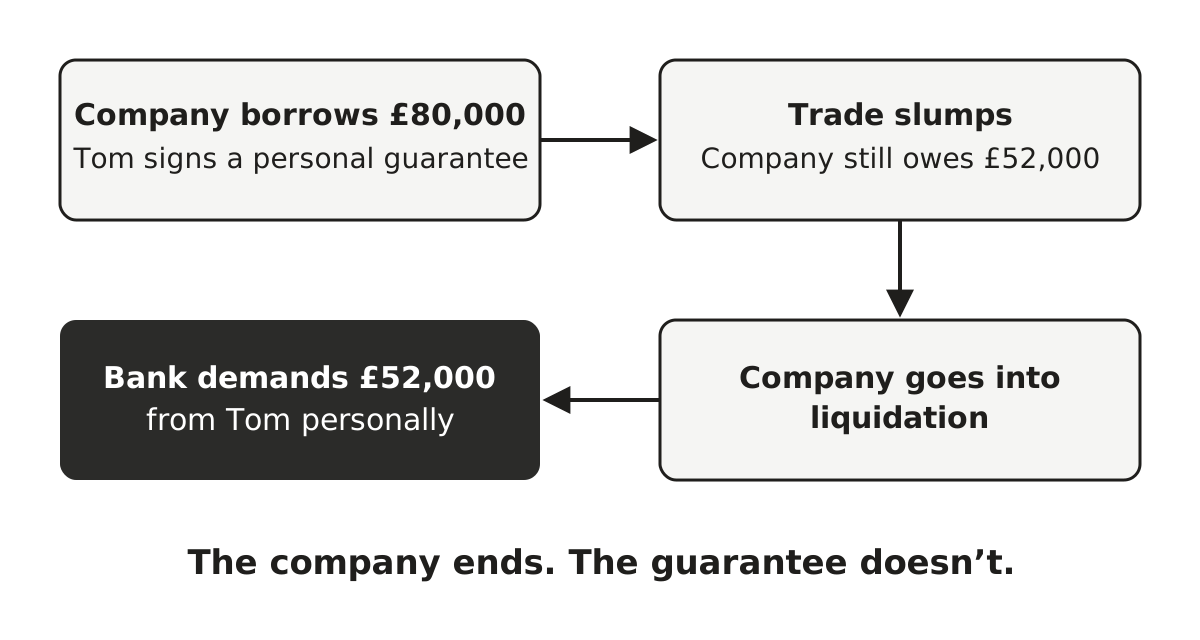
Tom runs a bakery in Leeds through a limited company. The company borrows £80,000 from its bank, and Tom signs a personal guarantee. Two years later trade has slumped, the company still owes £52,000, and it goes into liquidation.
Liquidation ends the company. It doesn’t end Tom’s guarantee. The bank can demand the £52,000 from Tom personally, plus interest and enforcement costs if the guarantee allows them. If he can’t pay, the bank can sue, get a judgment and, at worst, seek a charge over his home or start bankruptcy proceedings. The pattern is much the same in the US, Canada and Australia, with local differences in how creditors collect.
The wording that makes a guarantee dangerous
Guarantees vary a lot. These are the terms to find and understand before you sign.
No cap on the amount
An unlimited guarantee covers everything the business owes that creditor, including interest, fees and collection costs. A limited guarantee caps your exposure at a fixed figure or a percentage of the debt.
“Continuing” or “all monies” language
A continuing guarantee doesn’t stop at the original loan. It covers future borrowing from the same lender too, until you formally bring it to an end. People are often shocked to find that a guarantee signed for a £20,000 overdraft now covers a £150,000 loan taken out years later.
Joint and several liability
If three co-owners each guarantee a debt “jointly and severally”, the creditor can chase any one of them for the whole amount. It doesn’t have to split the claim three ways, and it tends to call whoever has the most assets. You may then have a claim against your co-guarantors for their share, but pursuing it is your problem.
Waivers of your defenses
Guarantees commonly let the creditor extend the loan, change its terms or release other security without asking you, while you stay liable. Many also say the creditor doesn’t have to go after the business first. In US terms, that’s a guarantee of payment rather than a guarantee of collection.
Spouses and the family home
Lenders sometimes ask a spouse to sign as well, especially when the home is jointly owned. The rules differ. In the US, federal lending rules limit when a lender can insist on a spouse’s signature. In England, a lender taking a guarantee from a spouse or partner, secured on the home, generally has to take steps to make sure that person has had independent legal advice. If you’re asked to guarantee a partner’s business, get your own lawyer.
What you can negotiate
A lender or landlord will rarely drop the guarantee entirely for a young business. They’ll negotiate its shape more often than people think, especially if you raise it while terms are still being agreed rather than on signing day.
| Ask for | What it looks like |
|---|---|
| A cap | Liability limited to a fixed sum, such as $50,000 or six months’ rent |
| A time limit or burn-off | The guarantee falls away after, say, 24 months of on-time payments |
| Several rather than joint liability | Each co-owner guarantees only their own percentage |
| One debt only | Covers this loan or lease, not “all monies” owed now or later |
| Release on sale or exit | Your guarantee ends if you sell the business or leave and a replacement guarantor steps in |
| A “good guy” clause (leases) | Liability ends once you give notice, pay rent up to move-out and hand back the keys |
Good guy guarantees are standard in many New York City office and retail leases, and they’re worth asking about anywhere. A landlord in Denver may never have heard the phrase and still agree to the idea.
Before you sign
- Find every guarantee in the paperwork, including credit applications and lease riders.
- Check the amount: capped or unlimited?
- Check what it covers: one debt, or everything owed now and in future?
- Check how it ends, and whether you can give notice to stop it covering new borrowing.
- Look for joint and several wording if there are co-owners.
- Work out the worst case in real numbers, and whether your household could survive it.
- Get every promise in writing. Guarantees generally have to be written and signed to be enforceable in England and in most US states, so reassurance from a banker on the phone counts for nothing unless it’s in the document.
If you’ve already signed some
Dig out every guarantee you’ve given and list them with amounts and end dates. Ask your bank whether older ones can be released now the business has a track record. If you’re leaving or selling a business, make the release of your guarantees a condition of the deal. Buyers forget, and sellers stay on the hook.
If the business is struggling, talk to a lawyer or insolvency adviser early. Guarantors usually have more room to negotiate a settlement before the creditor starts enforcing than after. And before your next signature, you can check the contract for guarantee, indemnity and default wording with LegalWolf.
This article is general information, not legal or tax advice. Laws differ between countries and states and change over time, so check the rules that apply to you or speak to a qualified professional.