Saudi e-invoicing wave 25 pulls in businesses above SAR 187,500
Saudi Arabia’s e-invoicing mandate is reaching small businesses. On 24 July 2026, the Zakat, Tax and Customs Authority (ZATCA) announced the criteria for the 25th wave of the e-invoicing integration phase. It covers every taxpayer whose revenue subject to VAT exceeded SAR 187,500 in 2022, 2023, 2024 or 2025. Those businesses must integrate their invoicing systems with ZATCA’s Fatoora platform by 1 February 2027.
That’s half the threshold of the previous wave. Cafés, small shops, agencies and freelancers registered for VAT who have so far only had to produce compliant electronic invoices will now have to send them through ZATCA’s systems as well.
What changed
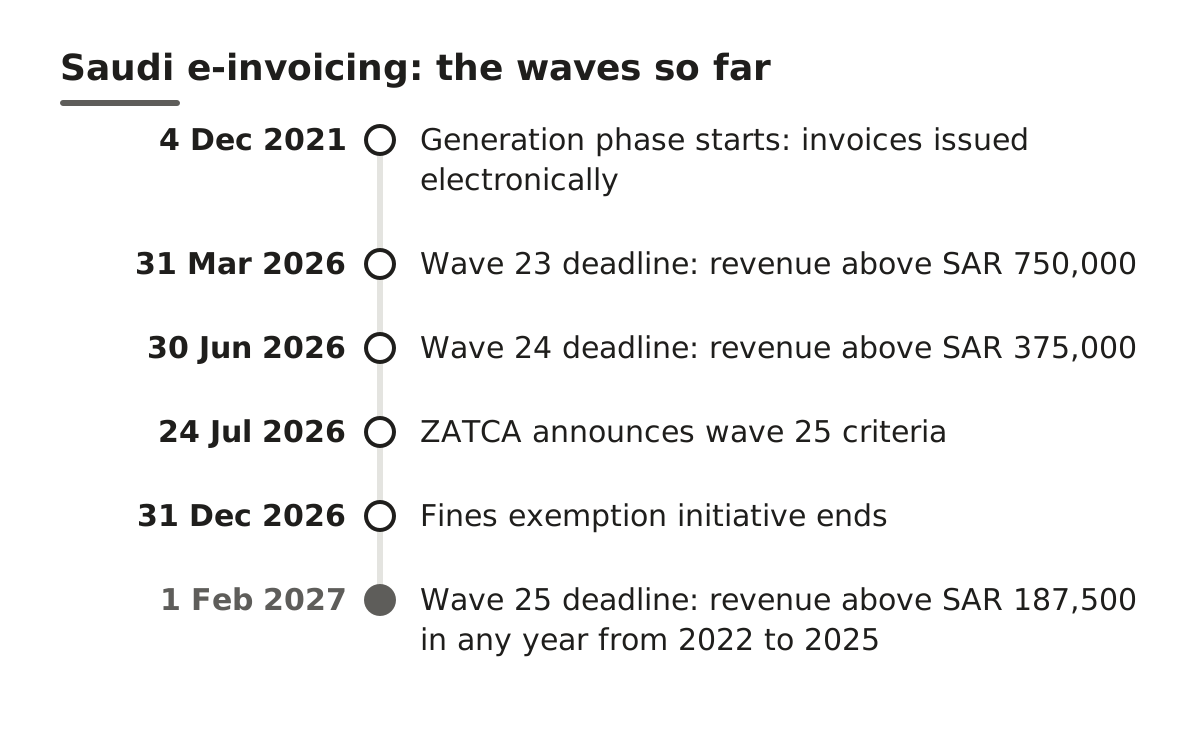
Saudi e-invoicing runs in two phases. The first, the generation phase, started on 4 December 2021 and requires VAT-registered businesses to issue invoices electronically. The second, the integration phase, requires businesses to connect their invoicing solutions to Fatoora, issue invoices in a specified format and add extra fields. ZATCA has rolled the integration phase out in waves, bringing in smaller businesses each time.
- Wave 23 covered taxpayers with revenue above SAR 750,000 and had a deadline of 31 March 2026.
- Wave 24 covered revenue above SAR 375,000 in 2022, 2023 or 2024, with a deadline of 30 June 2026.
- Wave 25 covers revenue above SAR 187,500 in any year from 2022 to 2025, with a deadline of 1 February 2027.
The test looks back. If your VAT revenue passed SAR 187,500 in any one of those four years, you’re in, even if you’re below it today. KPMG notes that ZATCA notifies each targeted taxpayer at least six months before its integration deadline, so watch your registered email and your ZATCA portal messages.
The fines amnesty runs to 31 December 2026
Separately, on 29 June 2026 ZATCA announced that the Minister of Finance had extended the Cancellation of Fines and Exemption of Financial Penalties Initiative for another six months, from 1 July to 31 December 2026. It covers fines for late registration under all tax laws, late payment, late filing, and fines for correcting VAT returns.
To benefit, you must be registered with ZATCA, file every outstanding return and pay the principal tax in full. You can ask for an instalment plan instead, as long as you apply before the initiative ends and pay each instalment on time. It doesn’t cover tax evasion penalties, fines under Article 45 of the VAT Law, fines you’ve already paid, or penalties connected to any return due after 30 June 2026.
If your VAT filings aren’t clean, fixing them under the amnesty before you integrate with Fatoora is the sensible order. Integration makes your invoicing far more visible to ZATCA.
Who this affects
- Small VAT-registered businesses in Saudi Arabia with revenue above SAR 187,500 in any year from 2022 to 2025.
- Freelancers and sole traders registered for VAT who cross that line, including those whose income has since dropped.
- Foreign businesses with Saudi entities or branches that fell outside earlier waves because their Saudi revenue was small.
- Software vendors and accountants who support small clients and will face a rush of integration projects before February.
What it means in practice
Consider Noura, who runs a specialty coffee shop in Jeddah. Her VAT-able revenue was SAR 210,000 in 2023, then dipped to SAR 170,000 in 2025 when roadworks closed her street for months. Because 2023 was above SAR 187,500, she’s in wave 25 anyway.
Her point-of-sale system produces e-invoices and QR codes, which covered the generation phase. For integration, she needs a solution that connects to Fatoora, issues invoices in the required format and includes the extra fields. Her first call should be to her POS vendor, to ask whether it supports integration and when she’ll be onboarded. If it doesn’t, she needs a new system, and that takes time to test.
The cost of getting it wrong adds up. When ZATCA published its e-invoicing penalties in 2021, Argaam reported a SAR 5,000 fine for not issuing and archiving an e-invoice, SAR 10,000 for cancelling an e-invoice after it’s issued, and warnings for missing items such as the QR code or VAT number. For a small café, a couple of those fines could wipe out a month’s profit.
Now take a Riyadh marketing freelancer, Faisal, who registered for VAT when his fees reached SAR 200,000 in 2024. He invoices from a spreadsheet. That won’t be enough after his deadline. He needs an invoicing tool that can integrate with Fatoora, and he should get it running well before 1 February 2027 so he can test a few real invoices first.
What to do now
- Check your VAT returns for 2022 to 2025. If any year’s taxable revenue passed SAR 187,500, assume you’re in wave 25.
- Look for ZATCA’s notification in your portal and registered email.
- Ask your invoicing or POS provider, in writing, whether its solution supports Fatoora integration and what onboarding involves.
- Plan to go live by December 2026, not the last week of January, to leave time for testing.
- Clean up any late returns or unpaid VAT under the fines initiative before 31 December 2026.
- Train whoever issues invoices, because cancelling or editing invoices after issue can attract fines.
Our VAT calculator is handy for checking the VAT on prices, and the invoice generator is fine for quotes and drafts. For invoices you actually issue in Saudi Arabia once you’re in scope, you’ll need a solution integrated with Fatoora. Wave 25 is the latest wave announced as of July 2026, and each wave so far has lowered the bar, so small businesses below SAR 187,500 should keep an eye on what comes next.
Sources
- ZATCA: Criteria for selecting targeted taxpayers in wave 25 of the integration phase
- ZATCA: Minister of Finance extends the exemption of fines initiative
- KPMG: Saudi Arabia e-invoicing mandatory for taxpayers with revenue above SAR 187,500
- The Invoicing Hub: Extended grace period, start of wave 24 and future wave 25
- Argaam: ZATCA announces penalties for non-compliance with e-invoice regulations
This article is general information, not legal or tax advice. Laws differ between countries and states and change over time, so check the rules that apply to you or speak to a qualified professional.