Security deposits: what landlords can keep and must return
A landlord can generally keep a security deposit only to cover what the tenant actually owes under the lease: unpaid rent, damage beyond normal wear and tear, and in many places cleaning or other costs the lease allows. Everything else goes back to the tenant, usually within a legal deadline and often with an itemized list of what was deducted and why. The details (caps, deadlines, where the money must be held, penalties) vary a lot between countries and, in the US, between states. Commercial deposits follow much looser rules, which we cover at the end.
What a landlord can usually deduct
- Unpaid rent, and in some places unpaid utilities or other charges the lease makes the tenant responsible for.
- Repairs for damage caused by the tenant, their household or guests, beyond ordinary wear and tear.
- Cleaning needed to get the property back to its move-in condition (not a better one).
- Replacing things the tenant removed or broke, such as keys, fixtures or appliances.
What they usually can’t
- Normal wear and tear from ordinary living.
- Damage that was already there when the tenant moved in.
- Upgrades or routine refreshing the landlord would have done anyway.
- The full price of replacing something that was already old. Courts and deposit schemes often expect deductions to reflect an item’s age and remaining life.
Wear and tear, or damage?
Most deposit disputes come down to this. Wear and tear is the gradual decline you’d expect from normal use. Damage comes from accidents, neglect or misuse.
| Usually wear and tear | Usually damage |
|---|---|
| Faded paint, a few small nail holes | Large holes, drawings on walls, unapproved paint colors |
| Carpet worn along walkways | Burns, pet stains or large rips in carpet |
| Loose door handles, light scuffs | Broken doors, cracked windows, missing blinds |
| Faint marks on kitchen counters | Deep cuts or heat burns on counters |
Time matters. After a six-year tenancy, repainting is normal upkeep and shouldn’t come out of the deposit. After six months, a wall that needs repainting because the tenant hung a gallery of frames without asking may be a fair deduction.
Deadlines and rules in different places
United States
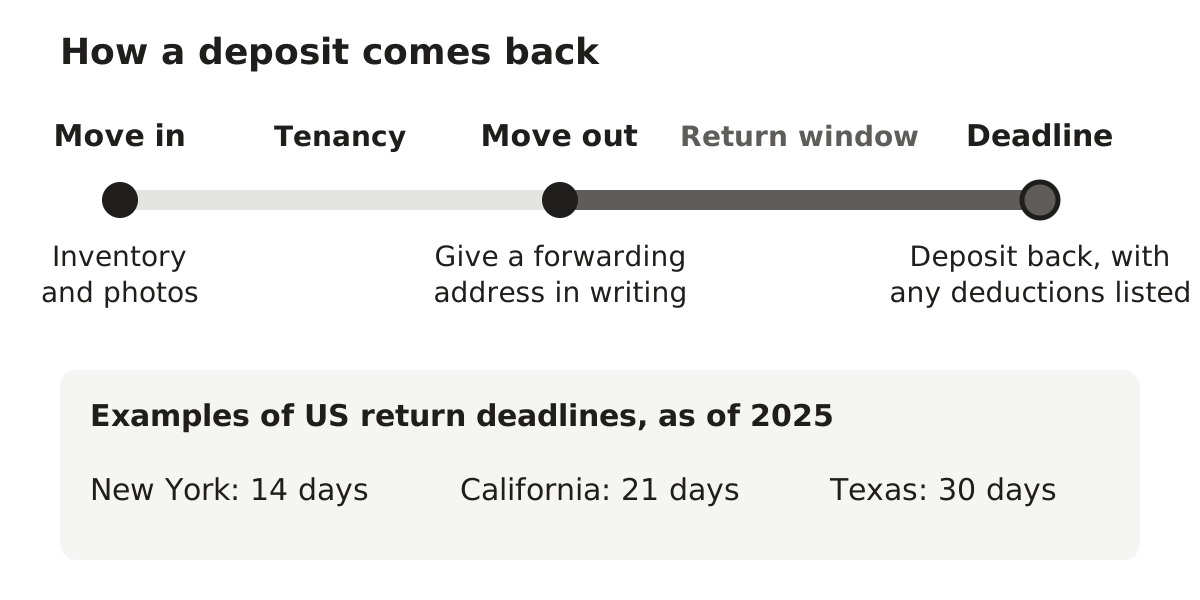
Each state sets its own rules. Return deadlines typically fall somewhere between 14 and 60 days after move-out, and many states require an itemized statement for any deductions. A few examples as of 2025:
- California: the landlord must return the deposit, with an itemized statement for deductions, within 21 days. Since mid-2024 most landlords can’t charge more than one month’s rent as a deposit, with a narrow exception for some small landlords.
- New York: residential deposits are generally capped at one month’s rent, and the landlord has 14 days to return the deposit with an itemized statement.
- Texas: the landlord has 30 days after the tenant leaves, and the tenant usually has to provide a forwarding address in writing.
Many states penalize landlords who wrongfully keep deposits, in some cases with two or three times the amount withheld. Cities can add their own rules, such as requiring interest on deposits.
England, Scotland and Wales
In England, landlords of most private residential tenancies must protect the deposit in a government-approved scheme within 30 days of receiving it and give the tenant certain prescribed information. Deposits are capped at five weeks’ rent where the annual rent is under £50,000, or six weeks’ rent above that. If a landlord doesn’t protect the deposit, a court can order them to pay the tenant between one and three times its amount, and it can make eviction harder. Each scheme offers free dispute resolution when the two sides can’t agree. Scotland and Wales run their own schemes with somewhat different rules, and private renting in England is going through significant reform, so check current guidance.
Canada
Rules are set province by province. Ontario is the outlier: residential landlords can generally take a deposit of up to one month’s rent to be used as the last month’s rent, but not a damage deposit. British Columbia allows a security deposit of up to half a month’s rent, plus a separate pet damage deposit.
Australia and the UAE
In Australia, deposits are called bonds, and each state and territory generally requires them to be lodged with a government bond authority rather than kept by the landlord. At the end of the tenancy the bond is released by agreement or, if there’s a dispute, through the state tribunal. In Dubai, deposits are commonly a small percentage of the annual rent, and disputes go to the emirate’s rental disputes center.
How tenants protect their deposit
- Before moving in, walk through the property and record its condition in a dated inventory with photos or video.
- Report problems in writing during the tenancy, so wear or defects aren’t blamed on you later.
- Get written permission for changes such as painting or putting up shelves.
- Clean properly and take your own move-out photos, ideally with the landlord or agent there.
- Give a forwarding address in writing.
- Note the return deadline. Our deadline calculator helps you count it.
If a deduction looks wrong, ask for the itemized list and receipts, then dispute it in writing, pointing to your move-in evidence. If that doesn’t work, use the deposit scheme’s dispute service where there is one, or small claims court. A clear, polite demand letter that sets out what you’re owed and by when often settles it without a hearing.
What landlords should do
Follow the rules on caps, protection and deadlines exactly, because the penalties for getting them wrong can exceed the deposit. Keep move-in and move-out records, get quotes or invoices for any repairs you charge for, and send an itemized statement on time even if you’re keeping nothing. Maria owns two flats in Bristol and has never lost a deposit dispute. Every tenancy starts with a 40-photo inventory the tenant signs.
Commercial deposits work differently
Most of the statutory protections above apply only to homes. For shops, offices and warehouses, the lease sets the rules: how much, where it’s held, what it covers and when it comes back. Commercial deposits are often bigger (three to six months’ rent is common for a new business), and in the UK they’re usually documented in a separate rent deposit deed. Some landlords accept a bank guarantee or letter of credit instead of cash.
If you’re a business tenant, negotiate a fixed return date after the lease ends, a right to get part of the deposit back after a clean payment record, and clear wording on what happens to your money if the landlord sells the building or becomes insolvent.
This article is general information, not legal or tax advice. Laws differ between countries and states and change over time, so check the rules that apply to you or speak to a qualified professional.