Small claims court: when it’s worth it and how it works
Small claims court is worth it when three things line up: the amount is under your local limit, your paperwork is clear, and the person you’re suing can actually pay. When all three hold, it’s one of the cheapest ways to recover money you’re owed, and you don’t need a lawyer. If the third one is shaky, think hard. Winning is usually the easy part. Collecting is where people get stuck.
What small claims court actually is
Most legal systems have a fast lane for low-value claims. In the US, each state runs its own version, sometimes called justice court or magistrate court. In England and Wales, low-value money claims go to the small claims track of the County Court. Canadian provinces have their own small claims courts, and in Australia small disputes often go to a local court’s small claims division or a state tribunal.
The details differ, but the idea is the same everywhere: simpler forms, relaxed rules of evidence, a judge who asks most of the questions, and little or no recovery of legal fees. That last point is why most people represent themselves. It’s a good fit for a clear unpaid invoice and a poor one for a tangled dispute with ten witnesses and a technical expert.
How much you can claim
Limits vary a lot and get revised from time to time, so treat these as examples as of 2025 and check your own court before filing.
| Where | Limit | Worth knowing |
|---|---|---|
| California | $12,500 for individuals, $6,250 for businesses | Lawyers generally can’t represent parties at the hearing |
| Texas | $20,000 | Heard in justice courts |
| England and Wales | £10,000 | Lower limits apply to personal injury claims |
| New South Wales | A$20,000 | Local Court small claims division |
Most other US states sit somewhere between $5,000 and $15,000, with a few outliers either way, and some cap how many claims one filer can bring each year. Canadian provinces set their own limits, often in the tens of thousands of dollars. If your claim is slightly over the limit, many courts let you give up the excess to stay in small claims. Just know that you’re giving it up for good.
Is it worth it for your claim?
Run your case through four questions before you spend a filing fee.
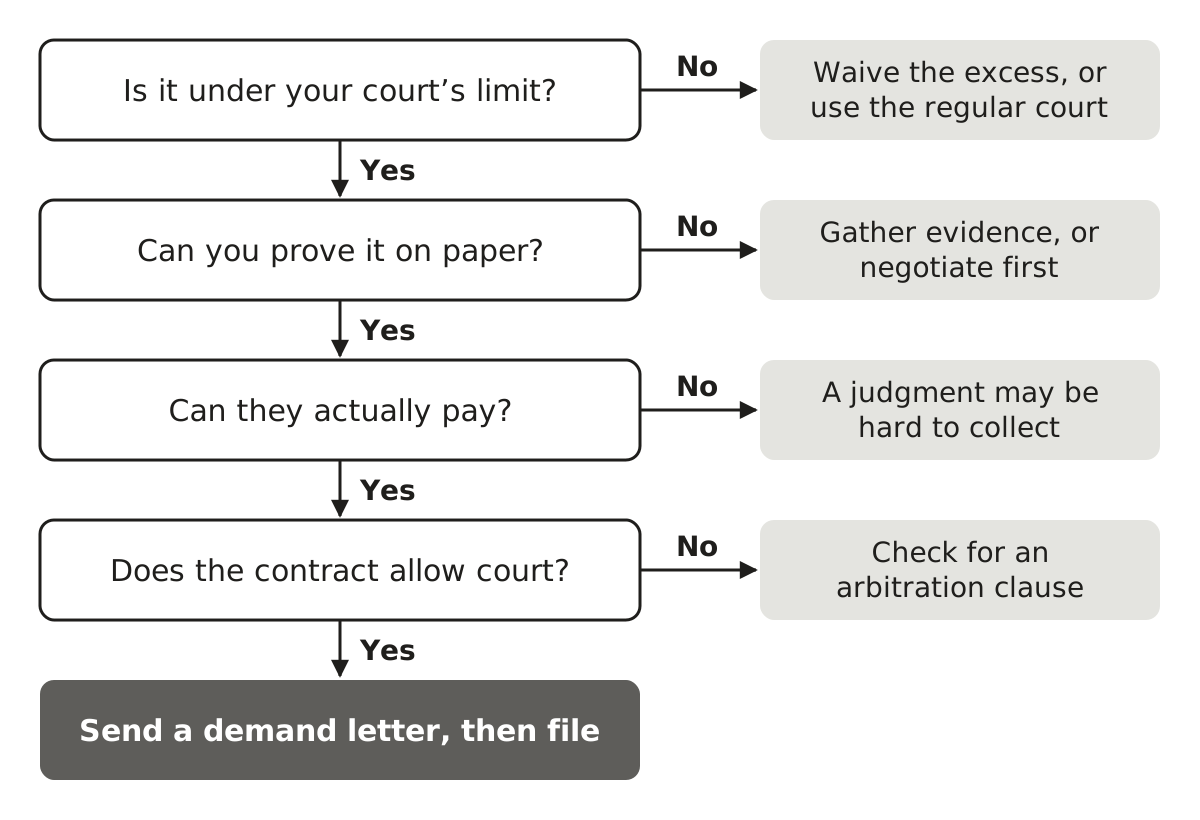
Two examples show the difference. Jess is a freelance illustrator in Manchester owed £3,200 by a local brewery. She has a signed quote, the brewery approved the final labels by email, and its taproom is busy every weekend. That’s about as good as small claims cases get.
Marco is a developer in Chicago owed $9,000 by a client in Portugal who says the app was buggy. The claim is disputed, the client has no assets in the US, and an Illinois judgment may be hard to enforce in Portugal. Small claims court isn’t the right tool for that one.
Two more things to check. If your contract has an arbitration clause, you may be required to arbitrate instead, although some clauses and some arbitration rules carve out small claims. And the limitation period for contract claims applies here just like anywhere else.
Send a demand letter first
Most courts expect you to have tried. In England and Wales, pre-action conduct rules apply to small claims too, and ignoring them can affect costs. Plenty of US judges will ask whether you demanded payment before filing. A firm letter with a deadline also gets a surprising number of debts paid without anyone going near a courtroom. The payment demand letter template gives you a solid starting point.
How a case moves through the court
Every court has its own forms and timings, but the broad path looks like this.
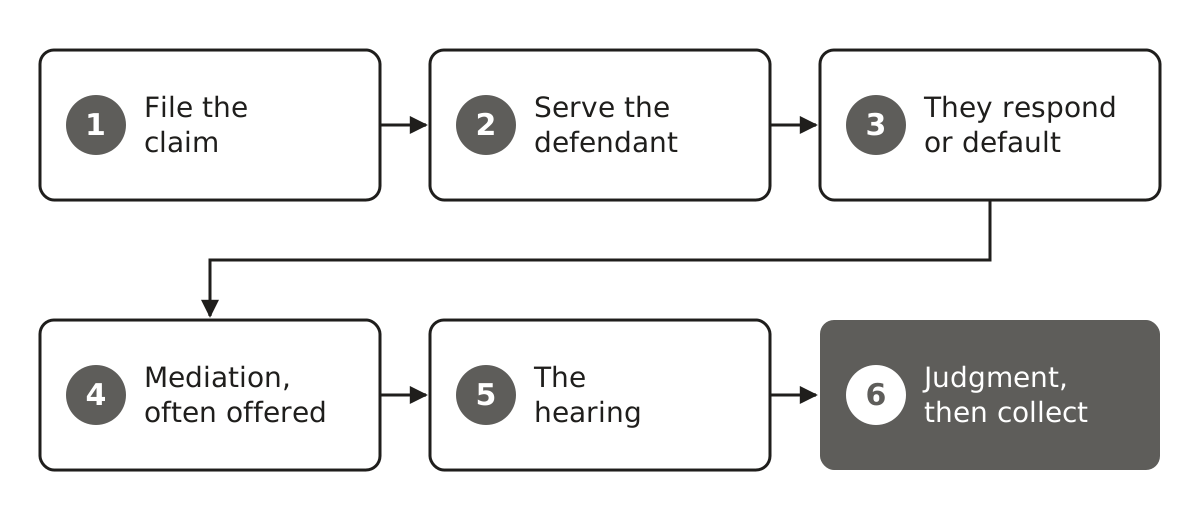
Filing and paying the fee
You complete a claim form saying who you’re suing, how much you want and why. Many courts take online filing now, and in England and Wales most simple money claims can be started online. Fees usually scale with the amount claimed, from a few tens to a few hundred dollars or pounds, and if you win the fee is normally added to the judgment.
Use the defendant’s correct legal name. Suing “Joe’s Plumbing” when the business is actually registered as J. Smith Plumbing LLC can cause real problems when you try to enforce.
Serving the defendant
The defendant has to be formally notified. Depending on the court, that might be done by the court itself, by certified mail, by a sheriff or by a process server. There are deadlines for service, so check them.
Their response
They can pay, admit the claim, dispute it, or file a counterclaim against you. If they don’t respond at all, you can usually ask for a default judgment without a hearing.
Mediation
Many courts push small claims toward settlement. In England and Wales, most defended small money claims are now referred to a free, short telephone mediation before any hearing. Many US courts have volunteer mediators available on the day. Go in knowing the lowest figure you’d accept and why.
The hearing
Hearings are short, often 15 to 60 minutes, and sometimes held by video. The judge will ask each side to explain and will look at the documents.
Walking in prepared
Small claims judges are busy, and they notice who has done the work. Bring:
- A one-page timeline: contract signed, work delivered, invoice sent, reminders, demand letter
- Copies of the contract, invoices, proof of delivery and key emails, with extra sets for the judge and the other side if your court requires them
- A short breakdown of what you’re claiming, including any late payment interest and how you calculated it
- Your answer to their obvious defense: if they’ll say the work was poor, bring proof it was approved or used
Stick to facts and paper. “The invoice fell due on June 13, and here’s their email of June 2 approving the final version” will do far more for you than a long account of how badly you were treated.
Winning isn’t the same as getting paid
A judgment is an order to pay, not the money itself. Most people who lose do pay. Some don’t, and then you need enforcement tools, which vary by place but often include:
- Wage garnishment or an attachment of earnings order against an individual
- A bank levy or third-party debt order
- A lien on property
- Seizure of goods by a sheriff, marshal or enforcement officer
- A hearing where the debtor must disclose their assets under oath
Each of these usually has its own fee. That’s why the “can they pay?” question belongs at the start, not the end.
Before you file
Check your court’s current limit and fees, confirm the defendant’s legal name and address, and make sure your contract doesn’t send disputes somewhere else first. Then send a proper demand with a clear deadline. If you’re not sure your contract supports the claim, you can review it with LegalWolf before filing.
A short consultation with a lawyer can still be worth it if the other side has hired one, if a counterclaim looks likely, or if the defendant is in another state or country.
This article is general information, not legal or tax advice. Laws differ between countries and states and change over time, so check the rules that apply to you or speak to a qualified professional.