Subleasing or assigning a lease: when you need permission
You need permission to sublease or assign a lease whenever the lease says so, and most commercial leases and many residential ones do. Even when the lease is silent, local law may restrict transfers, particularly for homes. The key difference is this: an assignment hands your whole lease to someone else, while a sublease makes you the landlord of a subtenant for some or all of the space. Either way, you often stay on the hook to your landlord unless they release you in writing.
Sublease or assignment: what’s the difference
With an assignment, the new tenant (the assignee) steps into your shoes for the rest of the term. They deal with the landlord and pay the rent directly. With a sublease, you keep your lease and rent space to a subtenant under a separate agreement. The subtenant pays you, and you carry on paying the landlord.
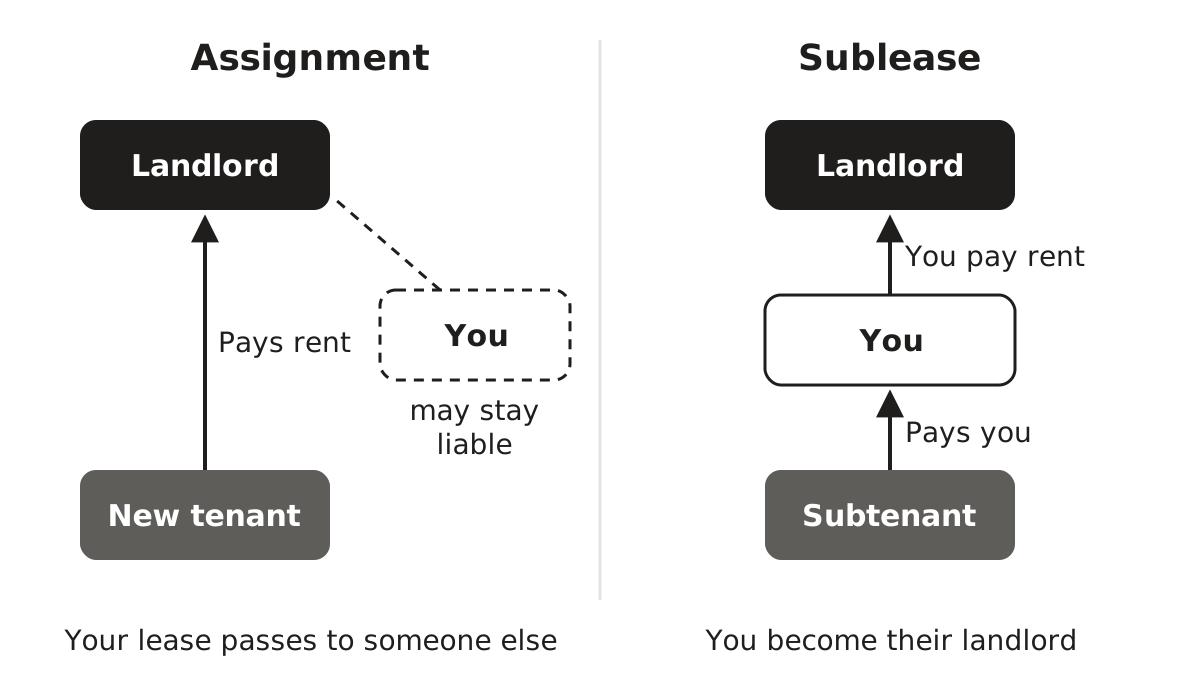
| Assignment | Sublease | |
|---|---|---|
| What transfers | Your whole remaining lease | Some or all of the space, for some or all of the remaining term |
| Who the new occupier pays | The landlord | You |
| Your position with the landlord | You step back, but may stay liable | Unchanged |
| Typical reasons | Selling the business, moving for good | Downsizing, a temporary absence, spare space |
Labels don’t settle it. In many US states, if you hand over the whole remaining term, a court may treat the deal as an assignment even if the document calls it a sublease.
When you need the landlord’s consent
Start with the lease itself. Look for a clause headed “Assignment and subletting” (UK leases often call it “Alienation”). It usually follows one of these patterns:
- Absolute ban: no assignment or subletting at all.
- Consent required: only with the landlord’s written consent.
- Consent not to be unreasonably withheld: the landlord needs a genuine reason to refuse, such as a financially weak incoming tenant or a use the lease doesn’t allow.
- Permitted transfers: some leases let you transfer to a group company or a buyer of your business without consent, provided you give notice.
Where the lease says nothing, the starting point in many common law countries is that tenants can transfer, but statutes and local rules often change that, especially for homes.
Business premises
In England and Wales, where a lease says consent can’t be unreasonably withheld, the landlord has a statutory duty to reply within a reasonable time and give written reasons for refusing. In the US, courts generally enforce the lease as written. Some states read in a reasonableness standard where a lease requires consent without saying more, but many don’t, so negotiate the words “not to be unreasonably withheld, conditioned or delayed” into the lease at the start.
Watch for these related clauses:
- Change of control: a sale of the shares in your company may count as an assignment. See change of control.
- Recapture: when you ask to transfer, the landlord can end your lease and take the space back instead.
- Profit sharing: if a subtenant pays more than you do, you may have to hand over part of the difference, often half.
- Conditions: the incoming tenant’s accounts, a new guarantee, and you paying the landlord’s legal costs.
Homes
Many residential leases ban subletting or require consent, and short-term rentals through booking platforms usually count as subletting. Some places give tenants extra rights. In New York, for example, tenants in many buildings with four or more units can ask to sublet, and the landlord can’t unreasonably refuse. Rent-regulated homes and social housing often come with tighter restrictions, and many cities regulate or license short-term rentals on top of whatever the lease says.
What happens if you don’t ask
Transferring without consent that your lease requires is usually a breach, and often a serious one. Depending on the lease and local law, the landlord may be able to:
- treat it as a default and, after any required notice and cure period, end the lease;
- remove the subtenant or assignee;
- claim damages, including lost rent;
- in some places, claim any profit you made on the arrangement.
In England, an assignment made in breach of the lease can still take effect, but the landlord may then be able to forfeit it, which leaves the new tenant exposed. Jake found out the hard way. He sublet his Brooklyn apartment through a short-term rental site for three months while working in London, and came home to a notice to cure and a very unhappy landlord. His guests, who had paid in advance, had to leave early.
You may still be liable after you leave
This is the part people miss. Assigning a lease doesn’t automatically let you off.
- In most US states, the original tenant stays liable for the rent if the assignee defaults, unless the landlord signs a release or a novation. The seller of a restaurant in Phoenix can end up paying rent years later when the buyer’s business fails.
- In England and Wales, for leases granted since 1996, the outgoing tenant is generally released on a lawful assignment, but the landlord can require an authorized guarantee agreement, under which you guarantee the next tenant until they assign in turn.
- With a sublease, you stay fully liable to your landlord. If your subtenant stops paying, you still owe the rent.
Any personal guarantee you gave for the lease may also survive the transfer. Make its release part of the negotiation.
How to ask for consent
- Reread the transfer clause and note every condition and time limit.
- Send a written request to the address in the lease’s notices clause, with the proposed tenant’s details, accounts, references and intended use.
- Offer to cover the landlord’s reasonable legal costs if the lease requires it. Most landlords will ask.
- Follow up in writing and keep a record of every date.
- Get consent in writing, ideally as a formal license or consent document, before anyone moves in.
For a sublease, use a written agreement that mirrors your own lease, so the subtenant can’t do anything that puts you in breach, and make sure it ends no later than your lease does. For an assignment, ask for a full release or, in England and Wales, keep any guarantee agreement as narrow as the law allows.
Planning ahead
If you’re about to sign a new lease, negotiate transfer rights now, while you still have bargaining power: consent not to be unreasonably withheld, permitted transfers to group companies and a buyer of the business, no recapture, and release of the original tenant and any guarantor on assignment to a creditworthy tenant. If you’re already locked in, read your clause closely and ask before you act. You can check your lease’s assignment clause and related terms with LegalWolf in a few minutes.
This article is general information, not legal or tax advice. Laws differ between countries and states and change over time, so check the rules that apply to you or speak to a qualified professional.