Trademark basics: protecting your business name and logo
You protect a business name and logo by using them consistently as a brand and registering them as trademarks in the countries where you sell. Registering a company and buying the domain don’t give you trademark rights, which surprises a lot of founders. A registration is what lets you stop someone using a confusingly similar name for similar goods or services, and it’s far easier to enforce than rights built on use alone.
Your company name and domain aren’t trademarks
Say you open a bakery in Leeds called Crumb and Rye. You register the company at Companies House, buy the .co.uk domain and print 2,000 loyalty cards. None of that stops a bakery in Manchester opening under almost the same name next spring.
It gets worse if the Manchester bakery registers the name as a trade mark first. You may then have to rely on a passing off claim to keep trading under your own name, which is slow, expensive and depends on proving your reputation. A UK filing in one class costs £170 online (as of 2025). That’s a lot cheaper than a fight.
Three assumptions trip people up in most countries:
- “We registered the company, so the name is ours.” A company register only stops another company registering an identical name there. It says nothing about who can use the name as a brand.
- “We own the domain.” A domain is an address. A trademark owner may even be able to take it from you through a domain dispute process.
- “It’s protected by copyright.” Names and short slogans generally aren’t. Your logo artwork might be, but that’s a separate right, and it may still belong to your designer.
Pick a name you can actually protect
Trademark offices rank names on a scale of distinctiveness. The more a name describes what you sell, the harder it is to register and enforce.
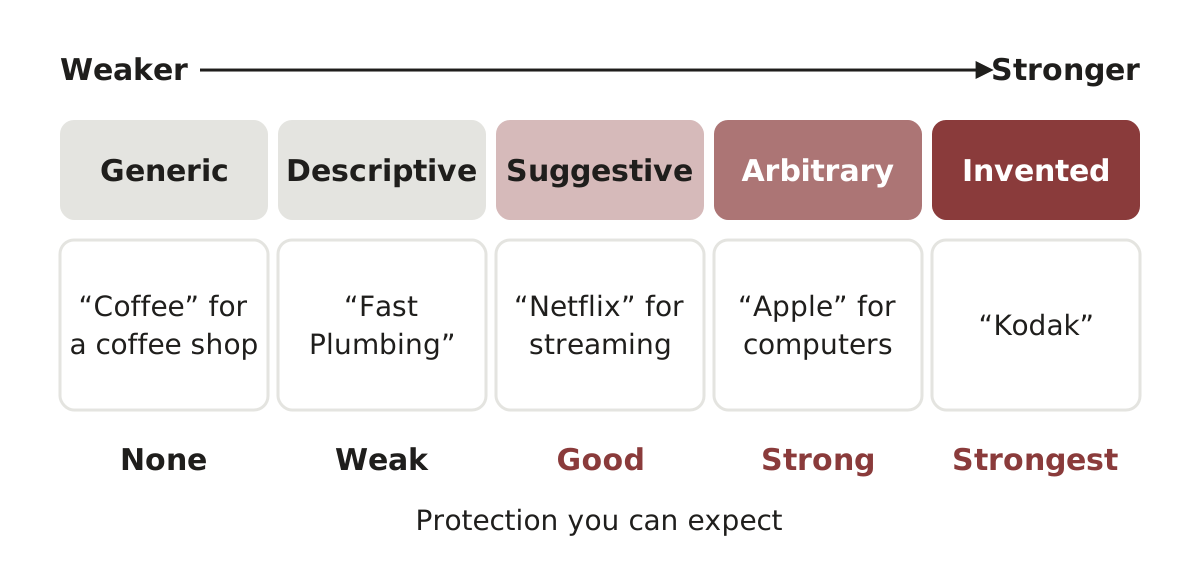
This is where a lot of small brands go wrong. Marketing people like descriptive names because customers get them instantly. “Leeds Artisan Bread” tells you exactly what’s on offer, and that’s the problem: other Leeds bakers need those words too, so no office will hand you a monopoly on them, at least not until the name has built up real recognition over years.
Honestly, a suggestive name is usually the sweet spot. It hints at what you do without spelling it out, and it’s far easier to register.
Search before you print anything
Before you order signage or pay for a logo, check whether someone already has rights in the same or a similar name for related goods or services. Rebranding after six months costs money. Being sued costs more.
- Search the official databases in your key markets: the USPTO in the US, the UK IPO, EUIPO for the EU, and the national office anywhere else you sell.
- Look for sound-alikes and near spellings as well as exact matches. “Krumb and Rye” is still a problem.
- Check search engines, app stores, social media, marketplaces and company registers for businesses using the name without registering it.
- If you’re about to spend serious money on a brand, pay for a professional clearance search and opinion. It’s cheap insurance.
Registered and unregistered rights
How much protection you get without registering depends a lot on where you are.
United States
US rights come from use. If you genuinely use a mark in commerce, you build common law rights in the area where you trade. A federal registration with the USPTO adds nationwide priority, a legal presumption that you own the mark, the right to use the ® symbol and the option to record the mark with customs. You can file before launch with an intent-to-use application, which locks in your priority date.
United Kingdom
Unregistered names are protected through passing off, but you have to prove goodwill, a misrepresentation and damage. That’s slow and costly. A UK registration is much easier to enforce.
The EU, the UAE and most other countries
Many countries rely mainly on registration, and in lots of them whoever files first has the stronger claim, sometimes even against an earlier user. An EU trade mark from EUIPO covers every member state in one registration. In the UAE, trademarks are registered at the federal level, and relying on unregistered use there is a weak position.
How registration works
The steps look similar almost everywhere.
- Choose your classes. Most countries use the Nice Classification, which sorts goods and services into 45 classes. A software company might file in class 9 (software) and class 42 (software as a service). Fees are usually charged per class.
- Describe what you sell. Too broad and it may be refused or later attacked for non-use. Too narrow and it won’t cover your actual business.
- Examination. The office checks the mark is distinctive and, in some countries including the US, whether it clashes with earlier marks.
- Publication. Anyone with earlier rights gets a window to oppose.
- Registration. After that, you keep it alive with renewals.
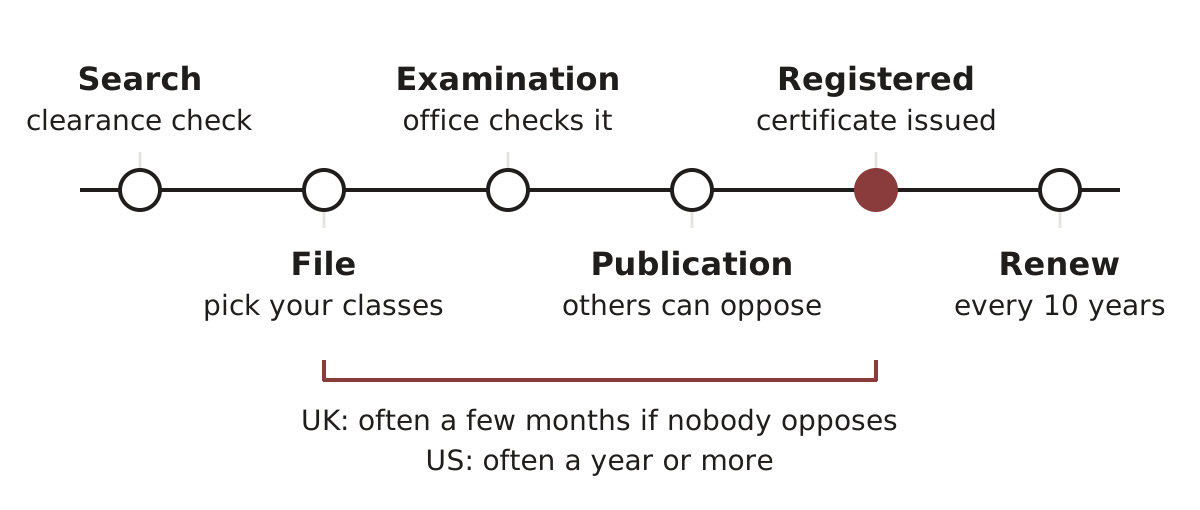
Registrations generally last ten years and can be renewed indefinitely. In the US you also file a declaration of continued use between the fifth and sixth years after registration. Stop using a mark for long enough and, in most countries, someone can apply to cancel it.
Selling abroad
Trademarks are territorial. A US registration does nothing for you in Canada, the UK or Australia. Two tools make going international less painful:
- The six-month priority window. Under the Paris Convention, if you file in another member country within six months of your first application, you can claim your original filing date.
- The Madrid System. One international application, based on your home filing, can be extended to many member countries. Each country still examines it under its own rules and charges its own fee.
Prioritize where you sell now, where you manufacture, and where copycats tend to appear. You don’t need 40 countries on day one.
Keeping the mark strong
- Use ™ for unregistered marks and ® only once the mark is registered in that country. In the UK, falsely claiming a mark is registered is a criminal offense.
- Use the mark as a brand followed by the product, like “Zyloo project software,” rather than as a verb or the everyday word for the product. Brands that turn into the generic name for something can lose protection.
- Set up a watch service, or at least a quarterly search, for new filings that look like yours.
- If partners, franchisees or resellers use your mark, give them a written license with quality control terms.
- If you sell the brand, record the transfer, and make sure the deal’s assignment clause covers the trademarks and the goodwill attached to them.
When you spot an infringer, a firm but polite letter is usually the first step. Plenty of disputes end there, often with a few months for the other business to rebrand.
Where to start
- List the names, logos and slogans your business relies on.
- Run a basic search in each market before spending more on a new brand.
- File in your home market first, then use the six-month priority window for your key export markets.
- Check your logo designer signed an IP assignment. Without one, they may still own the copyright in the artwork.
- Put renewal and US use-declaration dates in your calendar. The deadline calculator can help you work out filing windows.
This article is general information, not legal or tax advice. Laws differ between countries and states and change over time, so check the rules that apply to you or speak to a qualified professional.