UAE e-invoicing: choose a provider by 30 October, go live in January
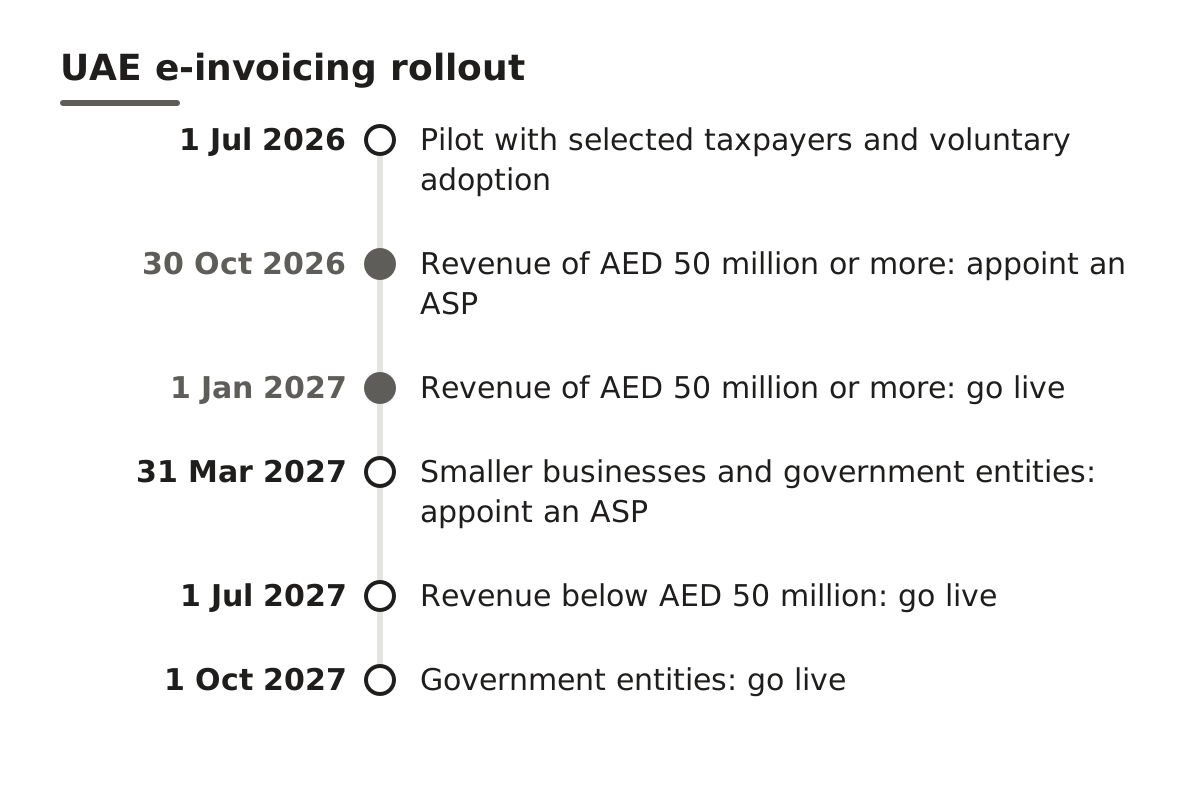
UAE e-invoicing is about three months from going live. Businesses with revenue of AED 50 million or more must appoint an Accredited Service Provider (ASP) by 30 October 2026 and start issuing electronic invoices through the new system on 1 January 2027. Smaller businesses must appoint a provider by 31 March 2027 and go live on 1 July 2027. Government entities follow on 1 October 2027. Fines for missing the deadlines start at AED 5,000 a month.
The ASP deadline was originally 31 July 2026. In May 2026 the Ministry of Finance moved it to 30 October, but it didn’t move the go-live date. If you’re in the first phase and haven’t signed with a provider yet, you’re now in the last few weeks.
What changed
The rules come from two Ministerial Decisions announced on 29 September 2025. Decision No. 243 of 2025 sets the scope, and Decision No. 244 of 2025 sets the timeline. Cabinet Resolution No. 106 of 2025, announced on 8 December 2025, added the fines. On 10 May 2026, the Ministry announced targeted amendments that extended the ASP deadline and let local providers work with international technology partners.
The main features:
- Scope. All business-to-business and business-to-government transactions. Business-to-consumer sales are excluded.
- Exclusions. KPMG lists sovereign government activities that don’t compete with the private sector, certain airline services (with a 24-month exemption for some), and financial services that are VAT exempt or zero-rated.
- Both sides need a provider. The issuer and the recipient of an e-invoice must each appoint an ASP.
- Standard. The system is built on the OpenPeppol standard.
- Credit notes too. Cancellations, price reductions and refunds need electronic credit notes.
- Voluntary adoption. Businesses can opt in early, from 1 July 2026, and a pilot with selected taxpayers was set for the same date.
Key dates
| Who | Appoint an ASP by | Go live on |
|---|---|---|
| Revenue of AED 50 million or more | 30 October 2026 | 1 January 2027 |
| Revenue below AED 50 million | 31 March 2027 | 1 July 2027 |
| Government entities | 31 March 2027 | 1 October 2027 |
KPMG reads the revenue test as the gross income earned in the most recent accounting period. If you’re close to AED 50 million, get your adviser to confirm which phase you’re in rather than guessing.
The fines
Cabinet Resolution No. 106 of 2025 sets these administrative fines for businesses required to use the system:
- AED 5,000 per month for failing to implement the system or appoint an ASP within the deadline.
- AED 100 for each e-invoice not issued or sent on time, capped at AED 5,000 a month.
- AED 100 for each e-credit note not issued or sent on time, with the same monthly cap.
- AED 1,000 for each day of delay in telling the Federal Tax Authority about a system failure.
- AED 1,000 for each day of delay in telling your ASP about changes to your data.
Voluntary adopters aren’t fined until they’re required to be in the system.
Who this affects
- Large UAE businesses with revenue of AED 50 million or more, which have the tightest deadline.
- Their suppliers and customers, because both sides of a B2B invoice need a provider, and big customers will start asking.
- Foreign groups with UAE entities. The decisions apply to persons conducting business in the UAE. If you sell into the UAE from abroad and are registered for UAE VAT, ask your adviser whether and when you’re in scope.
- Freelancers and small firms selling to businesses, who fall into the July 2027 phase.
What it means in practice
Take Gulf Star Distribution, a Sharjah wholesaler with AED 38 million of revenue. It’s in the second phase: provider by 31 March 2027, live on 1 July 2027. But its three biggest customers are all above AED 50 million and will be live from January. Expect them to ask Gulf Star when it can send and receive e-invoices long before July. Commercially, Gulf Star’s real deadline may be earlier than its legal one.
Now take a large Dubai retailer, above AED 50 million, that hasn’t signed with a provider by 30 October and doesn’t go live until April 2027. That’s three months of failing to implement, so AED 15,000 in fines. If it also issues 400 invoices a month outside the system in those months, the AED 100 per invoice fine hits the AED 5,000 monthly cap each month, adding another AED 15,000. At AED 30,000 or more, it’s cheaper to do the project on time.
What to do now
- Confirm your phase from your revenue for the most recent accounting period.
- If you’re in the first phase, sign with an accredited provider before 30 October 2026. The Ministry said 32 providers were already approved in May, with more in the pipeline.
- Map every place invoices are created (ERP, billing tools, spreadsheets) and plan how each will connect.
- Clean up customer and supplier master data, especially tax registration numbers.
- Build a process for electronic credit notes, not only invoices.
- Write a procedure for reporting system failures to the FTA quickly, since those fines run daily.
- Talk to your main customers and suppliers about their phase and their provider.
Our invoice generator is handy for quotes and drafts, but invoices within scope will need to go through your ASP once you’re live. The VAT calculator is still useful for checking the tax on each line. As of September 2026, the go-live dates haven’t moved, but the Ministry has already adjusted this timeline once, so keep an eye on its announcements.
Sources
- UAE Ministry of Finance: Two Ministerial Decisions on the scope and timelines of the Electronic Invoicing System
- UAE Ministry of Finance: Targeted amendments to eInvoicing system decisions
- UAE Ministry of Finance: Cabinet Resolution on administrative fines for the Electronic Invoicing System
- KPMG: Implementation of the Electronic Invoicing System in the UAE
- Deloitte: UAE e-invoicing ASP deadline extended, but go-live remains 1 January 2027
This article is general information, not legal or tax advice. Laws differ between countries and states and change over time, so check the rules that apply to you or speak to a qualified professional.