US sales tax nexus: when you have to collect
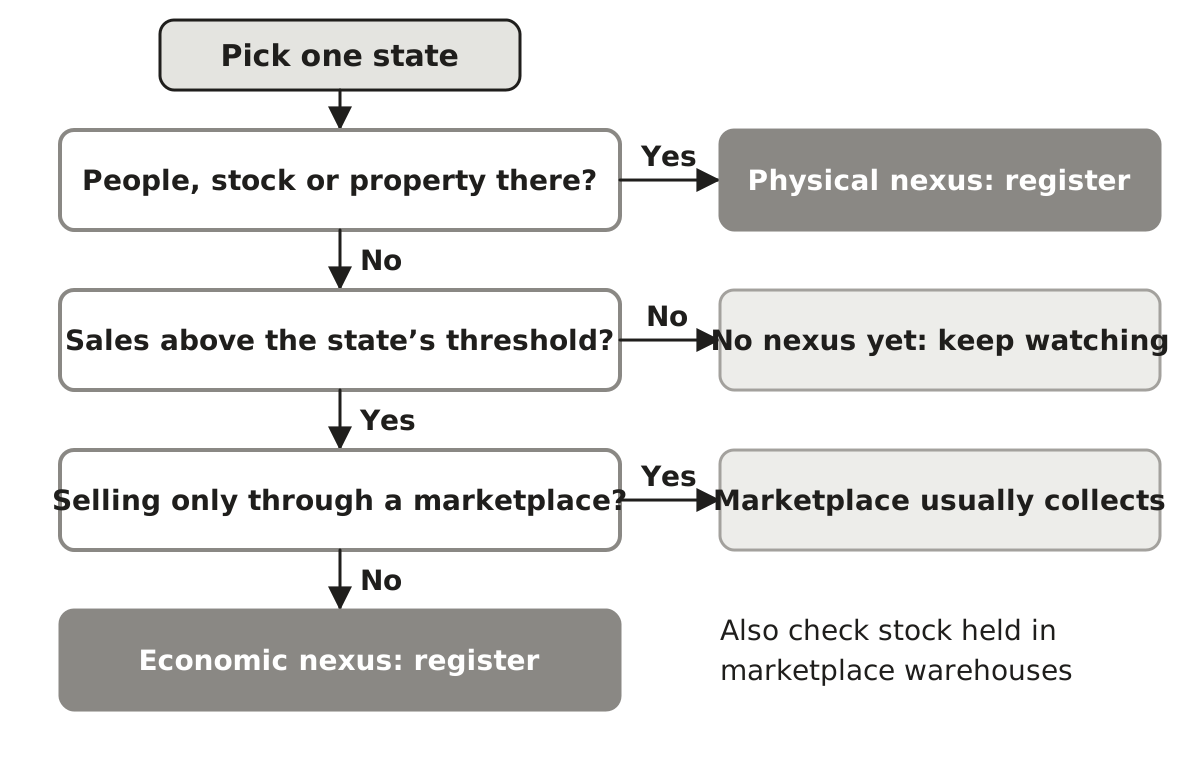
You have to register and collect sales tax in a US state once you have “nexus” there, meaning a connection strong enough for the state to tax you. There are two main ways to get it. Physical nexus comes from having people, property or inventory in the state. Economic nexus comes from selling enough into the state, and the most common threshold is $100,000 of sales a year. You only collect in states that have a sales tax, and only on products they treat as taxable.
Most small sellers get this wrong in the same direction. They assume that because they’re based in one state, they only deal with that one state. That stopped being true in 2018.
Physical nexus: the old rule still applies
For decades, a state could only make you collect its sales tax if you had a physical presence there. That rule hasn’t gone away. It’s now one of two routes in. Things that commonly create physical nexus include:
- An office, shop, warehouse or other place of business in the state.
- Employees working there, including a single remote employee working from home.
- Inventory stored there, including stock held in a marketplace’s fulfillment warehouse.
- Sales reps or agents regularly soliciting orders for you in the state.
- In some states, attending trade shows or delivering in your own vehicles.
The remote employee point catches a lot of people. Say a design studio in Austin hires a production designer who lives in Denver. That person working from home can give the studio nexus in Colorado, even if the studio has never sold anything there. Whether it matters depends on whether the studio sells taxable products into Colorado, but the connection is there.
Economic nexus: when sales alone are enough
In 2018, the US Supreme Court decided South Dakota v. Wayfair and allowed states to require out-of-state sellers to collect tax based on their sales alone. Every state with a sales tax has since adopted economic nexus rules. They share a basic shape but differ in the details.
| State | Economic nexus threshold (as of 2025) |
|---|---|
| Most states | $100,000 of sales into the state in a year |
| California | $500,000 of sales |
| Texas | $500,000 of revenue |
| New York | $500,000 of sales and more than 100 transactions |
Some states also used a 200-transaction test, so that a seller making lots of small sales got caught even under $100,000. Several have dropped it, and a few still use it. The measuring period differs too. Some states look at the previous or current calendar year, others at the last 12 months, and they don’t all count the same sales (gross sales, taxable sales, or retail sales only).
Here’s how it plays out. A candle maker in Portland, Oregon sells through her own website. Oregon has no sales tax, so she’s never thought about it. Last year she sold $112,000 of candles to customers in Washington and $140,000 to customers in California. She has economic nexus in Washington, where the threshold is $100,000. She doesn’t in California, because she’s under $500,000 there. From that point, she needs a Washington registration and has to charge Washington tax to her Washington customers.
Marketplace sales change the math
Every state with a sales tax now has a marketplace facilitator law. If you sell through Amazon, Etsy, eBay or a similar platform, the marketplace collects and pays the tax on those sales for you. That’s a big relief for small sellers.
It doesn’t fully take you off the hook, though. Some states count your marketplace sales toward your own economic nexus threshold, and some don’t. If you use a fulfillment service that stores your stock in warehouses around the country, that inventory can give you physical nexus in those states. Whether you then need to register when the marketplace is already collecting varies by state. Sellers who also run their own website need to check this carefully, because their direct sales into those states will be taxable.
Is what you sell even taxable?
Nexus tells you whether a state can make you collect. It doesn’t tell you whether your product is taxable. That’s a separate question, answered state by state.
- Physical goods are usually taxable, but many states exempt groceries, prescription drugs and sometimes clothing.
- Services are often untaxed, though some states tax a wide range of them.
- Software and SaaS are a patchwork. Texas and New York tax SaaS in some form, for example, while California generally doesn’t.
- Digital products such as downloads and e-books are taxed in some states and not others.
- Sales for resale are exempt when the buyer gives you a valid resale certificate. Keep a copy of each one.
Mixed sales need extra care. For a consultancy that sells both advice and a software licence, the split between taxable and non-taxable parts should be clear on the invoice and in the contract. A lump-sum price can make the whole thing taxable in some states.
What to do once you cross a threshold
- Register before you collect. In many states it’s against the rules to collect sales tax without a permit. Registration is usually free and online. The Streamlined Sales Tax system lets you register in its member states in one go.
- Charge the right rate. Most states tax based on where the customer receives the goods, and local rates can differ street by street. Use your checkout software’s rate lookup or a tax service, not a single flat rate.
- File on time, every time. The state assigns you a filing frequency (monthly, quarterly or annually). Many states expect a return even when you had no sales.
- Keep exemption certificates. If you don’t charge a customer because they’re reselling or exempt, you need the certificate on file when an auditor asks.
- Keep watching. Check your sales by state every month. It’s much easier to register the month you cross a threshold than to catch up a year later.
If you’ve already missed one
If you had nexus and didn’t collect, the state can still come after the tax, and it comes out of your pocket because you can’t go back and bill customers. Interest and penalties get added on top.
Most states offer voluntary disclosure agreements for this situation. You come forward before they contact you, and in return they often limit how many years back they look and waive most penalties. Honestly, don’t wait for a nexus questionnaire to land in your inbox. Once a state has contacted you, the voluntary route may no longer be available.
Next steps
- Pull last year’s sales by state from your store or accounting software.
- Compare each state’s total against its current threshold and measuring period.
- List every place you have people, stock or property, including warehouses you don’t run yourself.
- Check whether your products are taxable in the states where you have nexus.
- Make sure your contracts and quotes say prices exclude sales tax, so you can add it without a fight.
If you sign services agreements with US customers, the tax clause should say who pays sales tax if a state later decides the service was taxable. You can check a contract for tax, indemnity and payment clauses with LegalWolf before you sign.
This article is general information, not legal or tax advice. Laws differ between countries and states and change over time, so check the rules that apply to you or speak to a qualified professional.