What a valid tax invoice needs to include
A valid tax invoice needs your business name, address and tax registration number, the customer’s details, a unique sequential invoice number, the date, a clear description of what you supplied, the price before tax, the tax rate and tax amount, and the total. That core list works in most VAT and GST countries. Each country then adds its own requirements, such as the words “Tax Invoice” in Australia and the UAE, or the customer’s VAT number on cross-border sales in the EU.
Getting it wrong rarely leads to a fine on day one. What usually happens is quieter and more annoying: your invoice gets bounced back by the customer’s accounts team and you wait another 30 days to get paid.
Why “valid” matters
In a VAT or GST system, your invoice is your customer’s evidence for reclaiming the tax they paid you. If it’s missing required details, they may not be allowed to claim the credit. So large customers check invoices closely, and many reject anything incomplete.
Australia has a sharper version of this. If a supplier doesn’t quote an ABN, the business paying it may be required to withhold tax from the payment at the top marginal rate (47% as of 2025), with some exceptions. A bookkeeper in Sydney who forgets her ABN on a $2,000 invoice could see less than $1,100 arrive.
The core checklist
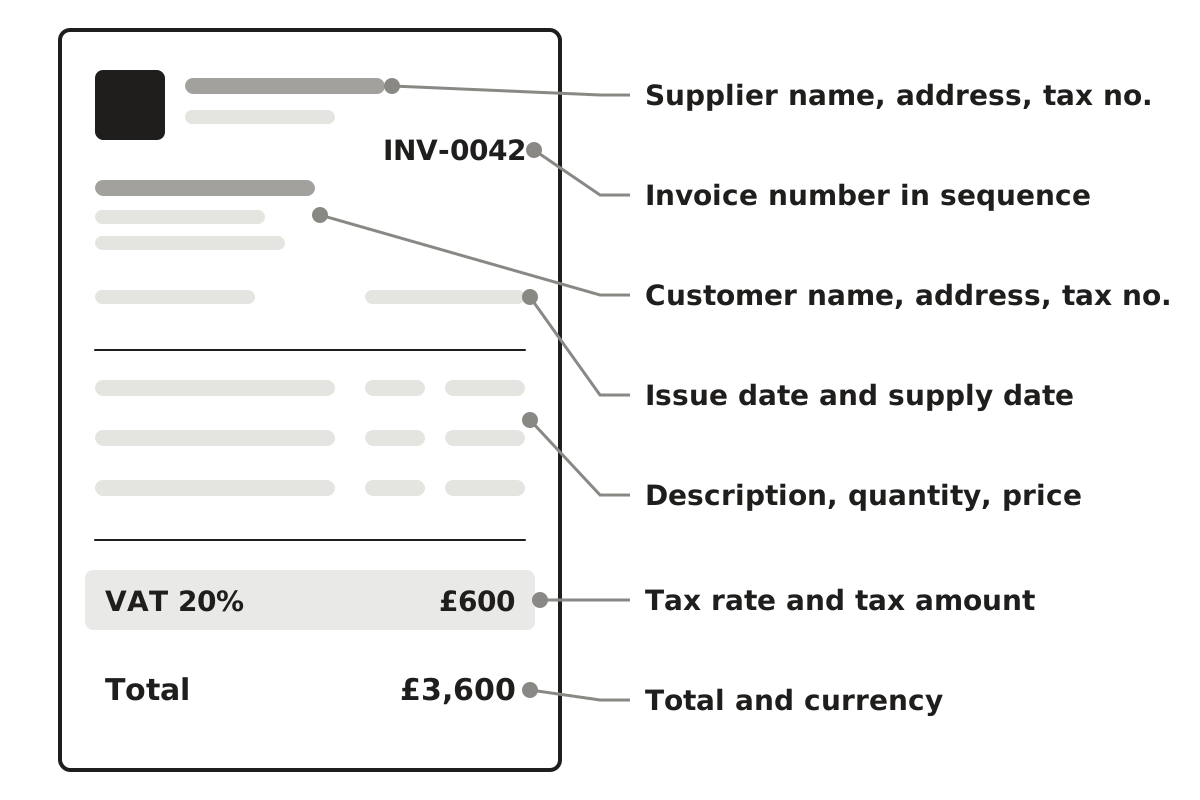
In most VAT and GST countries, a full tax invoice includes:
- The words “Tax Invoice” where the country requires them.
- Your business’s legal name, address and VAT or GST registration number.
- The customer’s name and address, and their tax number on B2B cross-border sales.
- A unique invoice number that follows a sequence.
- The date of issue and, if different, the date of supply (sometimes called the tax point).
- A description of the goods or services, with quantities and unit prices.
- The price excluding tax, the tax rate for each line, and the tax amount.
- The total including tax, and the currency.
- Any note that explains a zero rate, exemption or reverse charge.
Timing counts too. In the UK, a VAT invoice generally has to be issued within 30 days of the date of supply or of receiving payment. Other countries set their own deadlines, and some e-invoicing systems want the invoice much faster. A consultancy that does monthly work but only bills once a quarter can fall foul of this without noticing, so invoice as you go.
Payment details aren’t a tax requirement, but they belong on every invoice anyway: your bank details, the due date, your payment terms and, if your contract allows it, a line about interest on late payments.
How the rules differ by country
UK
For a full VAT invoice, you need all the core items above. For retail sales of £250 or less including VAT, you can issue a simplified invoice with fewer details. If you invoice in a foreign currency, the VAT amount still has to be shown in sterling.
EU
The EU VAT rules set a common list of invoice contents, and member states add their own details on top. Many allow simplified invoices for small amounts. E-invoicing is spreading fast: Italy has required electronic B2B invoices through a central system for years, Germany has required businesses to be able to receive e-invoices since January 2025, and France’s mandate is scheduled to phase in from September 2026. If you sell into these countries, check what format your customers expect.
Australia
If a GST-registered business asks for a tax invoice on a taxable sale over A$82.50 including GST, you have to provide one within 28 days. It must make clear it’s a tax invoice and show your identity and ABN, the date, a description, the GST amount (or that the total includes GST) and the extent each item is taxable. For sales of A$1,000 or more, it also needs the buyer’s identity or ABN.
UAE
In the UAE, a tax invoice needs the words “Tax Invoice” clearly displayed, the supplier’s tax registration number (TRN), the recipient’s TRN if they’re registered, and the usual details on price, VAT rate and VAT amount in dirhams. A simplified tax invoice is allowed in certain cases.
US and Canada
The US has no VAT, so there’s no federal “tax invoice”. If you charge sales tax, show it as a separate line. Canada sets out tiered information requirements for input tax credits that depend on the invoice amount, and your GST/HST registration number is required on invoices above a low threshold. Put it on every invoice and you won’t have to think about it.
Mistakes that get invoices rejected
- A missing or wrong VAT, GST or ABN number, usually after copying an old template.
- Invoicing the wrong legal entity, such as “Brightline Media” when the contract is with “Brightline Holdings Ltd”.
- No purchase order number when the customer’s process requires one.
- Gaps or duplicates in your numbering after deleting a draft.
- Charging VAT on a cross-border B2B service that should have been reverse charged.
- A vague description like “services rendered” with no dates or project reference.
That entity point is worth a second look. If the name on the invoice doesn’t match the name in the contract, many accounts teams won’t pay until it does. Check the parties section of the contract before you send your first invoice.
Correcting an invoice the right way
Once you’ve issued a tax invoice, don’t edit it and resend it with the same number. Issue a credit note that references the original invoice, then a new invoice with a new number. That keeps your sequence intact and gives both sides a clean audit trail.
A receipt is different again. It proves payment was made, while the invoice asks for payment and records the tax. Plenty of small businesses send both. Our receipt template covers that side.
Next steps
- Compare your current invoice template against the core checklist above.
- Add any country-specific items for the places you sell into.
- Check your numbering has no gaps or duplicates for this year.
- Confirm each regular customer’s exact legal name and tax number.
- If you sell into the EU, find out whether your customers need e-invoices.
Our free invoice generator includes fields for tax numbers, rates and reverse charge notes, and the VAT calculator checks the tax line before you send.
This article is general information, not legal or tax advice. Laws differ between countries and states and change over time, so check the rules that apply to you or speak to a qualified professional.