Withholding tax on cross-border payments, explained
Withholding tax is tax that the payer deducts from a payment and sends to its own government before the money reaches you. On cross-border payments, it mostly applies to dividends, interest and royalties, and some countries also apply it to fees for services. Tax treaties between countries often reduce the rate or remove it entirely, and you can usually claim a credit for what was withheld against the tax you owe at home. The trick is getting the paperwork in place before the first invoice goes out.
If you’ve ever sent a $10,000 invoice to a foreign client and received $9,000, this is probably why.
How it works in practice
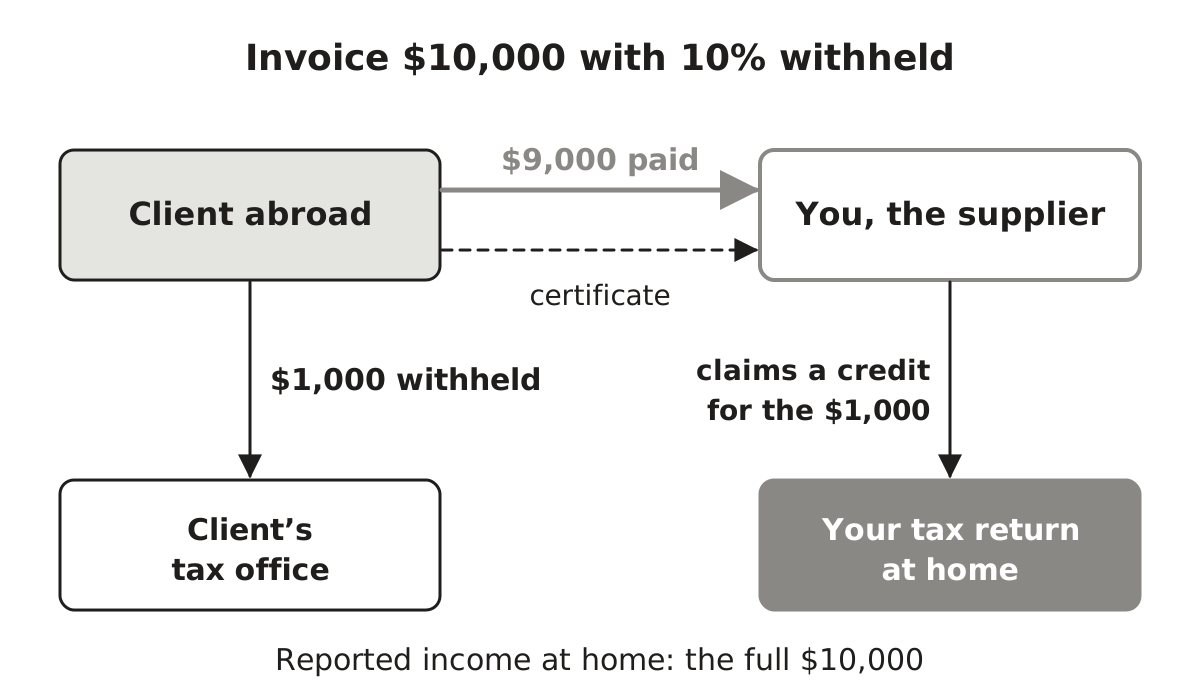
The payer is responsible for withholding, not you. Your client in another country works out whether their law requires them to hold back tax on the payment. If it does, they pay you the net amount, send the tax to their tax authority, and should give you a certificate or statement showing what they withheld.
Say a software consultancy in Toronto licenses a tool to a client in a country that withholds 10% on royalties. The invoice is $10,000. The client pays $9,000 to the consultancy and $1,000 to its own tax office. The consultancy reports the full $10,000 as income in Canada, then claims a foreign tax credit for the $1,000, provided the withholding was correct under the treaty.
Which payments usually get hit
| Payment type | Withholding common? | Examples |
|---|---|---|
| Dividends | Yes, in many countries | The US withholds on dividends paid abroad; the UK generally doesn’t |
| Interest | Often | The UK generally withholds on yearly interest paid abroad, subject to treaty relief |
| Royalties and licence fees | Often | The US default rate on royalties to foreign persons is 30%, before any treaty |
| Service fees | Depends on the country | Many countries don’t, but some, including India, withhold on certain technical or consultancy fees |
| Sale of goods | Rarely | Usually handled through customs and VAT instead |
The line between a service fee and a royalty matters more than people expect. A freelancer delivering custom work is usually selling a service. A business charging for the right to use existing software, content or a brand is usually earning a royalty. Some countries treat software subscriptions as royalties, which can bring withholding into play where you didn’t expect it.
US clients and the W-8BEN
If you’re outside the US and a US client pays you, expect to be asked for a Form W-8BEN (for individuals) or W-8BEN-E (for entities). A US person gets a W-9 instead. The form tells the client you’re a foreign person and lets you claim any treaty benefits.
For services you perform entirely outside the US, the income generally isn’t US-source, so there’s usually no US withholding at all. Royalties are different. If a UK illustrator licenses artwork to a US publisher, the default US rate is 30%, but the US and UK treaty generally reduces withholding on royalties to zero. Without a correctly completed W-8BEN, the publisher may withhold the full 30% to protect itself.
Tax treaties can cut the rate
Double tax treaties set maximum withholding rates between two countries, often much lower than the local default. To use them, you usually have to prove you’re resident in the other treaty country. That might mean a form like the W-8BEN, a certificate of residence from your own tax authority, or a form specific to the payer’s country.
Treaty relief is applied in one of two ways. Either the payer applies the reduced rate at the time of payment, or they withhold the full rate and you claim a refund from their tax authority later. Refunds from a foreign tax office can take many months, and some small claims aren’t worth the effort. Get the paperwork to the client before the first payment, not after.
A few places have little or no withholding to worry about. As of 2025, the UAE applies a 0% rate on payments to non-residents under its corporate tax rules. Plenty of other countries do withhold, and the rates and exemptions vary widely.
Getting credit at home
Most countries let you offset tax withheld abroad against the tax you owe at home on the same income, through a foreign tax credit or similar relief. There are limits:
- The credit is usually capped at the home tax on that income. If you had 25% withheld on income taxed at 15% at home, you may lose the difference.
- Tax withheld above the treaty rate generally isn’t creditable at home. You have to claim the excess back from the other country.
- You need evidence: the withholding certificate or statement from the payer, plus the invoice and proof of payment.
Our withholding tax calculator shows the net payment and the gross amount you’d need to invoice to receive a target figure.
Put it in the contract: the gross-up clause
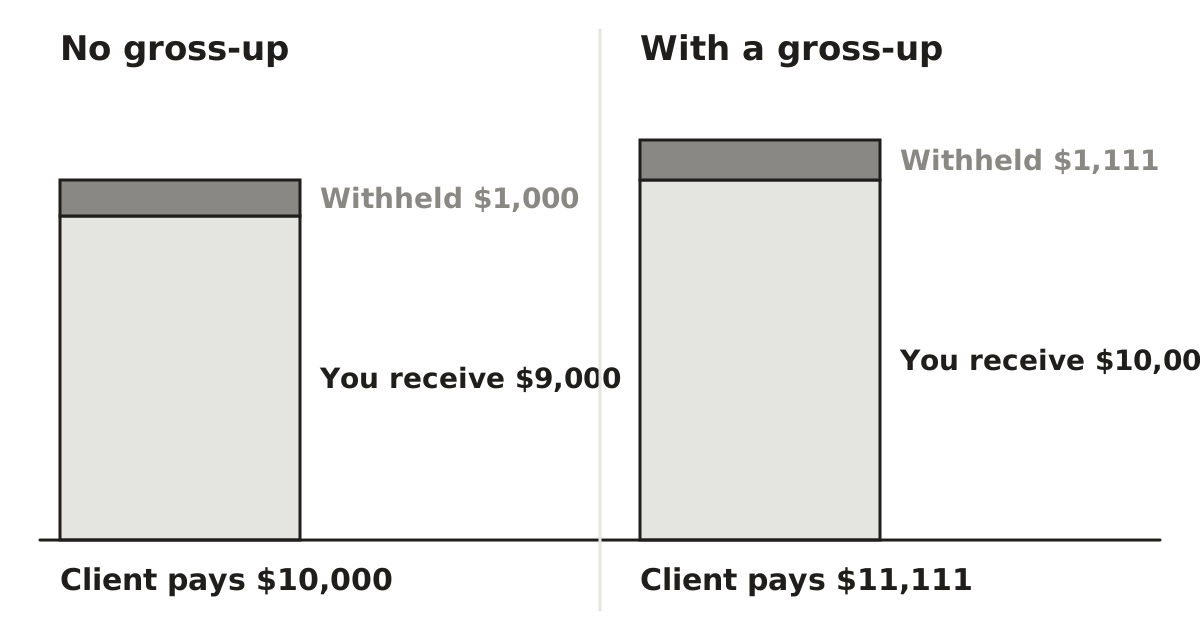
The simplest protection is a gross-up clause. It says that if the client has to withhold tax, they’ll increase the payment so you still receive the full invoiced amount. To net $10,000 with 10% withholding, the client would pay $11,111.11 and withhold $1,111.11.
Large clients often refuse full gross-ups. A reasonable middle ground is a clause where the client agrees to apply any treaty rate available, cooperate with the forms, send withholding certificates within a fixed time, and not set off tax against other amounts owed. That at least makes sure you can claim the credit. If you draft your own consulting agreement or services agreement, add the tax clause before you send it, not during the invoice dispute. You can also run a client’s draft through LegalWolf to spot whether it says anything about withholding at all.
Before you invoice a foreign client
- Ask the client whether their country withholds tax on this type of payment.
- Work out whether you’re selling a service or licensing something, because that often decides the answer.
- Check whether a tax treaty exists between the two countries and what rate it sets.
- Send any residency forms or certificates before the first invoice.
- Agree in the contract who bears the withholding, and ask for certificates every time.
- Keep every certificate with the matching invoice for your own tax return.
Next steps
List your foreign clients and the type of payment each one makes to you. For any that have withheld tax in the past, check that you’ve claimed the credit at home. For new ones, have the withholding conversation during the contract stage, while there’s still room to adjust the price. An accountant who handles international work can confirm the treaty position in an hour or two.
This article is general information, not legal or tax advice. Laws differ between countries and states and change over time, so check the rules that apply to you or speak to a qualified professional.