How to write a demand letter that gets you paid
A demand letter that actually gets you paid is short and specific. It says what you’re owed, why, by when, and what you’ll do if the money doesn’t arrive. That’s the whole job. Most unpaid invoices end at this stage, so an hour spent getting the letter right is usually the best-paid hour in the whole dispute.
We’ve read plenty of demand letters that fail. They tend to be too long, too angry, or vague about the number. The fix for all three is the same: write it as though a judge will read it one day, because sometimes one does.
Why a formal letter works when reminders don’t
Take Priya, who runs a two-person web studio in Austin. She built a site for a local gym, sent invoice 1042 for $4,800, and followed up with three friendly “just checking in” emails over six weeks. Nothing came back. Those emails were easy to ignore because they didn’t ask for anything by a particular date and didn’t mention a consequence.
A demand letter changes the tone. It shows you’ve organized your paperwork, you know the exact figure, and you have a next step lined up. For a lot of accounts payable teams, a formal demand is what finally moves an invoice to the top of the pile.
It protects you later, too. In England and Wales, courts expect parties to follow pre-action conduct rules before suing, and ignoring them can affect who pays costs. Many US small claims judges will ask whether you demanded payment first, and some state consumer protection laws require a written demand before certain claims can be filed.
Pull the file before you write a word
You want the paperwork in front of you, not in your memory. Gather:
- Whatever shows the deal: the contract, statement of work, purchase order, or the email thread where they said yes
- The invoice, the date you sent it, and the payment terms that applied
- Proof you delivered: sign-off emails, delivery notes, a “looks great, thanks” message, usage logs
- Your reminders and any replies, especially anything like “we know, we’ll sort it next week”
- Any clause on late payment interest, collection costs or attorneys’ fees
While the contract is open, look for a notices clause, which may say how formal notices have to be sent, and for any dispute escalation or mediation step. If the contract says senior managers must meet before anyone goes to court, your letter should invoke that process rather than skip it.
What goes in the letter, in order
One page is ideal and two is the ceiling. This is the order we’d use, with Priya’s gym as the example.
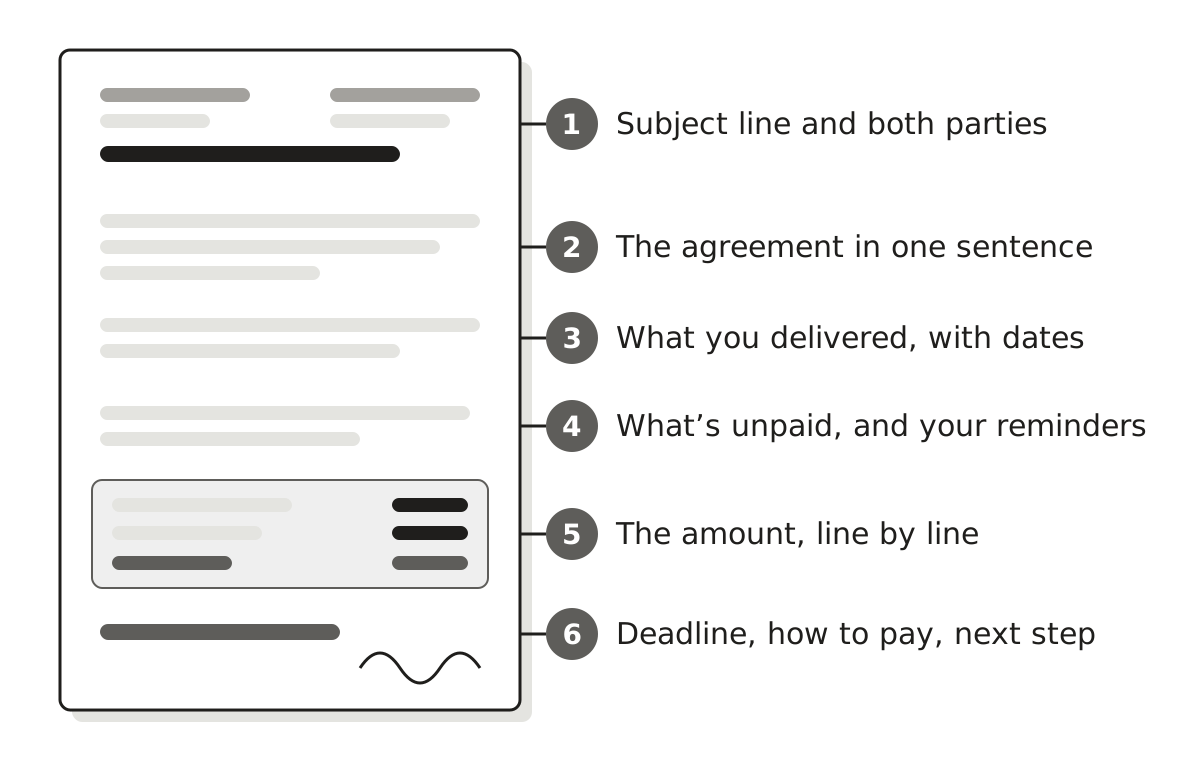
- A clear subject line. “Formal demand for payment: invoice 1042.” Above it go your details, their full legal name and address, and the date.
- The agreement. “Under our services agreement dated March 3, you agreed to pay $4,800 for website development, due 30 days from invoice.”
- What you did. “We delivered the finished site on May 12. You confirmed receipt by email on May 13, and the site has been live since May 20.”
- What they didn’t do. “Invoice 1042, issued May 14, fell due on June 13. It remains unpaid despite reminders on June 20 and July 2.”
- The exact amount. Principal first, then any interest or fees you’re entitled to, each on its own line.
- A deadline, how to pay, and what happens next. A real date (7 to 14 days is typical for a business debt), bank details or a payment link, and the step you’ll take if the date passes.
Be exact about the number
“$4,800 plus interest and costs” invites an argument. “$4,800, plus $113.62 interest at the contract rate of 18% a year from June 13 to July 31” doesn’t. Show the rate, the start date and the number of days. The late payment interest calculator will do the arithmetic.
Claim only what you’re entitled to. In the UK, businesses can add statutory interest and fixed compensation to late commercial debts even when the contract says nothing about it. In most US states, interest on an unpaid invoice depends on the contract or on the state’s statutory rate, and some states cap rates. A “$500 admin fee” that appears nowhere in your contract makes the rest of the letter look shaky.
Tone: the judge test
Read your draft back and picture a judge reading it eight months from now. Do they see a reasonable business owner, or someone venting? Cut the sarcasm. Cut the paragraph about everything you’ve done for this client over the years. Keep the dates, amounts and documents.
Some lines can land you in real trouble:
- Threatening criminal charges to collect a civil debt. That’s prohibited or risky in many places and can itself be unlawful.
- Bluffing. Threatening a lawsuit you have no intention of filing can breach debt collection rules, especially when the debtor is a consumer.
- Contacting their employer, family or customers about the debt, which can lead to harassment or defamation claims.
- Naming and shaming online. It feels good for about an hour.
Chasing an individual rather than a company brings stricter rules. In England and Wales, a business claiming a debt from an individual (sole traders included) has to follow a specific pre-action protocol: a detailed letter of claim, an information sheet and a reply form, with 30 days for the debtor to respond. In the US, federal debt collection law mainly targets third-party collectors, but some state laws also cover businesses collecting their own consumer debts.
Keep any discount offer out of it
Maybe you’d happily take $4,000 next week instead of $4,800 in six months. That’s a sensible instinct. Just don’t put it in the demand letter.
In the UK, Canada, Australia and other common law countries, a genuine settlement offer can usually be marked “without prejudice,” which generally keeps it out of evidence if the case reaches court. In the US, federal and most state evidence rules generally stop settlement discussions being used to prove liability, though the details vary. Send the formal demand for the full amount. If they reply, make the compromise offer in a separate message clearly labelled as a settlement proposal.
Send it so “we never got it” isn’t an option
Check the notices clause first. Some contracts require a particular address, a named person, or a method like courier or registered mail. Email is usually fine for a demand letter, but we’d also send a copy by a trackable method. It costs a few dollars and removes an easy excuse.
Save a copy of everything with proof of when it went out. If this ends up in front of a judge, that folder is your case.
If the deadline comes and goes
Follow through. Honestly, a deadline you don’t act on is worse than no deadline at all, because it teaches the other side that your letters are optional. Depending on the amount and your contract, your next move might be:
- Filing in small claims court, if the amount is under your local limit
- Starting mediation or arbitration, if your contract requires it
- A letter from a lawyer on firm letterhead, which works more often than you’d expect
- Handing the debt to a collection agency, which will take a cut
- Pausing further work, if your contract allows it, after giving notice
Keep an eye on the calendar as well. Contract claims have limitation periods, and in most places sending a demand letter doesn’t stop that clock.
Your next steps
- Open the contract and note the payment terms, interest, notices and dispute resolution clauses.
- Write a four-line timeline: agreed, delivered, invoiced, chased.
- Draft the letter from the payment demand letter template, then delete anything that isn’t a fact, a figure or a date.
- If you’re unsure what your contract lets you claim, you can check it with LegalWolf before you send.
When the amount is large, the customer says the work was defective, or they’re based in another country, a short call with a lawyer before sending is money well spent.
This article is general information, not legal or tax advice. Laws differ between countries and states and change over time, so check the rules that apply to you or speak to a qualified professional.