7 Times You Actually Need a Real Lawyer (And When AI Is Fine)

Let me be brutally honest with you: I built an AI legal tool, and I'm about to tell you when you shouldn't use it.
Why? Because knowing when you need a real lawyer versus when AI can help isn't just good ethics—it could save you from making a catastrophically expensive mistake.
I learned this lesson the hard way when a friend used an online template for a complex commercial lease. It seemed fine until a pipe burst and flooded his business. Turns out, the template's insurance and liability clauses were completely wrong for his situation. The legal battle cost him $40,000.
So here's my honest breakdown:
When You NEED a Real Lawyer

1. You're Being Sued or Might Be Sued
No debate here. If legal action is threatened or filed against you, get a lawyer immediately.
Why AI can't help: Litigation strategy is an art form. Every case has unique factors, and one wrong move can sink your entire defense. Plus, most courts require actual attorney representation.
Real cost of DIY: Representing yourself (called "pro se") statistically reduces your chance of winning by 50%+.
2. Criminal Charges (Obviously)
If you're facing criminal charges of any kind—DUI, theft, assault, even minor offenses—hire a criminal defense attorney.
Why this matters: A criminal record follows you forever. It affects employment, housing, professional licenses, and even child custody.
AI tools can't:
Negotiate with prosecutors
File proper motions
Navigate procedural requirements
Challenge evidence

3. Complex Business Transactions Over $100K
Buying a business? Raising Series A funding? Signing a major partnership deal?
Get a lawyer.
Why the cutoff at $100K? That's typically where stakes are high enough that:
Negotiations get complex
Tax implications become significant
Risk of future litigation increases dramatically
What I mean by "complex":
Multiple parties with competing interests
Regulatory compliance requirements
IP transfers or licensing
Multi-year agreements with performance milestones
Real example: A founder used an AI-generated term sheet for a $500K investment. The investor's lawyer found 14 problematic terms. The founder looked amateurish and almost lost the deal.
4. Divorce with Kids or Significant Assets
Get a family law attorney if:
You have children (custody arrangements are too important to mess up)
You own property together
Combined assets exceed $100K
Either spouse owns a business
There's any complexity at all

Child custody laws vary wildly by state and judge. What works in California might be illegal in Texas. An AI can't know the tendencies of your local family court judge.
5. Immigration Issues
Immigration law is federal, complex, and has life-changing consequences. One missed deadline or incorrectly filed form can result in deportation or permanent visa denial.
Never use AI for:
Visa applications
Green card processes
Citizenship applications
Deportation defense
The USCIS (immigration agency) changes rules constantly. Even immigration lawyers struggle to keep up.
6. Estate Planning Over $1 Million
Simple wills? AI can handle those. But if your estate exceeds $1 million or includes:
Multiple properties
Business ownership
Complex family situations (estranged relatives, second marriages)
Special needs trusts
Then you need an estate planning attorney.
Why: Estate taxes, probate procedures, and trust structures are state-specific and complex. A mistake could cost your heirs six figures.

7. Employment Discrimination or Wrongful Termination
If you were fired or discriminated against because of:
Race, gender, religion, age, disability, pregnancy
Whistleblowing
Taking protected medical leave
Get an employment lawyer immediately.
Why: These cases have strict deadlines (often 180 days) and require specific procedures like EEOC filings. Miss a deadline, and you lose your right to sue forever.
When AI Legal Tools Work Great
Now for the good news—AI tools (like ours) can legitimately help with:

✅ Standard NDAs
Non-disclosure agreements for simple situations (freelancer, contractor, employee) are pretty standardized. AI handles these well.
✅ Simple Contracts
Independent contractor agreements
Service agreements under $50K
Basic purchase agreements
Consulting contracts
✅ Demand Letters
That first "pay me what you owe me" letter? AI can draft a professional one.
✅ Document Review
Upload a contract and get it analyzed for common red flags. Not perfect, but catches obvious issues.
✅ Legal Research
Understanding a legal concept? Researching a law? AI is excellent for preliminary research.
✅ Templates and First Drafts
Starting point for:
Operating agreements
Basic wills (simple estates)
LLC formation documents
Privacy policies
Terms of service
The key phrase: Starting point. Have a lawyer review anything important.
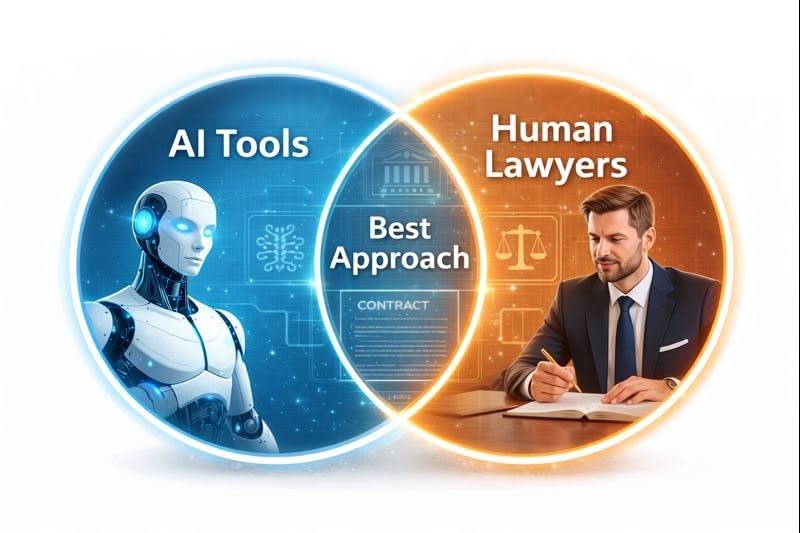
The Hybrid Approach (Smart Money Option)
Here's what savvy people do:
1. Use AI to draft the first version ($50-200) 2. Pay a lawyer to review and revise ($500-1,500)
Total cost: $550-1,700 Cost if you just hired a lawyer from scratch: $2,000-5,000+
You save 50-70% while still getting professional legal review.
How to Know Which Category You're In
Ask yourself:
1. What happens if this goes wrong?
Lose $500? Maybe AI is fine
Lose your house? Get a lawyer
Go to jail? Definitely get a lawyer
2. How complex is the situation?
One page, standard terms? AI probably works
20 pages with custom clauses? Lawyer
3. Is the other party using a lawyer?
If yes, you should too
Uneven legal representation usually leads to uneven outcomes
4. Would I understand this if someone explained it to me?
If the legal concepts are beyond your comprehension even after research, you need professional help
Red Flags That You're Over Your Head
Stop using AI and call a lawyer if:
You've read the same clause five times and still don't understand it
Google searches for your question return contradictory answers
The document includes unfamiliar legal terms you can't easily define
Deadlines are tight (legal filings often have strict timing)
The other party's lawyer is aggressive or threatening

The Bottom Line
AI legal tools are powerful and can save you thousands of dollars. But they're tools, not replacements for professional judgment in high-stakes situations.
Use AI for the routine stuff. Use lawyers for the important stuff. And if you can't tell the difference, err on the side of hiring a lawyer.
Your future self will thank you.