I Read 50 Employment Contracts. Here's What They're Hiding.

Last year, my neighbor Alex came to me panicked. He'd just quit his job to join a startup, only to receive a cease-and-desist letter from his old employer. Apparently, the employment contract he'd signed three years ago—and never read carefully—had a non-compete clause that basically prevented him from working anywhere in his industry for 18 months.
His new job offer was rescinded. He couldn't afford a legal battle. He spent the next year and a half doing freelance work he hated, watching his dream opportunity disappear.
All because he didn't read page 7 of his employment contract.
I decided to do something about it. I collected and analyzed 50 employment contracts from various industries—tech, finance, healthcare, retail, you name it. What I found was alarming.
The Clauses Nobody Reads (But Everyone Should)
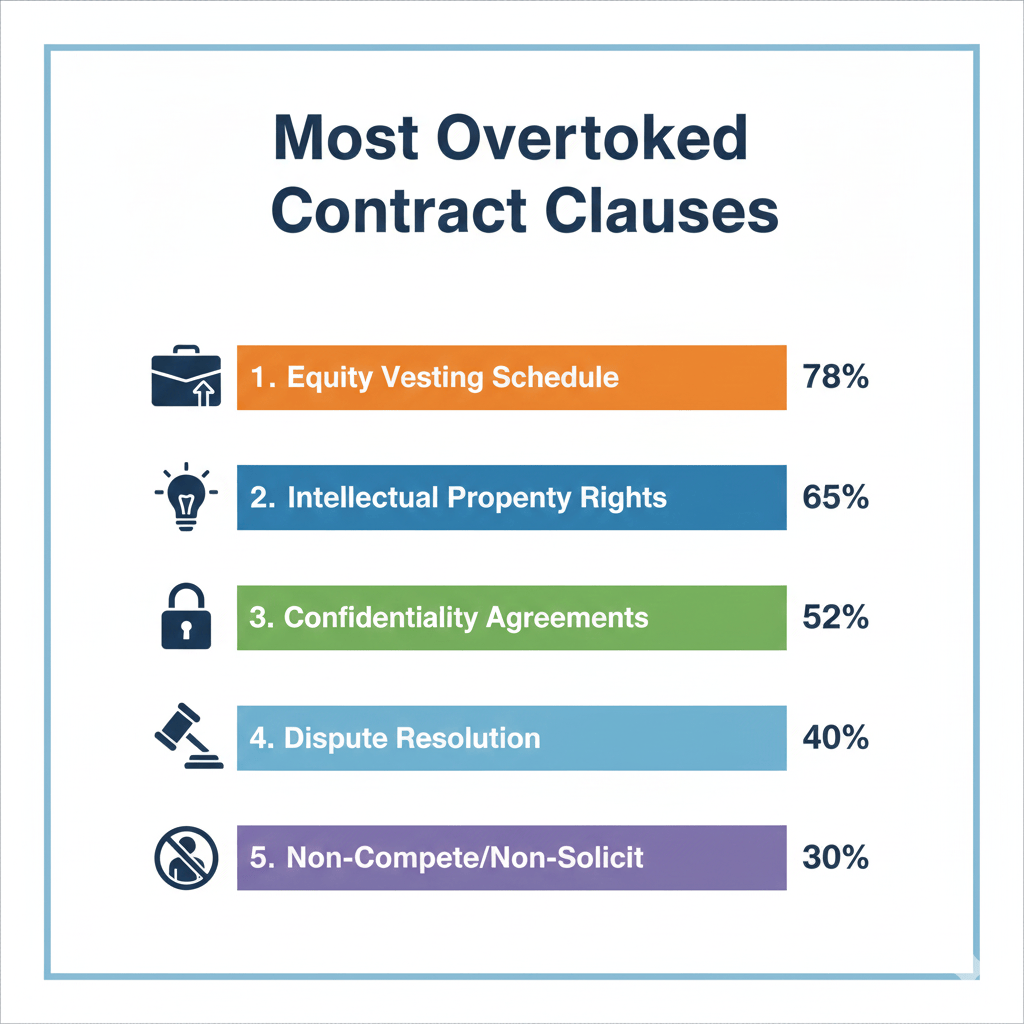
1. The Non-Compete Clause (The Career Killer)
What it usually says: "Employee agrees not to work for any competing business within [geographic area] for [time period] after leaving the company."
What it actually means: Your employer might be able to prevent you from working in your industry, even after you quit or get fired.
Here's what shocked me: 38 of the 50 contracts I reviewed had non-compete clauses. But here's the kicker—only 12 of them were likely enforceable.
Most people don't know that non-compete agreements are heavily restricted or outright banned in many states. California, North Dakota, and Oklahoma essentially don't enforce them at all. Other states will only enforce "reasonable" non-competes.
What's "reasonable"? Courts look at:
Duration: 6-12 months is usually okay; 2+ years is often too long
Geographic scope: "Within 50 miles" might be reasonable; "anywhere in the United States" usually isn't
Industry scope: "Can't work at direct competitors" might fly; "can't work in tech at all" won't
Real example I found: A graphic designer's contract prohibited them from "any work in marketing, advertising, or communications" for 24 months within 100 miles. That's basically saying, "Find a new career or move to another city." Totally unenforceable in most states, but the designer didn't know that.
2. Intellectual Property Assignment (They Own Your Side Hustle)
What it usually says: "All inventions, discoveries, and creative works made during employment belong to the Company."
What it actually means: That app you're building on weekends? Legally might belong to your employer.

15 of the 50 contracts had IP clauses so broad they claimed ownership of literally anything you create while employed, even if:
You made it on your own time
You used your own equipment
It has nothing to do with your job
You didn't use any company resources
Real example: A software engineer at a healthcare company created a meal-planning app on weekends. His employment contract's IP clause was so broad that technically, the healthcare company owned his meal-planning app. He had to negotiate a release before he could launch it.
What to look for:
Does it only cover work-related inventions?
Does it exclude things you create on your own time with your own resources?
Does it require you to disclose all outside projects?
3. The Mandatory Arbitration Clause (Kiss Your Day in Court Goodbye)
What it usually says: "Any disputes will be resolved through binding arbitration, not in court."
What it actually means: If your employer discriminates against you, harasses you, or doesn't pay you, you can't sue. You must go to private arbitration instead.
32 of the 50 contracts included mandatory arbitration clauses.
Why should you care? Because:
Arbitration is private (no public record of wrongdoing)
You can't appeal the decision
The company often gets to help choose the arbitrator
Studies show employees win less often in arbitration than in court
You usually can't participate in class action lawsuits

To be clear: arbitration isn't always bad. It's faster and cheaper than court. But you should know what you're giving up.
4. The "At-Will" Disclaimer (You Can Be Fired for Almost Anything)
What it usually says: "Employment is at-will and can be terminated by either party at any time for any reason."
What it actually means: All those promises your boss made about career growth and job security? Not legally binding.
All 50 contracts had at-will language. This is standard in the U.S., but people don't realize how broad it is.
You can be fired for:
Wearing the wrong color shirt
Your boss not liking your tone
No reason at all
The only exceptions are illegal reasons like discrimination based on race, gender, religion, disability, etc.
The trap: Recruiters and hiring managers often make verbal promises: "This is a long-term position," "We've never had layoffs," "You'll definitely get promoted within a year."
None of that matters if your contract says "at-will employment." Get important promises in writing.
5. Compensation Clauses (The Pay Cut Hidden in Fine Print)
What to watch for:
"Salary may be adjusted at company's discretion" = They can cut your pay whenever
"Bonus is discretionary" = That "guaranteed" bonus? Not guaranteed
"Commission structure subject to change" = Your compensation plan can be altered mid-year
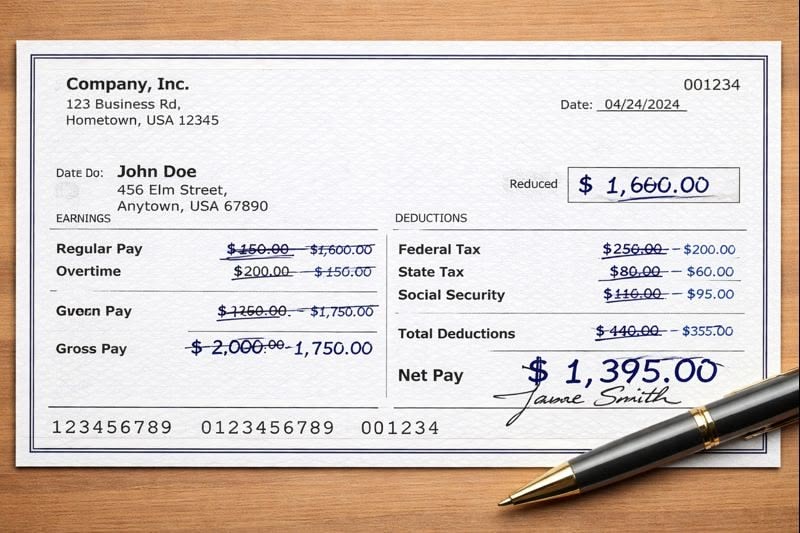
Real example: A sales rep's contract said commissions were "subject to plan changes with 30 days notice." Six months in, after he'd landed major deals, the company changed the commission structure and he earned 40% less than expected. Totally legal.
The Clauses That Actually Protect You (Make Sure You Have These)
While reviewing these contracts, I also noticed what was missing:
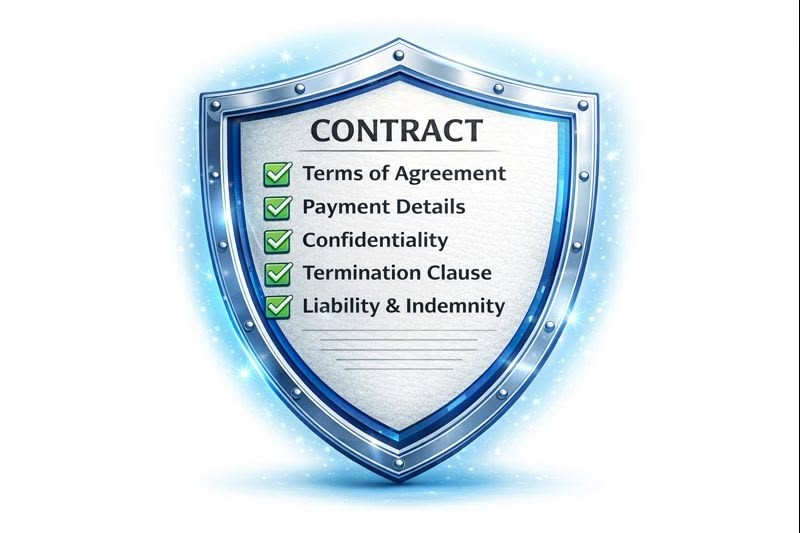
Severance terms: Only 8 of 50 contracts specified severance pay. Without it, you could work somewhere for 10 years and get nothing if laid off.
Notice period: Only 12 contracts required the company to give advance notice before termination.
Benefits continuation: Rarely specified how long health insurance continues after you leave.
What Alex Should Have Done (And What You Should Do)
Before you sign your next employment contract:
1. Actually read it. Yes, all of it. It might take an hour. That's an hour well spent.
2. Google "[Your State] non-compete laws" before signing anything with a non-compete clause.
3. Ask for changes. Everything is negotiable. I've seen people successfully negotiate:
Reducing non-compete duration from 24 months to 6 months
Narrowing IP assignment clauses
Adding severance terms
Removing mandatory arbitration
The worst they can say is no.
4. Get verbal promises in writing. If your boss promises something important, ask for it in an email or added to the contract.
5. Keep a copy. You'd be amazed how many people sign contracts and never see them again until it's too late.
When to Walk Away
Some red flags that should make you seriously reconsider:
Non-compete covering more than 12 months
IP clause claiming ownership of everything you ever create
No severance despite requiring you to give notice
Contract requires you to pay the company if you quit early
Anything that feels intentionally vague or confusing

The Bottom Line
Alex eventually got through his non-compete period and found another job. But he lost 18 months of career growth and about $80,000 in potential earnings.
Don't be Alex.
Your employment contract isn't just a formality. It's a legally binding document that could affect your career for years. Treat it that way.
Read it. Question it. Negotiate it. Or at least understand what you're signing.
Because the fine print isn't fine at all.