Breach of contract: your options when they don’t deliver
When the other side doesn’t deliver, your options are to demand they fix it, claim compensation for your losses, withhold your own performance where the contract allows it, terminate, or negotiate a new deal. Which ones are open to you depends on how serious the breach is and what your contract says. The most expensive mistake we see is reacting too fast. Terminate over a minor breach and you can end up as the party in breach instead.
Pin down exactly what they broke
Before deciding anything, work out which obligation was broken. Read the contract itself, not your memory of it, and ask:
- What did they actually promise? Look at the scope, specifications, deadlines and service levels.
- Was the date firm? A “target date” is weaker than a delivery date backed by a time is of the essence clause.
- Did they promise a result or an effort? A duty to use best efforts is breached differently from a flat promise.
- Do they have an excuse? A force majeure clause, or a delay you caused by being late with your own inputs, can change the picture.
- What can you prove? Emails, delivery records, test results, photos.
How serious is it?
Seriousness decides your remedies. The labels vary by country, but most common law systems work along the same lines.
| Type of breach | Example | Usual remedies |
|---|---|---|
| Minor | A monthly report arrives two days late and nothing turns on it | Damages for any actual loss; no right to terminate |
| Material or repudiatory | Software still can’t perform its core function after three months of fixes | Damages, and usually a right to terminate |
| Anticipatory | A supplier tells you in writing it won’t deliver next month’s order | You may be able to treat the contract as ended now and claim damages |
In the US, courts ask whether the breach was “material,” looking at how much of the expected benefit you lost and whether the problem can be fixed. In England and Wales, the question is often whether the breach is “repudiatory,” meaning serious enough to justify ending the contract. If it is, you generally have to choose: accept the breach and terminate, or affirm the contract and carry on. Sitting on your hands can count as affirming, so decide promptly.
Civil law countries often work differently. In Germany, for instance, you generally have to give the other party a reasonable extra period to perform before you can withdraw or claim damages in place of performance. In France, a formal notice to perform is usually the first step.
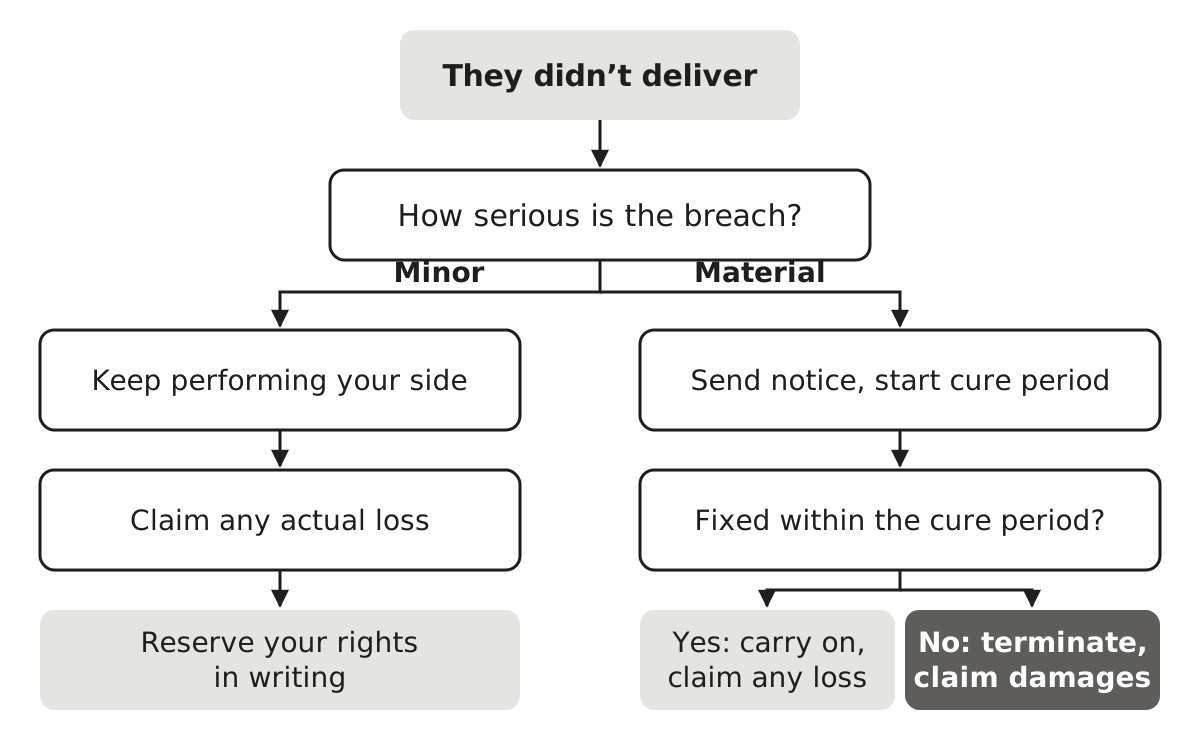
The options, one at a time
Ask them to fix it
The most practical outcome is often just getting what you paid for. Send a written notice describing the breach and asking for it to be remedied by a specific date. Many contracts build this in through a cure period, commonly 10 to 30 days. The breach notice template is a good place to start.
Courts can sometimes order a party to perform (specific performance), but in common law countries that’s usually reserved for cases where money wouldn’t do the job, such as land or unique goods. Civil law systems are generally more willing to order performance.
Claim damages
Contract damages aim to put you where you’d have been if the contract had been performed. Say Marta runs a coffee roastery in Portland and orders 1,000 custom tins at $20 each for the holiday rush. The supplier never delivers. She buys replacements elsewhere at $26, so her basic loss is $6,000, plus reasonable extra costs like rush shipping.
Three limits apply almost everywhere:
- Foreseeability. You can usually recover only losses that were a foreseeable result of the breach when the contract was signed.
- Mitigation. You have to take reasonable steps to keep the loss down. If Marta could have bought at $26 but waited three weeks and paid $35, she’ll probably struggle to recover the difference.
- The contract’s own limits. Look for a limitation of liability cap, an exclusion of consequential damages, or a liquidated damages clause that fixes the amount in advance.
Hold back payment
Refusing to pay until they sort it out feels natural, but it’s risky. Whether you can lawfully withhold depends on the contract and on how closely your payment is tied to their performance. Holding back a $30,000 fee because of a $400 defect may itself be a breach. Some contracts expressly allow you to withhold disputed amounts or give a right of set-off. Others expressly ban it.
If you do withhold, say so in writing, hold back only the amount genuinely in dispute, and pay the rest on time.
Terminate
Termination ends future obligations but usually keeps your claim for damages alive. Read the termination for cause clause closely: it often spells out what counts as a terminable breach, whether a cure period applies and how notice has to be given. Follow those steps to the letter. A notice sent to the wrong address, or before the cure period has run out, can be invalid.
If there’s a termination for convenience right, that can be a cleaner exit even when you believe there’s been a breach, though it may carry a notice period or a fee.
Renegotiate
Plenty of breaches are best settled with new terms: a revised deadline, a price cut, extra services, or a clean exit with a partial refund. Put the deal in writing and check the amendment clause, which may require a signed written variation.
Ways to shoot yourself in the foot
- Wrongful termination. Ending the contract without a valid right can make you liable for their losses.
- Accidental waiver. Accepting late deliveries month after month without comment weakens your position. A waiver clause helps, but reserve your rights in writing anyway.
- Ignoring the notice rules. The notices clause may require a specific method, address or recipient.
- Skipping the dispute steps. Your contract may require escalation, mediation or arbitration before you can sue.
- Letting time run. Claims have limitation periods, and some contracts shorten them.
What to do now
- Gather the contract and evidence and write a short timeline.
- Identify the obligation that was breached and how serious it is.
- Check the contract for cure periods, notice rules, liability caps and dispute steps. LegalWolf can flag these clauses for you in a few minutes.
- Send a written notice describing the breach, reserving your rights and asking for a fix by a set date.
- Arrange reasonable alternatives to limit your loss, and keep every receipt.
- If nothing is fixed, choose between termination, a damages claim and a negotiated outcome.
If the contract is valuable, the breach is disputed, or you’re thinking about terminating, get legal advice before you act. Termination is the step most likely to backfire when it’s done wrong.
This article is general information, not legal or tax advice. Laws differ between countries and states and change over time, so check the rules that apply to you or speak to a qualified professional.