Making Tax Digital for Income Tax starts: who’s in from April 2026
Making Tax Digital for Income Tax is now live. Since 6 April 2026, UK sole traders and landlords whose qualifying income was over £50,000 on their 2024 to 25 tax return have had to keep digital records, use compatible software, and send HMRC a summary of their income and expenses every quarter. The threshold falls to £30,000 from April 2027 and £20,000 from April 2028.
There’s some good news for the first year. HMRC has confirmed there are no penalties for missing a quarterly update deadline in the 2026 to 27 tax year. Late tax returns and late payments are still penalized, though, so this isn’t a free pass.
Who’s in, and when
“Qualifying income” is your total gross income from self-employment and property before expenses. It isn’t your profit. HMRC checks it each year using your Self Assessment return from two years earlier.
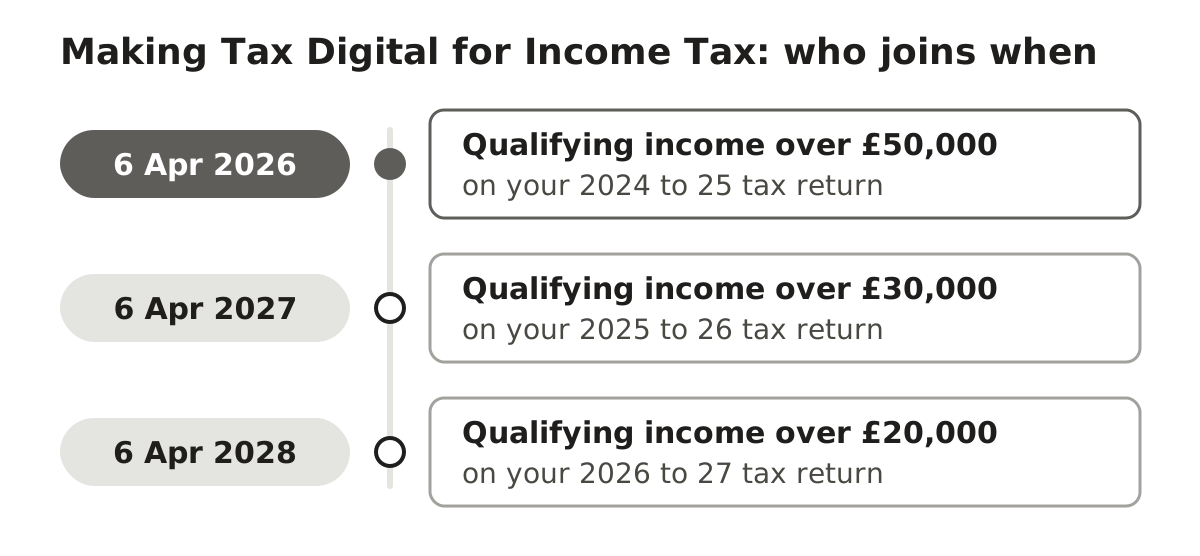
| Qualifying income | Measured on | Must use MTD from |
|---|---|---|
| Over £50,000 | 2024 to 25 tax return | 6 April 2026 |
| Over £30,000 | 2025 to 26 tax return | 6 April 2027 |
| Over £20,000 | 2026 to 27 tax return | 6 April 2028 |
What you have to do
- Keep digital records of each item of business or property income and expense, in software that works with MTD.
- Send quarterly updates by 7 August, 7 November, 7 February and 7 May. You can choose calendar quarters instead of the standard tax-year quarters.
- File your tax return through the software. All four quarterly updates must be sent before you can submit it.
Quarterly updates aren’t mini tax returns. They’re summaries of what came in and went out. You still make adjustments and claim reliefs at the year end.
Exemptions
Some people are permanently exempt without applying. That list includes anyone with qualifying income of £20,000 or less, anyone without a National Insurance number, trustees, personal representatives, non-resident companies, Lloyd’s members, people who have someone acting for them under a power of attorney, ministers of religion, and people receiving Married Couple’s Allowance or Blind Person’s Allowance.
Others are exempt only until April 2027, including people claiming averaging relief or qualifying care relief (foster and kinship carers) and people who file the trusts and estates or residence and remittance supplementary pages. Partnerships aren’t in scope yet.
If you can’t use digital tools because of age, health, disability, religious beliefs or lack of internet access, you can apply to HMRC by phone or letter to be treated as digitally excluded. HMRC aims to reply within 28 days.
Penalties
MTD brings in the points-based system for late submissions:
- You get a point for each missed deadline. At four points, you pay a £200 penalty, and £200 for each further miss.
- Points below the threshold expire after 24 months. Once you hit the threshold, you need 12 months of on-time filing to reset.
- In 2026 to 27, missed quarterly updates don’t attract penalties. Late tax returns still do.
Late payment penalties also change. For 2026 to 27, 3% of the unpaid tax is charged at day 15 and another 3% at day 30, then 10% a year from day 31. In your first year, nothing is charged for days 16 to 30. From 2027 to 28, the day 15 and day 30 charges rise.
A worked example
Priya is a freelance designer in Bristol. On her 2024 to 25 return she had £38,000 of self-employed income and £16,000 of rent from a flat she lets out. Her qualifying income is £54,000, before any expenses, so she’s been in MTD since 6 April 2026 even though her profits are well under £50,000.
Her first quarter runs 6 April to 5 July 2026, and the update is due by 7 August. She sends four updates in the year, and her final return for 2026 to 27 is due by 31 January 2028. If she misses the August deadline in this first year, there’s no penalty. From April 2027, a miss starts earning points.
Her friend Tom, a sole trader plumber with £42,000 of turnover and no other income, isn’t in yet. His 2025 to 26 return will very likely bring him in from April 2027, when the threshold drops to £30,000. He’d be smart to switch to MTD software this year and get a trial run.
What to do now
- Add up your gross self-employment and property income from your 2024 to 25 return. If it’s over £50,000, you’re in now.
- Check the 2025 to 26 figure too, because over £30,000 means you’re in from April 2027.
- Pick HMRC-recognized software and move your records into it.
- Put the four quarterly dates in your calendar: 7 August, 7 November, 7 February and 7 May.
- Check whether you qualify for an exemption, or apply for digital exclusion if that applies to you.
- Keep setting money aside for the tax bill. Our tax set-aside calculator helps, and our freelancer taxes guide covers the basics.
Sources
- GOV.UK: check if you’re eligible for Making Tax Digital for Income Tax
- GOV.UK: send quarterly updates
- GOV.UK: penalties for Making Tax Digital for Income Tax
- GOV.UK: exemptions from Making Tax Digital for Income Tax
- HM Treasury: Budget 2025 overview of tax legislation and rates
This article is general information, not legal or tax advice. Laws differ between countries and states and change over time, so check the rules that apply to you or speak to a qualified professional.