FinCEN makes it final: US companies no longer file BOI reports
Beneficial ownership information (BOI) reporting under the Corporate Transparency Act is now permanently off the table for companies formed in the United States. FinCEN issued a final rule on August 11, 2026, effective August 14, that makes permanent the March 2025 interim rule exempting US companies and US persons. FinCEN says it will also delete the information it already holds on US persons. The only businesses still filing are foreign entities registered to do business in a US state, and even they don’t have to report US owners.
For the millions of small LLCs and corporations that filed, or worried about filing, in 2024, this is the end of the story at the federal level. It isn’t quite the end everywhere, as New York shows.
What changed
The interim rule, March 2025
On March 21, 2025, FinCEN announced an interim final rule removing the BOI reporting requirement for US companies and US persons. It was published in the Federal Register on March 26, 2025. It narrowed the definition of "reporting company" to entities formed under foreign law and registered to do business in a US state or tribal jurisdiction, and it exempted all entities created in the United States.
The final rule, August 2026
The final rule keeps that approach and adds two more exemptions. US persons who act as company applicants are exempt, and US persons who hold a FinCEN identifier no longer have to keep that information updated. FinCEN says it will delete previously reported information about US persons from its database.
Who still files
Foreign reporting companies that aren’t otherwise exempt still have to report BOI for their foreign beneficial owners. Those registering to do business in the US after March 26, 2025 must file within 30 calendar days of receiving notice that their registration is effective, and file updates within 30 days of a change. They don’t report US persons as beneficial owners.
The Corporate Transparency Act itself is still law. What changed is FinCEN’s rule on who has to report under it, so a future rule or new legislation could change the picture again.
What about New York?
New York’s LLC Transparency Act took effect on January 1, 2026. The legislature had passed a bill to broaden it, but Governor Kathy Hochul vetoed that bill on December 19, 2025. As a result, the law currently applies only to LLCs formed under the law of a foreign country and registered to do business in New York. LLCs formed in the US are exempt.
For covered foreign LLCs, those registered before 2026 have to file their initial disclosure by the end of 2026, and those registering from January 1, 2026 have 30 days. Non-filers can be marked past due and then suspended, and companies delinquent for two years face fines of up to $500 a day. Law firm commentary notes it’s still not completely clear whether exempt companies must file an exemption statement, so check with New York counsel if you have an LLC registered there.
Who it affects
- US-formed LLCs, corporations and partnerships: no federal BOI filing, now or on formation.
- Lawyers and formation agents: no more company applicant reporting for US persons.
- Foreign companies registered in a US state: still file, but only for foreign owners.
- Foreign-formed LLCs registered in New York: a separate state filing by the end of 2026.
Key dates
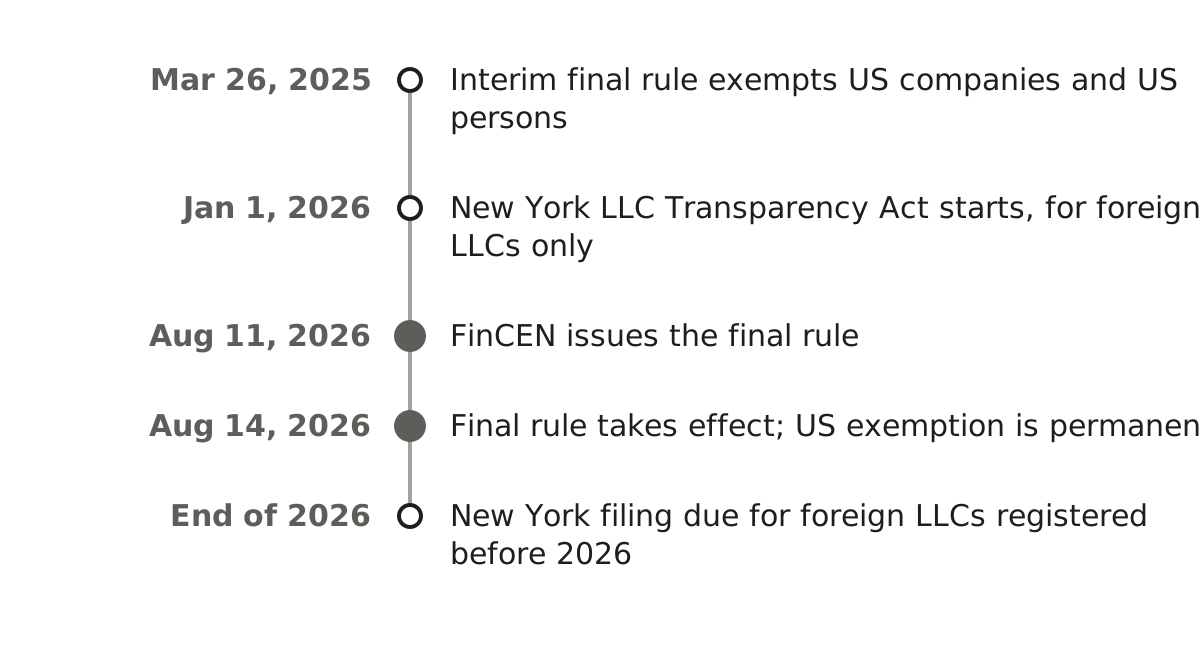
| Date | Event |
|---|---|
| March 21, 2025 | FinCEN announces the interim final rule |
| March 26, 2025 | Interim final rule published; US companies exempt |
| December 19, 2025 | New York governor vetoes the bill to broaden the state law |
| January 1, 2026 | New York LLC Transparency Act takes effect (foreign LLCs only) |
| August 11, 2026 | FinCEN issues the final rule |
| August 14, 2026 | Final rule takes effect |
| End of 2026 | New York deadline for foreign LLCs registered before 2026 |
What it means in practice
Three clients, three answers:
- Rosa and Tom’s bakery LLC in Texas, owned by two US citizens: nothing to file with FinCEN, and nothing to update when they bring in a third partner.
- A Canadian software company that registers with the Florida Secretary of State to open a US sales office on September 1, 2026: once it gets notice that the registration is effective, it has 30 calendar days to file BOI for its foreign owners. If one of its three owners is a US citizen, that person isn’t reported.
- A company formed in England and registered as an LLC in New York since 2023: no US persons to report federally, but a New York filing by the end of 2026, or it risks suspension.
Banks are a separate matter. Your bank may still ask who owns and controls your company when you open an account, under its own customer due diligence rules. Keep an ownership chart handy; it’s useful for due diligence anyway.
What to do now
- If you’re a US company, stop any recurring BOI update process you set up in 2024.
- Keep a copy of any BOI report you filed, for your own records.
- If you’re a foreign entity registering in any state, diary the 30-day deadline from the effective date notice.
- If you have a foreign-formed LLC registered in New York, file by the end of 2026.
- Remove BOI covenants from templates where they no longer make sense, such as operating agreements or founders’ agreements that required members to supply FinCEN data.
- Watch for new state laws modelled on the CTA.
As of September 2026, the federal rule is final. Because the exemption comes from FinCEN’s rule rather than a change to the statute, a later rule could still revisit it.
Sources
- FinCEN: FinCEN permanently ends beneficial ownership reporting requirements for millions of small business owners
- Federal Register: Beneficial Ownership Information Reporting Requirement Revision (final rule)
- Federal Register: Interim final rule, March 26, 2025
- Ballard Spahr: FinCEN permanently exempts US entities and persons
- Sidley: New York LLC Transparency Act took effect; US-formed LLCs exempt
This article is general information, not legal or tax advice. Laws differ between countries and states and change over time, so check the rules that apply to you or speak to a qualified professional.