UK Employment Rights Act 2025: what starts in October and January
The Employment Rights Act 2025 received Royal Assent on 18 December 2025, and it’s being switched on in stages. The first batch took effect in April 2026. The next two dates are close: on 1 October 2026 the time limit for most employment tribunal claims doubles from three months to six, and on 30 October 2026 employers must take “all reasonable steps” to prevent sexual harassment, including by third parties. Then on 1 January 2027, the qualifying period for unfair dismissal drops from two years to six months.
The dates below come from the government’s implementation timeline, last updated on 25 September 2026. Some 2027 measures still don’t have exact dates, so expect more updates.
Already in force
Since 6 April 2026:
- Statutory Sick Pay is paid from the first day of sickness, and the lower earnings limit has gone.
- Paternity leave and unpaid parental leave are day-one rights.
- Bereaved partners can take paternity leave of up to 52 weeks.
- The maximum protective award for failing to consult on collective redundancies has doubled.
- Whistleblowing protection covers disclosures about sexual harassment.
- Employers can publish voluntary gender equality and menopause action plans.
The Fair Work Agency, the new enforcement body, was set up on 7 April 2026. Several trade union changes, including the repeal of most of the Trade Union Act 2016 and electronic balloting from 25 August 2026, are also in force.
What’s coming, and when
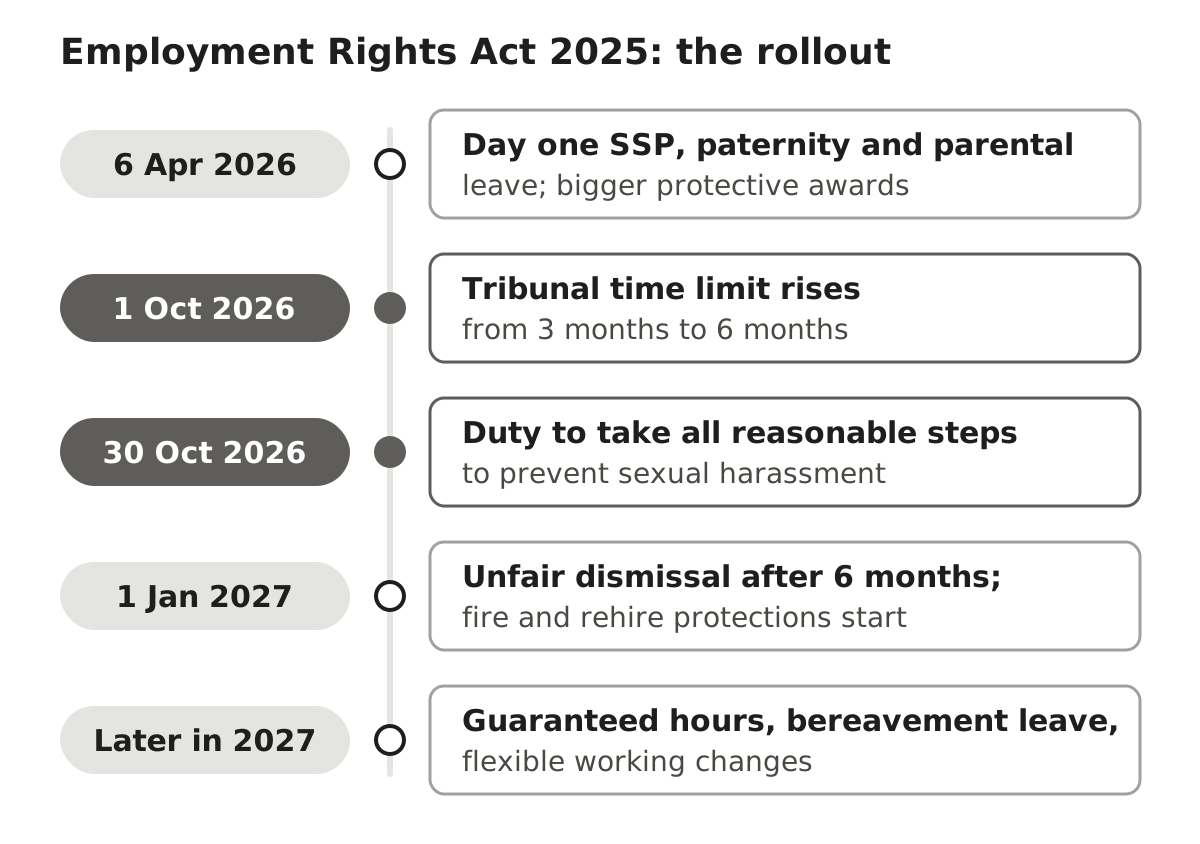
| Date | Change |
|---|---|
| 1 October 2026 | Tribunal time limit rises from 3 to 6 months (9 November 2026 for contract claims in Scotland) |
| 30 October 2026 | Duty to take all reasonable steps to prevent sexual harassment; duty not to permit harassment by third parties; stronger union access and recognition rules |
| 1 January 2027 | Unfair dismissal qualifying period cut to 6 months; cap on the compensatory award removed; fire and rehire protections start |
| 2027, date to be set | Guaranteed hours and shift notice rules, bereavement leave (including pregnancy loss), flexible working changes, stronger protection for pregnant women and new mothers, mandatory action plans, limits on NDAs, umbrella company regulation |
One correction worth flagging: earlier roadmaps put the fire and rehire protections in October 2026. The current timeline says January 2027.
Who it affects
Every employer with staff in Great Britain, whatever its size and wherever its parent company is based. A US or EU business with a small UK team is covered in exactly the same way as a British one.
What the January 2027 change means in practice
The unfair dismissal change is the one that will change day-to-day decisions most. Under the current rules, most employees need two years’ service before they can claim unfair dismissal. From 1 January 2027, for dismissals from that date, the period is six months. The cap on the compensatory award also goes.
Say a Leeds retailer hires Sam on 1 June 2026. If it dismisses Sam on 15 February 2027, Sam has eight and a half months’ service. Under the old rules, Sam couldn’t have claimed unfair dismissal. Under the new rules, Sam can, so the retailer needs a fair reason and a fair process, just as it would for someone with years of service. And because the tribunal time limit is now six months, Sam would have longer to bring the claim.
The harassment duty in practice
The 30 October change is easy to underrate. Employers already have a duty to take reasonable steps to prevent sexual harassment. From 30 October 2026, the test becomes “all reasonable steps”, and employers must not permit harassment of their employees by third parties such as customers, clients and contractors.
Picture a hotel group in Manchester whose reception staff regularly deal with guests late at night. A written policy on the intranet won’t be enough on its own. The business should be able to show that it assessed the risk at the front desk, trained managers to act on complaints, gave staff a clear way to report problems, and actually dealt with guests who crossed the line. If it can’t, a tribunal is likely to ask what else it could reasonably have done, and with a six-month time limit, staff have longer to bring that question.
My practical advice: use the first six months properly. That means a real probation process with documented reviews, clear standards and honest feedback. The businesses that get caught out will be the ones that treated probation as a formality.
What to do now
- Update your tribunal claim tracking for the six-month limit from 1 October.
- Carry out a sexual harassment risk assessment before 30 October, including risks from customers, clients and contractors, and refresh training and reporting routes.
- Rebuild your probation process for hires who will pass six months’ service after 1 January 2027.
- Stop any plans that rely on dismissing and re-engaging staff on worse terms without legal advice.
- Review zero-hours and variable-hours contracts ahead of the guaranteed hours rules.
- Check your template contracts, your employee handbook and your settlement terms, including any NDA wording, against the new rules.
For the dismissal side, our guide to letting an employee go covers the process, and our notice period entry explains the basics.
Sources
- GOV.UK: Plan to Make Work Pay and Employment Rights Act timeline update
- GOV.UK: implementing the Plan to Make Work Pay and the Employment Rights Act
- legislation.gov.uk: Employment Rights Act 2025
This article is general information, not legal or tax advice. Laws differ between countries and states and change over time, so check the rules that apply to you or speak to a qualified professional.